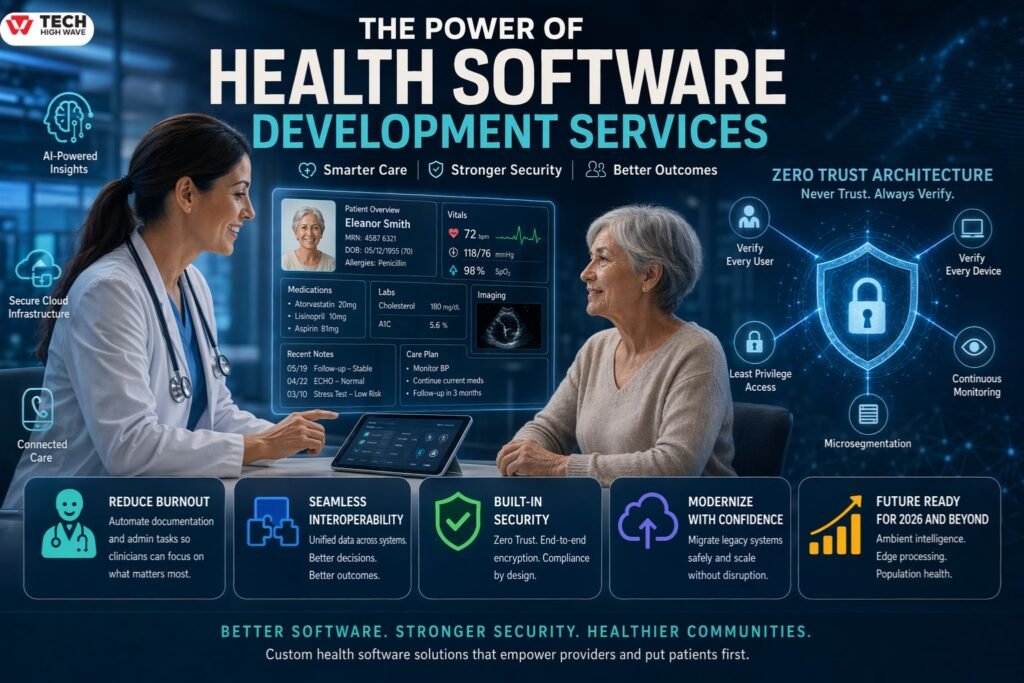
TL;DR: The Essentials
|
The medical world is shifting fast. We’re moving away from just reacting to sickness and toward using data to keep people healthy in the first place. But this shift only works if the digital foundation is solid. Often, when organizations look into healthcare software development services, they aren’t just looking for new code. They’re looking for a way out of a digital mess that has spent years pulling doctors away from their patients.
Software should be a tool, not a wall. But right now, data silos, clunky interfaces, and high-stakes compliance rules often make technology feel like a burden. Custom development is about fixing that. It’s about making sure a clinic’s software actually matches how a doctor works in a high-pressure exam room.
What Is Healthcare Software Development?
Simply put, this is the work of building and maintaining apps specifically for the medical field. It’s not just general engineering; it’s a specialized craft that requires a deep understanding of everything from a trauma center’s chaos to the strict privacy rules of HIPAA or the 2026 TEFCA standards.
The goal isn’t just a shiny interface. It’s about interoperability—the ability for a lab result, a pharmacy order, and a doctor’s note to all live in the same “story” without getting lost in the shuffle.
Two Realities: The Impact of Better Tech
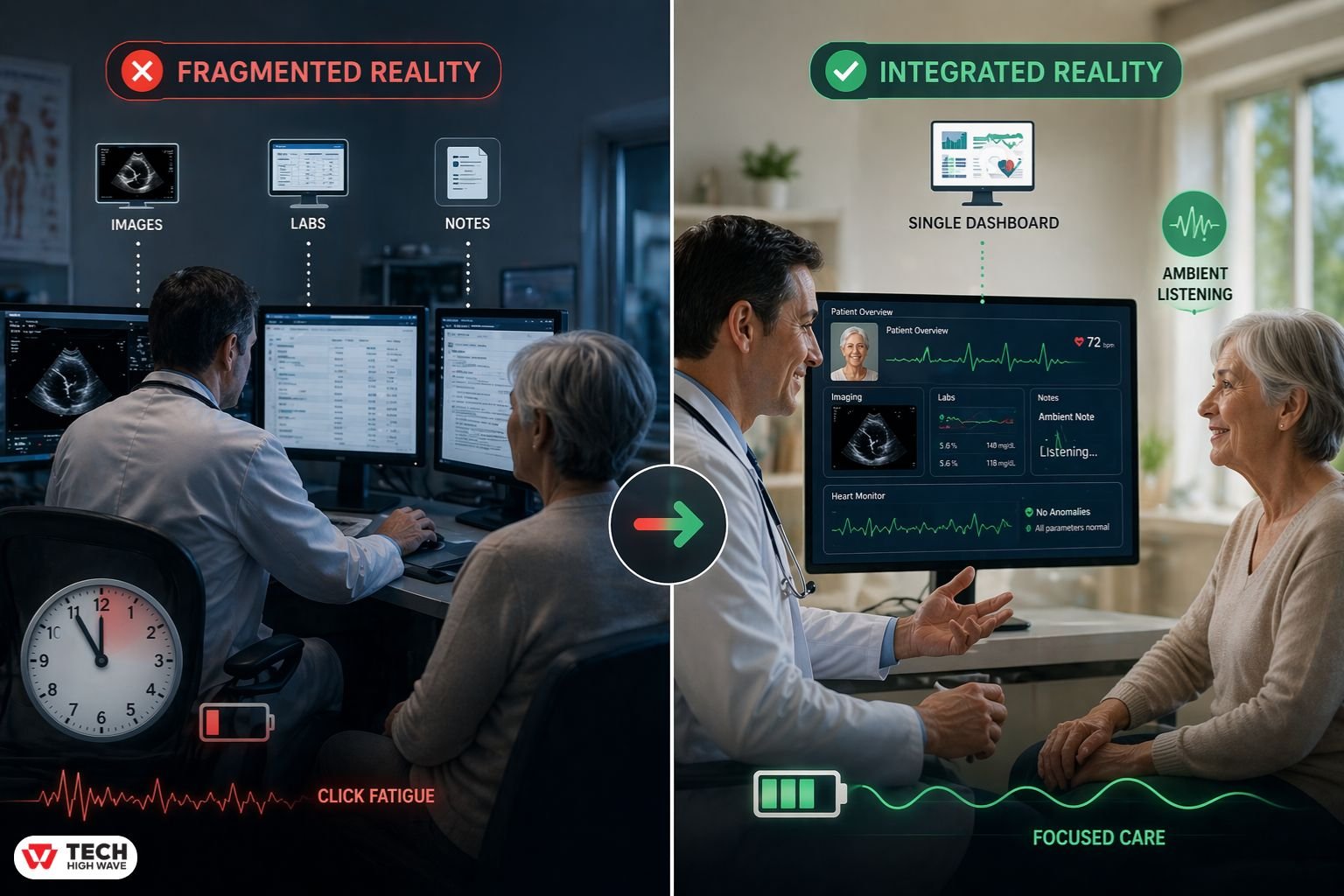
To see why this matters, look at two different mornings for a typical cardiologist.
The Fragmented Reality
The doctor starts their day by logging into three different programs just to see one patient’s history. One for images, one for labs, one for notes. They spend the whole 15-minute appointment staring at a screen, typing. By noon, they’re exhausted from “click fatigue,” and their back is literally turned to the person they’re trying to help. This is where mistakes happen.
The Integrated Reality
With software built for the job, that same doctor sees a single dashboard. An ambient listening tool drafts the notes automatically as they talk. The doctor keeps eye contact, notices the patient’s anxiety, and can actually listen. Data from the patient’s heart monitor is already there, flagged if anything looks weird. The doctor gets to be a doctor again, not a data entry clerk.
The Health Triangle: Balancing Technology, Care, and Outcomes
Modern healthcare isn’t just about better tools—it’s about balance. This is where the idea of the health triangle becomes useful. Traditionally, the health triangle refers to the balance between physical, mental, and social well-being. In today’s digital-first medical environment, that concept has evolved.
In the context of healthcare software development, the triangle can be reimagined as:
- Clinical Efficiency (Physical Layer): Systems that reduce manual work, eliminate click fatigue, and streamline workflows so providers can perform at their best.
- Provider Experience (Mental Layer): Intuitive interfaces and automation that reduce stress, burnout, and cognitive overload during high-pressure decision-making.
- Patient Engagement (Social Layer): Tools that improve communication, trust, and connection between patients and providers.
When software is poorly designed, this triangle collapses—doctors become overwhelmed, patients feel ignored, and outcomes suffer. This is exactly what we saw in the fragmented reality.
But in the integrated reality, custom healthcare software strengthens all three sides of the triangle. Doctors stay focused, patients feel heard, and data flows seamlessly in the background.
The real goal of modern healthcare technology isn’t just innovation—it’s maintaining this balance. Because when the health triangle is stable, better care naturally follows.
How Healthcare Software Development Works
Building medical software is a high-stakes process that leaves no room for “moving fast and breaking things.”
- Compliance First: Everything starts by mapping out the rules. Whether it’s HIPAA or the latest FHIR data standards, the guardrails are built in from day one.
- Design for Stress: Engineers create frameworks that work under pressure. This means choosing the right servers so there’s zero lag when a surgeon needs a record.
- Real-World Testing: Doctors and nurses test the software in simulations. If an interface is confusing during a busy shift, it gets scrapped and rebuilt.
- Deep Validation: Security teams run “stress tests” to make sure a hacker can’t get in and a bug can’t lead to a wrong dosage.
- Always Evolving: After launch, the software is constantly updated to handle new medical laws and faster cyber threats.
Advanced Security: The Zero Trust Shift
In 2026, the old way of securing a hospital—putting a big firewall around the building—is dead. Doctors work from home, patients use wearables, and hackers are smarter. Modern services now use Zero Trust Architecture (ZTA). The rule is simple: never trust, always verify.
Breaking it Down
ZTA splits the hospital network into tiny, isolated pieces (microsegmentation). If a hacker gets into a smart thermometer in a patient’s room, they can’t jump from there to the main server holding everyone’s private records. Access isn’t granted just because you’re “inside” the hospital; every user and device has to prove who they are every time they move.
Watching the Devices
Hospitals are full of connected gear—IV pumps, heart monitors, tablets. Modern development includes tools that automatically “find” and watch every device. If a diagnostic machine suddenly tries to send data to an unknown IP address in another country, the system shuts it down instantly.
Dealing with Legacy Debt
A huge headache for medical leadership is “legacy debt.” These are the old, slow systems that have been running for twenty years. They’re expensive to keep alive, they don’t talk to new apps, and they’re a massive security risk.
The Cost of Doing Nothing
Staying with old tech is a trap. It costs more to patch an old EHR than to buy a new one. Plus, these old systems can’t handle the 2026 rules for sharing data across different hospital networks.
The Way Out
Smart developers use a “sunset strategy” to phase out the old stuff without causing a blackout:
- Encapsulation: Putting a modern “wrapper” (an API) around the old system so it can talk to new tools.
- Phased Migration: Moving data in “clinical blocks”—first the pharmacy, then the labs—instead of trying to flip a switch on everything at once.
- Smart Archiving: Moving old, inactive records to a secure cloud so the new system stays fast and searchable.
- Governance and Decommissioning: Formally shutting down old servers to eliminate security “blind spots” that hackers frequently exploit.
Why Custom Development Wins
Getting Back the “Joy of Practice”
When software is built for the human using it, burnout drops. It automates the boring stuff, like insurance paperwork, so doctors can focus on the healing work they actually went to school for.
Consistency Everywhere
Medical work happens on the move. Good development makes sure a nurse on a tablet has the same exact data as a specialist on a desktop, with no lag and no errors.
Security as a Foundation
In a custom build, security isn’t a “plug-in.” It’s the floor, the walls, and the ceiling. This means better encryption and more detailed logs that generic software just doesn’t offer.
What’s Coming in 2026?
- Ambient Intelligence: Systems that listen to a doctor-patient talk and write the medical note for them. No more typing during the exam.
- Edge Processing: Wearables that can “think” for themselves. If a watch detects a heart problem, it alerts the doctor immediately without waiting for a slow cloud upload.
- Population Mapping: Using big data to find at-risk groups before an outbreak happens, letting public health teams step in early.
Frequently Asked Questions
Q1: What exactly does a healthcare software developer do?
They are engineers who build apps for doctors, patients, and hospitals. They have to understand medical work just as well as they understand code, especially when it comes to security and privacy laws.
Q2: Is custom software really worth the cost?
For most, yes. Off-the-shelf software is often bloated with features you don’t need and missing the ones you do. Custom tech integrates with your old systems better and keeps your data much safer.
Q3: How is security different in 2026?
We’ve moved to Zero Trust. We don’t assume anyone is safe just because they are in the building. Every person and every device is verified constantly to prevent data breaches.
Q4: What is interoperability?
It’s the ability for different medical systems to “talk” to each other. It means your records from the cardiologist can be seen by your primary doctor and your pharmacy without anyone having to fax a piece of paper.
Q5: What do we do with our old, slow software?
Most hospitals use a “sunset strategy.” They don’t just delete it; they slowly migrate the data to a new system while using “wrappers” to keep things connected during the transition.
Q6: How much do data breaches cost now?
By 2026, a single healthcare breach costs about $10.9 million on average. That includes fines, fixing the tech, and the massive loss of trust from patients. It’s why security is now the top priority in development.
For More Visit: TechHighWave