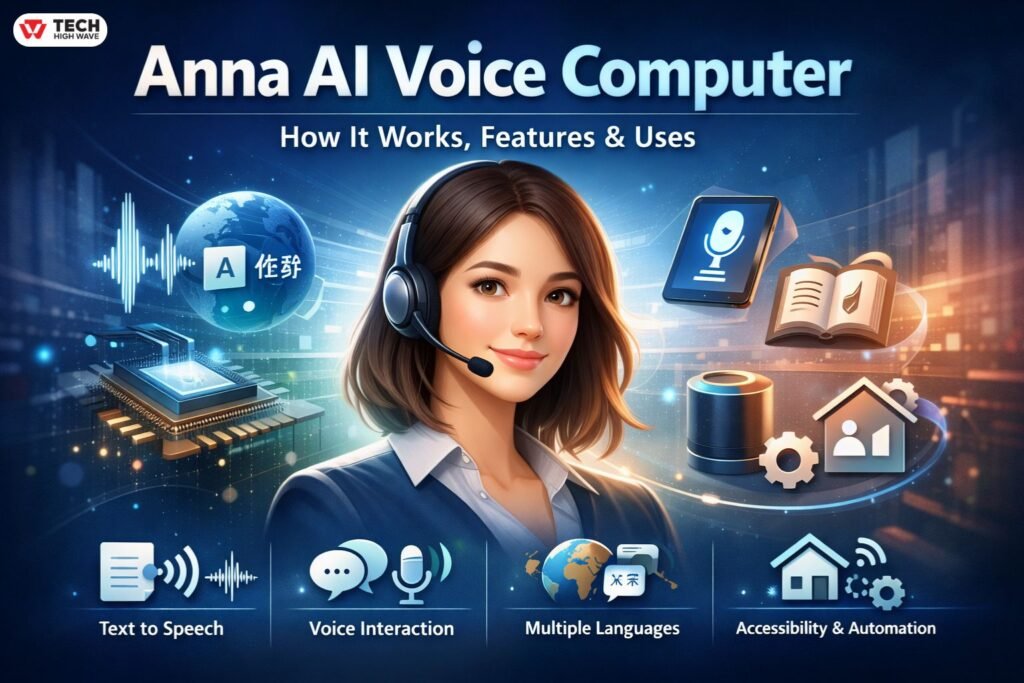
Searches for Anna AI Voice computer usually come from a practical need: finding a voice that sounds natural, responds quickly, and works reliably across different tasks. Whether used for narration, automation, or accessibility, expectations have shifted. Basic robotic voices are no longer acceptable in most real-world scenarios.
The challenge is that “Anna” is not a single system. It appears across multiple platforms, each offering a slightly different version of the same voice profile. Some are simple text-to-speech engines, while others are advanced systems capable of real-time interaction with minimal delay.
A clear understanding of how these systems function—and where they differ—helps avoid common pitfalls such as poor voice quality, lag, or limited features. This guide breaks down the technology, practical uses, and current capabilities of Anna AI voice systems with a grounded, experience-based perspective.
What Is Anna AI Voice Computer?
Anna AI voice computer refers to a dual-layer voice intelligence category used across both consumer voice synthesis tools and enterprise-grade autonomous AI systems.
In 2026, the term no longer describes a single voice or product. It represents two overlapping but fundamentally different technologies:
- Voice generation systems used in content creation and accessibility
- Agentic AI platforms used in recruitment, customer experience, and real-time decision systems
This distinction is critical because most confusion in the market comes from treating both as the same thing.
Two Distinct Forms of Anna AI (Critical 2026 Distinction)
-
Anna as a Voice Profile (TTS Layer)
This version appears in platforms like:
- ElevenLabs-style voice models
- Cloud TTS engines (Azure, Amazon Polly variants)
- Content creation tools
Characteristics:
- Focused on speech generation only
- No decision-making ability
- Used in narration, media, and accessibility
- Voice identity varies across platforms
This is the “Anna voice” most users encounter in creative tools.
-
Anna as an Agentic AI System (Enterprise Layer)
In enterprise environments, “Anna” refers to autonomous AI systems used in:
- Recruitment automation pipelines
- Customer sentiment analysis engines
- Voice-based candidate screening systems
- CX automation platforms (notably in large-scale staffing ecosystems such as PSG-style recruitment infrastructures)
These systems are not “voices”—they are decision agents that use voice as an interface layer.
They operate under strict latency and compliance requirements, often integrated into enterprise workflow stacks.
How Anna AI Voice Computer Works
At a technical level, both versions rely on a shared pipeline:
-
Input Capture
Voice or text input is captured through microphones, APIs, or system integrations.
-
Interpretation Layer
Language models analyze:
- intent
- emotional tone
- task classification
-
Response Generation
A response is created either as:
- synthesized speech (TTS layer)
- structured decision output (agentic layer)
-
Voice Rendering
Speech output is generated with neural synthesis engines optimized for real-time interaction.
Modern deployments operate under sub-250ms latency thresholds, enabling interruption-based conversations.
Hybrid Voice Architecture (2026 Standard)
Most modern Anna AI systems no longer rely on a single model.
They use a two-layer architecture:
- Reflex Layer (On-device / SLMs):
Handles instant responses, confirmations, and interruptions - Reasoning Layer (Cloud LLMs):
Handles planning, analysis, and complex decision-making
This separation is what enables natural conversation flow without delay fatigue.
Main Features of Anna AI Systems
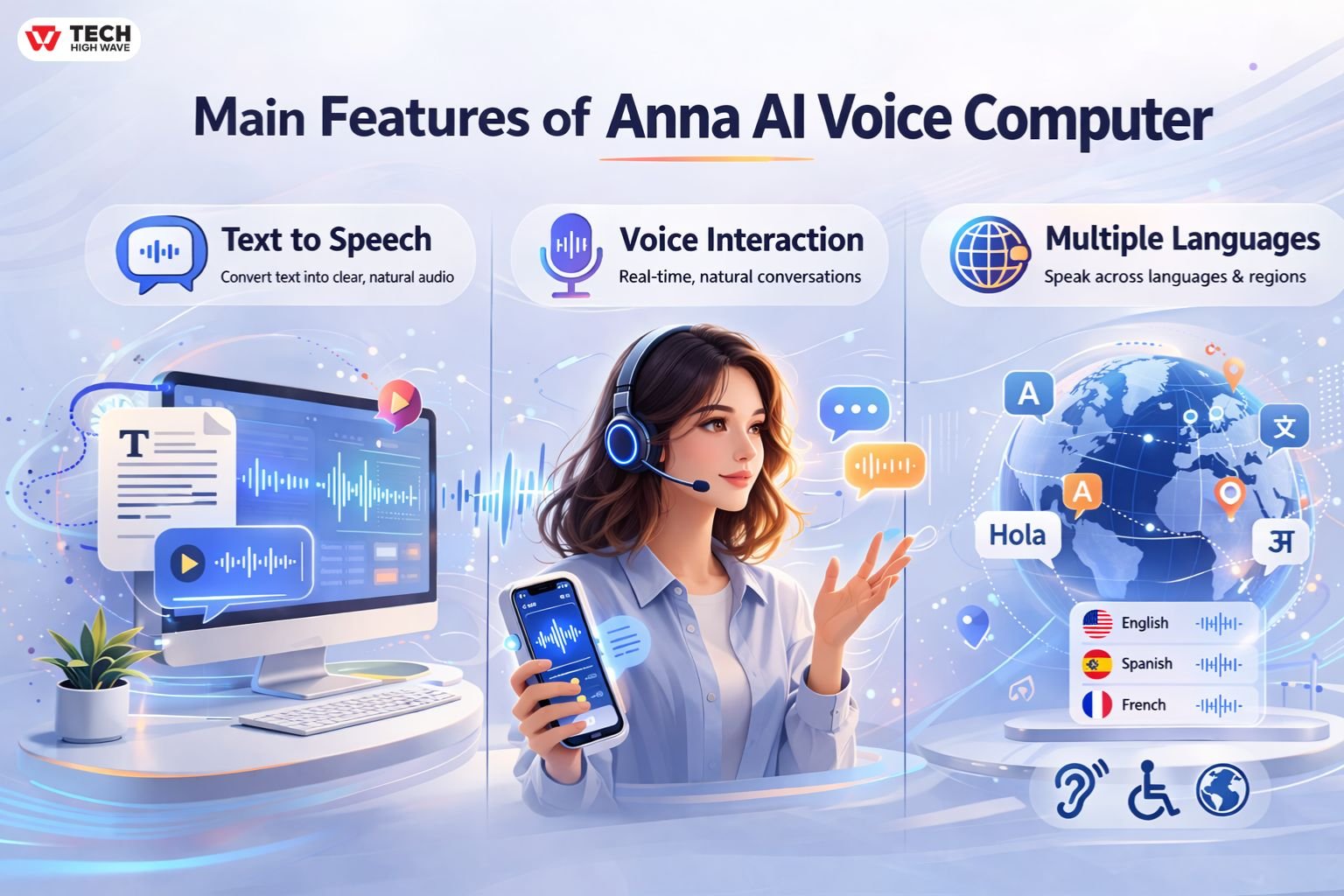
Text to Speech Intelligence
Modern TTS systems are no longer static. They support:
- emotional modulation
- contextual tone shifts
- real-time pacing control
The voice adapts based on conversational context rather than fixed scripts.
Voice Interaction Layer
Voice is no longer just input/output—it is now a control interface.
Systems can:
- interrupt themselves mid-response
- adjust tone dynamically
- switch tasks without reset
Multilingual Neural Support
Anna AI systems now support:
- 70+ languages in advanced deployments
- automatic language switching
- accent normalization
Enterprise Use Cases (2026 Reality)
Recruitment Automation
Anna AI systems are widely deployed in high-volume recruitment pipelines where they:
- screen candidates via voice interviews
- analyze speech sentiment
- score communication clarity
Large-scale staffing ecosystems have reported significant efficiency gains using these systems, particularly in pre-screening workflows.
Customer Experience (CX) Systems
In CX environments, Anna AI handles:
- real-time support calls
- sentiment-driven escalation
- automated resolution flows
Accessibility Infrastructure
Voice-first systems remain essential for:
- assistive reading tools
- disability support interfaces
- low-bandwidth environments
Types of Anna AI Systems
Voice Assistant Apps
- Lightweight interaction systems
- Limited reasoning capability
- Consumer-focused
AI Voice Generators
- High-quality speech synthesis
- Used in media production
- No autonomous decision logic
Agentic AI Systems
- Enterprise-grade autonomy
- Workflow integration
- Decision-making + voice interface combined
Capability Comparison (2026 Standard)
| Feature | TTS Voice Systems | Agentic Anna AI |
| Role | Voice output only | Decision + voice interface |
| Latency | 300–1500ms | <250ms optimized |
| Emotion Handling | Scripted | Context-aware |
| Use Case | Media/content | Recruitment/CX/ops |
| Compliance Layer | Minimal | Enterprise-grade (SOC2/HIPAA-ready in deployments) |
How Anna AI Processes Voice in Real Time
-
Speech Capture
Audio is processed through noise-filtered pipelines optimized for clarity.
-
Semantic Mapping
The system identifies:
- intent
- urgency
- emotional markers
-
Decision Routing
Requests are routed either to:
- fast reflex systems
- or deep reasoning models
-
Voice Output Generation
Response is synthesized using neural voice engines with dynamic tone shaping.
Security, Ethics, and Voice Fraud Protection
As voice systems become more realistic, security has become a core infrastructure layer.
Modern deployments increasingly integrate voice authentication and fraud detection systems. For example, enterprise AI stacks now combine agentic AI with biometric verification frameworks and anomaly detection to prevent synthetic voice misuse and impersonation attacks.
A detailed breakdown of how autonomous AI systems are addressing these risks can be seen in agentic AI voice fraud prevention systems, where real-time voice verification and cryptographic identity layers are used to secure AI-driven conversations.
These systems reflect a broader shift: voice AI is no longer just an interface—it is part of enterprise security infrastructure.
Future Trends in Anna AI Voice Computer (2026 Outlook)
Real-Time Conversational Intelligence
Sub-200ms interaction loops are becoming standard in high-performance deployments.
Emotion-Driven Voice Models
Systems now adapt tone dynamically based on:
- stress detection
- intent urgency
- conversational history
On-Device + Cloud Fusion
Hybrid execution models reduce latency while maintaining reasoning depth.
Security-Native Voice AI
Voice authentication and watermarking are becoming mandatory in enterprise deployments.
FAQs
Q1: What is Anna AI voice computer in 2026?
Anna AI voice computer refers to both voice synthesis systems and enterprise agentic AI platforms used in recruitment, CX automation, and real-time voice interaction systems.
Q2: Is Anna AI just a voice generator?
No, in 2026 the term also includes autonomous AI systems that make decisions and use voice as an interface layer in enterprise environments.
Q3: How fast is Anna AI voice response?
Modern systems typically operate under 250ms latency, enabling near real-time conversation and interruption handling.
Q4: Where is Anna AI used in business?
It is widely used in recruitment automation, customer experience systems, accessibility tools, and large-scale workflow orchestration.
Q5: Does Anna AI support emotional speech?
Yes, advanced systems support context-aware emotional modulation such as tone shifts for urgency, empathy, or clarity.
Q6: Is Anna AI safe for enterprise use?
Enterprise deployments often include SOC2-level compliance, voice authentication, and fraud detection layers for secure operation.
Q7: What is the difference between Anna voice and Anna AI agent?
The Anna voice is a speech synthesis model, while Anna AI agent refers to an autonomous decision-making system that uses voice as an interface.
For More Visit: TechHighWave