For a long time, chatbots sounded better in demos than they worked in real life.
You’d ask something slightly different than expected, and the whole system would fall apart. Most people have experienced that at least once—and probably didn’t go back.
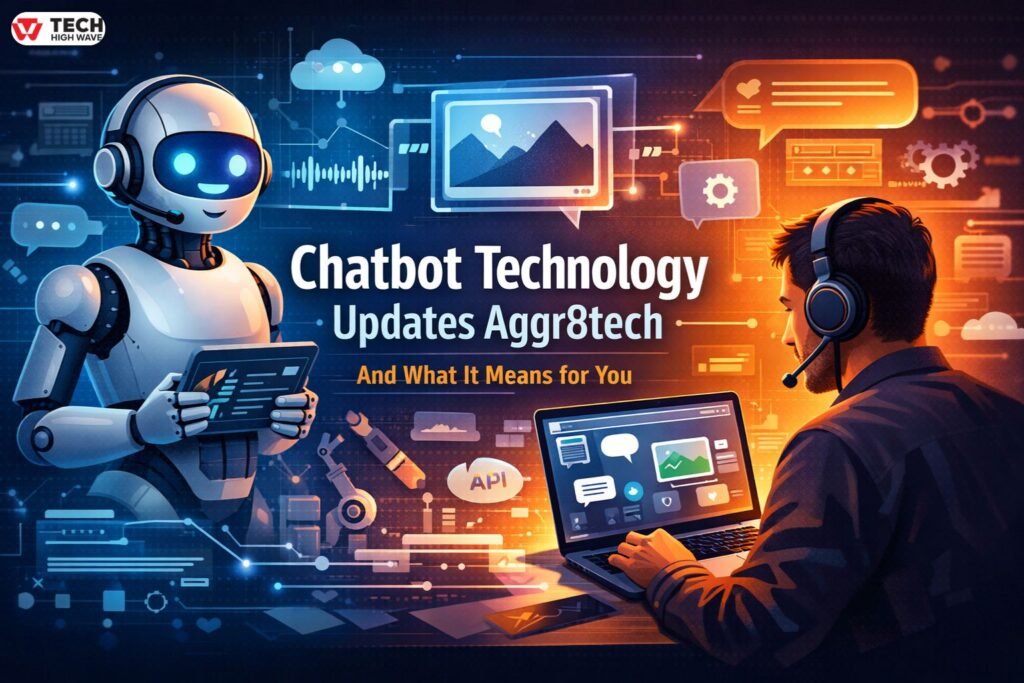
That’s what’s changing with chatbot technology updates aggr8tech.
The shift isn’t dramatic on the surface. But underneath, these systems are getting better at handling messy input, maintaining context, and—more importantly—actually connecting to real systems.
So instead of just “chatting,” they’re starting to do real work.
If you’re trying to evaluate whether this tech is worth it now, that’s the angle to focus on.
Chatbot Technology Updates Aggr8tech (Definition)
Chatbot technology updates aggr8tech refer to the latest improvements in AI-powered chatbot systems—especially around context awareness, multimodal interaction (text, voice, images), and the ability to actually do things, not just respond.
Chatbots aren’t just answering questions anymore. They’re starting to handle real tasks—checking systems, triggering actions, guiding users through decisions. Multimodal input is becoming normal, not optional. And yes, companies are seeing cost reductions—but only when the system is implemented properly. The difference now isn’t intelligence—it’s usability.
Understanding Chatbot Technology Updates Aggr8tech
At a basic level, chatbot technology here is about AI systems like AI Radiocord Technologies that manage conversations, automate tasks, and assist with decisions.
But that definition doesn’t really capture the shift.
Older chatbots were predictable. Not in a good way.
They followed scripts, and the moment a user stepped outside those scripts, things broke.
Modern systems are less rigid. They interpret intent, keep track of what’s been said, and handle multi-step interactions better than before.
That doesn’t mean they’re perfect—far from it. But they’re usable in ways older systems weren’t.
And that’s the key difference.
How Does Chatbot Technology Updates Aggr8tech Work
If you strip away the buzzwords, the process is actually pretty straightforward.
First, the system tries to understand what the user is saying. This is where natural language processing comes in. It identifies intent and pulls out useful details. It works well most of the time—but unclear phrasing can still trip it up.
Then comes context. Good systems remember what you said earlier. Bad ones don’t. That’s usually the difference between a smooth interaction and a frustrating one.
After that, the system decides what to do. This part is more complex than it sounds. It might call an API, pull data from a database, follow a rule, or generate a response using an AI model.
In reality, it’s a mix of all of these.
Finally, it responds—and ideally learns from the interaction over time. But that only happens if someone is actually monitoring and improving the system. Left alone, performance usually drifts.
Why Is Chatbot Technology Aggr8tech Important?
Because it’s starting to work in situations where it used to fail.
Companies are seeing real results—cost reductions, faster response times, less pressure on support teams. Some report savings in the 30–40% range, but those numbers depend heavily on how the system is set up.
What matters more is consistency.
Users don’t want to wait. They don’t want to navigate menus. They just want answers. Chatbots, when done right, can deliver that instantly.
At the same time, they don’t replace humans. They filter workload. The repetitive stuff gets handled automatically, and the complex issues get passed on.
That balance is where most of the value comes from.
Real-World Use Cases of Chatbot Technology Aggr8tech
This is where things move from theory to reality.
In e-commerce, chatbots handle order tracking, returns, and product questions. Some systems can even analyze images—like a damaged item—and respond accordingly.
In SaaS platforms, they guide users through onboarding, explain features, and help troubleshoot issues. It’s not perfect, but it reduces friction.
Healthcare and fintech are more cautious, for obvious reasons. Still, chatbots are being used for scheduling, basic triage, and account support.
Across all these cases, the benefit is the same: faster responses, fewer bottlenecks.
Chatbot Technology Aggr8tech vs Traditional Chatbots
| Feature | Traditional Chatbots | Aggr8tech Chatbots |
| Understanding | Keyword-based | Intent-based |
| Context | None | Maintained |
| Responses | Prewritten | Dynamic |
| Integration | Limited | Deep |
| Input | Text only | Text, voice, image |
| Reliability | Fragile | More stable |
The difference isn’t subtle. It’s a completely different level of usability.
Core Technologies Behind Chatbot Technology Updates Aggr8tech
A lot of pieces are working together behind the scenes.
Natural language processing helps interpret what users mean. Large language models generate responses. APIs connect the chatbot to real systems.
But none of these alone solve the problem.
What actually makes systems usable is the combination—rules for structure, AI for flexibility, and integrations for execution.
Without that mix, things fall apart quickly.
Multimodal Capabilities in Chatbot Technology Updates Aggr8tech
This is one of the more noticeable changes.
Chatbots aren’t limited to text anymore.
You can speak instead of typing. You can upload an image instead of explaining a problem. In some cases, systems are starting to process video input as well.
It sounds like a small shift, but it changes how people interact.
Describing a problem takes time. Showing it is faster.
That’s why multimodal systems tend to feel more intuitive—even if the underlying tech is more complex.
Key Specialties Chatbot Technology Updates Aggr8tech
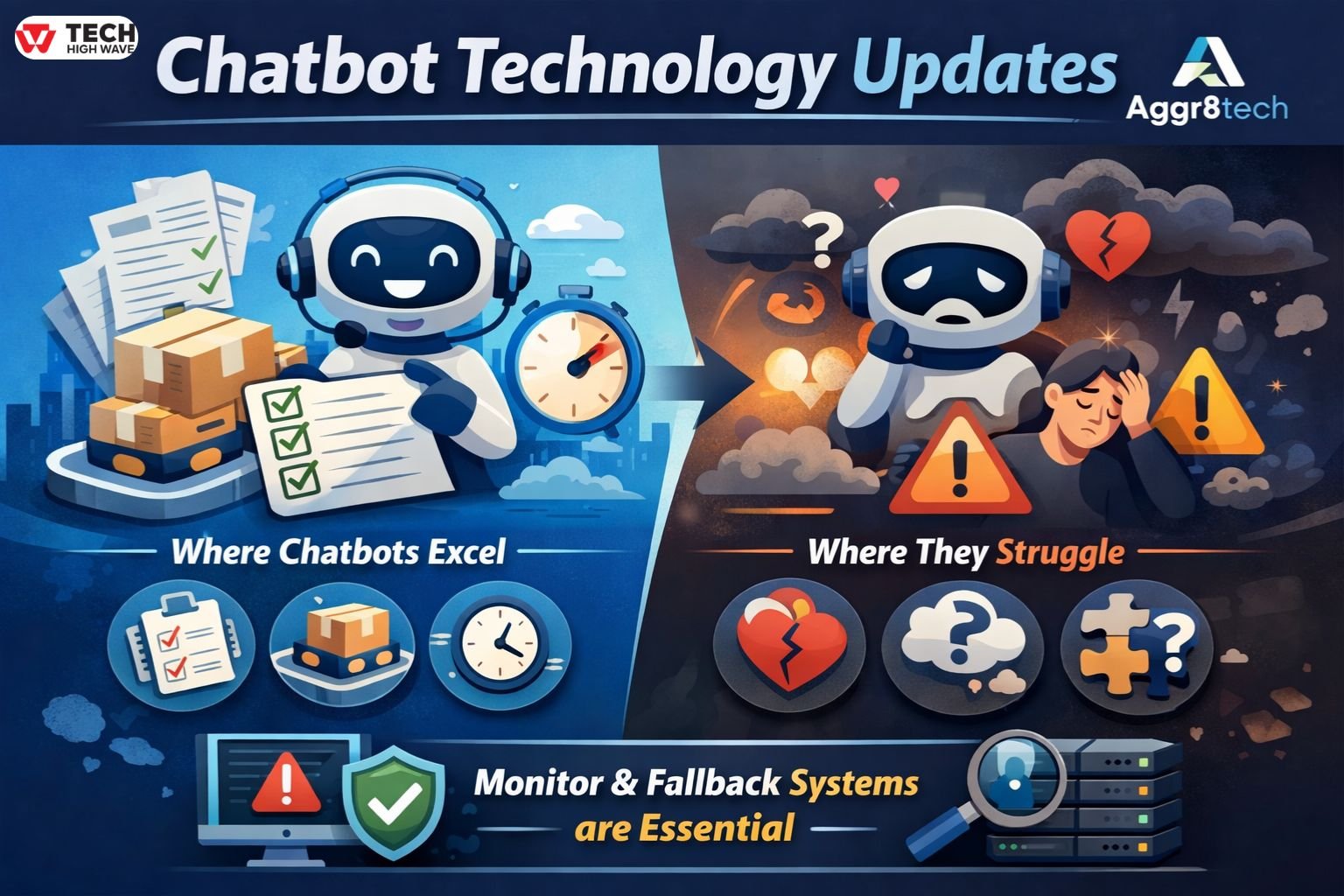
Chatbots perform best in environments where things are predictable and repeatable.
Where they work well:
- High-volume, repetitive queries
- Structured workflows like onboarding or tracking
- Situations where speed matters more than nuance
But there are limits.
Where they struggle:
- Emotion-heavy conversations
- Ambiguous or unclear requests
- Unusual edge cases
There’s also the issue nobody likes to talk about—AI can be confidently wrong.
Not often, but often enough to matter.
That’s why fallback systems and monitoring aren’t optional.
Implementation Challenges & Limitations
This is where most real-world projects run into trouble.
It looks simple at first. Then integration starts.
Connecting systems isn’t always clean. Data isn’t always structured. And once you start relying on the chatbot, small issues become very visible.
Some common challenges:
- Integration takes longer than expected
- Training data isn’t as clean as it should be
- Performance drops without ongoing monitoring
Add security and compliance requirements on top, and things get more complicated—especially in regulated industries.
Common Mistakes When Adopting Chatbot Technology
A lot of problems come from expectations, not technology.
Businesses often assume the system will “just work.” It doesn’t.
Common missteps include:
- Choosing tools based on hype rather than fit
- Expecting full automation too early
- Ignoring fallback mechanisms
- Skipping ongoing optimization
None of these break the system immediately. But over time, they create friction.
A slower, more deliberate rollout usually works better.
Cost, ROI & Business Impact
Cost savings get the most attention—and for good reason.
But they’re only part of the picture.
Chatbots can improve response times, which improves user satisfaction. They can guide users, which can improve conversions.
Still, ROI depends heavily on execution.
A well-integrated system can deliver real value. A poorly implemented one can frustrate users and create more work than it saves.
AI Agents vs Chatbots: What’s the Difference?
This distinction is becoming more relevant.
Chatbots respond.
AI agents act.
Agents can initiate tasks, make decisions within limits, and operate more independently. Chatbots are still mostly reactive, though that’s starting to change.
Aggr8tech updates are pushing toward more agent-like behavior—but full autonomy isn’t always a good idea.
In most cases, controlled systems perform better.
How to Evaluate a Chatbot Platform (Step-by-Step)
Choosing a chatbot platform isn’t just about features.
Start with the use case. If that’s unclear, everything else becomes guesswork.
Then look at integration. If the system can’t connect to your tools, it won’t do much.
From there:
- Test how it handles edge cases
- Check response accuracy
- Make sure there’s a human fallback
- Monitor performance over time
Skipping these steps is where most implementations go wrong.
Future Trends in Chatbot Technology Updates Aggr8tech (2026 Outlook)
The direction is becoming more practical.
Chatbots are turning into workflow tools, not just interfaces. Personalization is improving, though it comes with privacy concerns.
Regulation is tightening. Expectations are rising.
And interestingly, the best systems are becoming less noticeable.
They don’t try to impress.
They just work.
FAQs
Q1: What are chatbot technology updates aggr8tech in simple terms?
They’re improvements that make chatbots more useful in real situations—better understanding, better integration, and the ability to handle more complex interactions without breaking.
Q2: How is modern chatbot technology different from older versions?
Modern systems use AI and context tracking, while older ones relied on scripts. This makes them more flexible and capable of handling real conversations.
Q3: What does multimodal chatbot capability mean?
It means chatbots can handle more than text—voice and images as well. This makes interaction faster and more natural.
Q4: Are chatbot systems reliable for business use?
They can be, but only if implemented properly. Integration, monitoring, and fallback systems make a big difference.
Q5: Do chatbot systems replace human support teams?
Not really. They reduce workload by handling repetitive tasks, but humans are still needed for complex situations.
Q6: What should businesses consider before adopting chatbot technology?
Focus on real use cases, integration, and long-term maintenance. Without those, even advanced systems can fail.
Final Thoughts
Chatbot technology updates in the Aggr8tech space aren’t about hype anymore.
They’re about whether the system actually works when people use it.
The biggest improvements are happening in integration, usability, and flexibility.
And in most cases, the best systems aren’t the ones that sound impressive—they’re the ones that don’t get in the way.
For More Visit: TechHighWave