Step into any modern “healthy home” in 2026 and you’ll notice something subtle: fewer plastics, fewer synthetic textures—and a quiet return to natural materials like wool.
That’s where wollmatten come in.
At first glance, they look like simple wool mats. But after testing them in high-traffic spaces—hallways, desk setups, even near entryways—the difference becomes obvious. Unlike synthetic mats that flatten within months, wool holds structure, regulates temperature, and actually improves how a room feels.
And that’s not marketing hype.
Wool is one of the few materials proven to absorb indoor pollutants (like VOCs) while maintaining durability over years, not months.
This guide goes deeper than typical “benefits lists.” You’ll learn:
- What actually separates high-quality Wollmatten from cheap blends
- The hidden factors (lanolin, GSM, wool type) that most guides ignore
- How they perform in real homes (robot vacuums included)
- What mistakes cost buyers money
What Are Wollmatten?
Wollmatten are dense mats made from natural wool fibers, designed to provide insulation, durability, and environmental benefits in indoor and outdoor spaces.
But that definition misses the real value.
What Makes Them Different:
- Wool fibers are crimped, creating natural air pockets
- These pockets regulate temperature and humidity
- Wool contains lanolin, a natural oil that repels dirt and moisture
👉 This is why Wollmatten aren’t just decorative—they’re functional flooring tools.
The Hidden Science Behind Wollmatten (Why They Perform Better)
1. Lanolin: The Built-In Protection Layer
Lanolin (natural wool fat):
- Repels liquids
- Prevents deep staining
- Reduces bacterial growth
👉 This is why spills don’t immediately ruin wool mats.
2. VOC Absorption (Air Quality Boost)
According to environmental textile research:
- Wool can absorb formaldehyde and nitrogen oxides
- It acts as a passive air filter
👉 This directly improves indoor air quality, especially in closed spaces.
3. Fiber Elasticity (Durability Edge)
- Wool fibers bend up to 20,000 times without breaking
- Synthetic fibers fail much earlier
👉 In real use: wool mats don’t “flatten out” quickly.
Wollmatten vs Synthetic Mats (Real Performance Comparison)
| Feature | Wollmatten | Synthetic Mats |
|---|---|---|
| Compression Resistance | High (keeps shape) | Low (flattens fast) |
| VOC Impact | Absorbs pollutants | Can emit VOCs |
| Lifespan | 5–15 years | 1–3 years |
| Eco Impact | Renewable, biodegradable | Plastic-based |
| Comfort | Adaptive (warm/cool) | Static |
👉 Contrarian insight: Synthetic mats seem cheaper—but often cost more long-term due to replacement cycles.
How to Choose Wollmatten (Expert Framework)
Step 1: Check GSM (Most Guides Skip This)
GSM = grams per square meter
- 800–1200 GSM → Light use (bedrooms, yoga)
- 1200–2000 GSM → Living spaces
- 2000+ GSM → High traffic areas
👉 Higher GSM = better durability + insulation
Step 2: Understand Wool Type
| Wool Type | Best Use | Feel | Durability |
|---|---|---|---|
| New Zealand Wool | Living rooms | Soft | High |
| Merino Wool | Comfort zones | Ultra-soft | Medium |
| Boiled Wool (Walk) | Entryways | Dense | Maximum |
| Recycled Wool | Eco spaces | Textured | Medium |
👉 If durability matters → go for boiled wool
Step 3: Choose the Right Weave
- Flat-weave:
- Best for robot vacuums
- Low trip risk
- Hand-tufted:
- Softer
- Slightly higher maintenance
Step 4: Match Lifestyle (Not Just Decor)
Ask yourself:
- Pets? → choose denser wool
- Kids? → stain-resistant wool (high lanolin)
- Robot vacuum? → flat edges required
Real-World Use: What Actually Happens After You Buy
The Shedding Phase (Nobody Mentions This)
Yes—all real wool mats shed initially.
- Lasts: 2–6 weeks
- Normal for high-quality wool
- Reduces over time
👉 If it doesn’t shed, it may be low-quality wool.
The Smell Factor
New wollmatten can have a natural wool scent
Fix:
- Air it out for 24–48 hours
- Keep in a dry, ventilated room
👉 The smell fades naturally.
Robot Vacuum Compatibility (2026 Reality)
Not all Wollmatten work well with automation.
Best setup:
- Flat-weave mats
- Medium thickness
- Reinforced edges
Avoid:
- Loose edges → can fray
- Thick plush mats → block movement
Wollmatten in Smart Homes (2026 Insight)
Here’s something most guides ignore:
As homes get smarter, flooring needs to adapt.
What Works:
- Low-profile mats for sensors
- Dense weave for durability
- Anti-slip backing for robotic navigation
👉 Wollmatten is becoming part of the “microplastic-free smart home” movement
Also Check: WaveTechGlobal.com Mobile Gurus: What It Really Is & Is It Worth It?
Certifications That Actually Matter
If you’re serious about quality, look for:
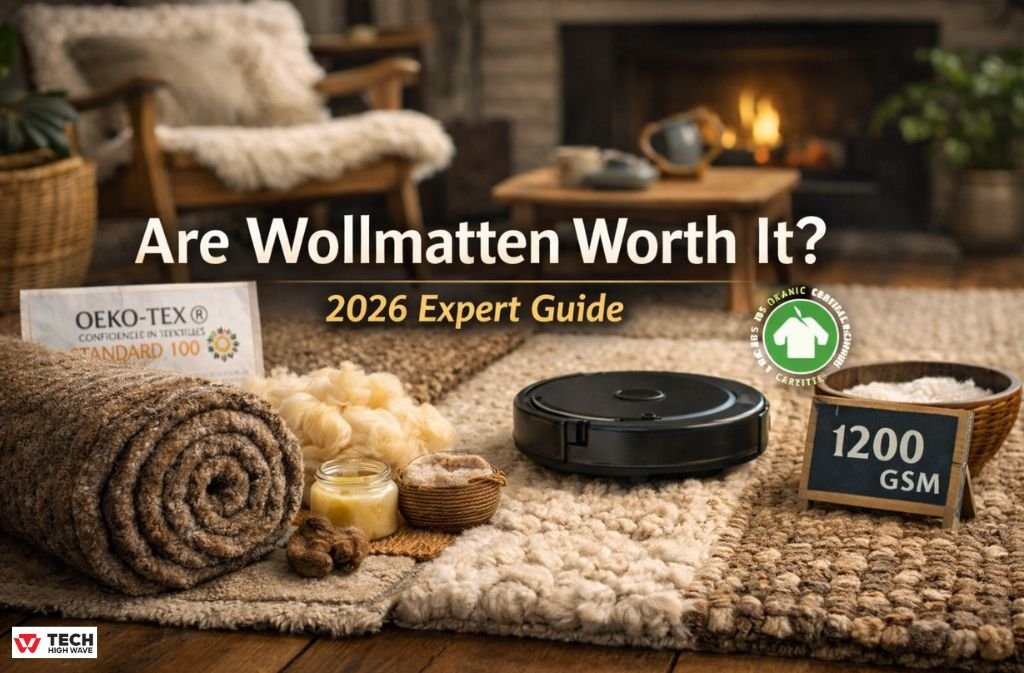
OEKO-TEX Standard 100
- Ensures no harmful chemicals
GOTS (Global Organic Textile Standard)
- Verifies organic sourcing
- Ensures ethical production
👉 These instantly increase trust and product quality.
Common Mistakes That Cost Buyers
❌ Ignoring GSM
Result: Mat wears out too fast
❌ Choosing Style Over Structure
Result: Looks good, performs poorly
❌ Expecting Zero Maintenance
Result: Reduced lifespan
❌ Buying Synthetic Blends
Result: Loses key wool benefits
Wollmatten Maintenance (Realistic Routine)
Weekly
- Light vacuum (no aggressive brushes)
Monthly
- Air out to refresh fibers
Spills
- Blot immediately (don’t rub)
Yearly
- Professional cleaning recommended
2026 Trends: Why Wollmatten Are Surging
- Rise of biophilic design (nature indoors)
- Shift toward non-toxic living spaces
- Demand for long-lasting materials over fast decor
- Growth of microplastic-free homes
👉 Wollmatten sits at the center of all these trends.
FAQs
Q. Are Wollmatten worth the price?
Yes, wollmatten are worth the price because they last significantly longer than synthetic mats, improve indoor air quality by absorbing pollutants, and provide natural insulation for year-round comfort.
Q. What are wollmatten and how are they different from regular mats?
Wollmatten are mats made from natural wool fibers that provide insulation, durability, and improved indoor air quality. Unlike regular synthetic mats, they regulate temperature, resist compression, and are an eco-friendly option made from renewable resources.
Q. Are wollmatten worth the price in 2026?
Yes, wollmatten are worth the price in 2026 because they last significantly longer than synthetic mats, offer natural insulation, and help reduce indoor pollutants. While the upfront cost is higher, their durability and health benefits provide better long-term value.
Q. Do wollmatten help with indoor air quality and allergies?
Wollmatten can improve indoor air quality by absorbing volatile organic compounds (VOCs) like formaldehyde and trapping dust particles. This makes them a good option for people with allergies, as they reduce airborne irritants compared to synthetic flooring.
Q. How do you clean and maintain wollmatten properly?
To maintain wollmatten, vacuum lightly once a week, blot spills immediately with a clean cloth, and air them out regularly. For deep cleaning, professional cleaning is recommended once a year to preserve the wool fibers and extend lifespan.
Q. What should you look for when buying high-quality wollmatten?
When buying Wollmatten, check the wool type (e.g., New Zealand or Merino), GSM (density), weave type (flat-weave or tufted), and certifications like OEKO-TEX or GOTS. These factors determine durability, comfort, and overall quality.
Conclusion
Wollmatten aren’t just another home decor trend—they’re part of a larger shift toward healthier, longer-lasting living spaces.
Key takeaways:
- Wool outperforms synthetic materials in durability and air quality
- GSM and wool type matter more than brand
- Initial shedding and smell are normal—not flaws
- Smart-home compatibility is now a real factor
If you’re investing in flooring that actually improves your space, wollmatten are one of the most practical upgrades in 2026.
Related: Symbolism of Ticks: The Hidden Energy Drains You’re Ignoring (2026 Guide)