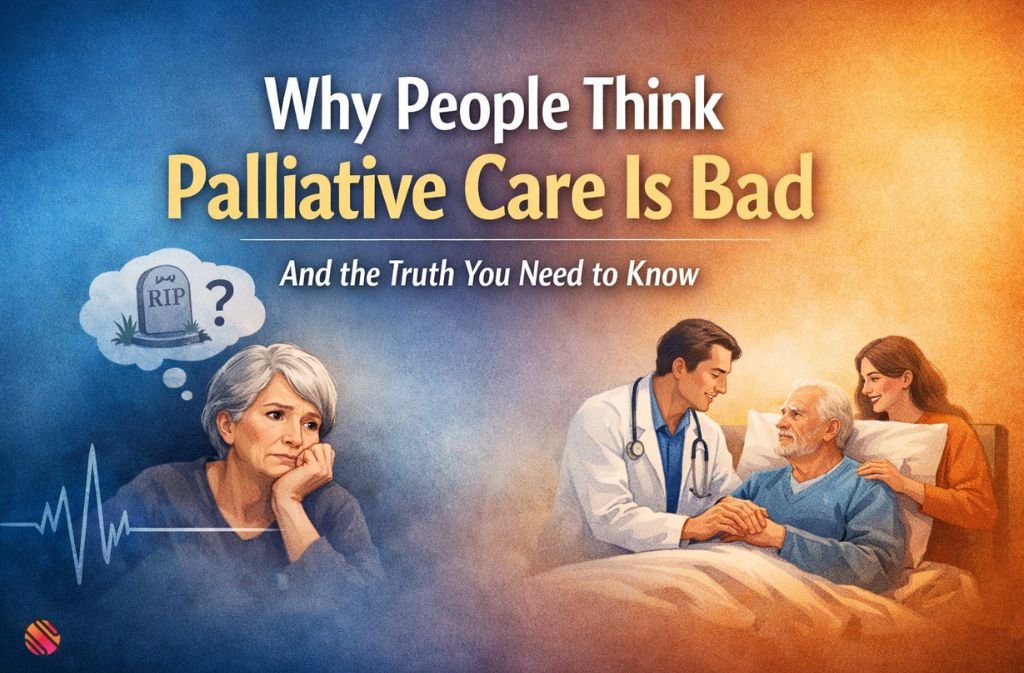
People don’t usually search “why palliative care is bad” because they hate the idea of comfort or support. Most of the time, they’re scared. Or confused. Or reacting to something they heard from a neighbor, a relative, or a half-remembered hospital conversation.
The irony is that palliative care itself isn’t bad at all. What is bad is how poorly it’s explained.
This article isn’t here to sell you anything. It’s here to explain why this belief exists—and why, in most cases, it doesn’t hold up once you understand what palliative care really is.
What Palliative Care Actually Means (Not the Internet Version)
Palliative care is medical care for people dealing with serious illness. That’s it. No secret agenda.
It focuses on helping patients feel better physically and mentally while they’re still receiving treatment for their condition. That treatment might be chemotherapy, heart medication, dialysis, or something else entirely.
One of the biggest problems is that people confuse palliative care with hospice. They are not the same thing.
Hospice care is for end-of-life situations.
Palliative care can start the moment someone is diagnosed.
You don’t stop treatment to receive palliative care. In many cases, you actually cope with treatment better because symptoms are managed more carefully.
Where the “Palliative Care Is Bad” Idea Comes From
A lot of people associate palliative care with death because that’s when they first hear about it. A doctor brings it up late. A hospital social worker mentions it quietly. Families feel blindsided.
So the care gets blamed, even though the timing is the real issue.
In many communities—especially outside large cities—this care is still introduced too late. That alone makes it feel like a last resort rather than a form of support.
Myth #1: Palliative Care Means You’ve Given Up
This belief causes more harm than anything else.
Choosing palliative care doesn’t mean giving up on treatment, life, or hope. It means someone is paying attention to how you’re actually feeling, not just what your lab results say.
Patients receiving palliative care often report less pain, less anxiety, and fewer emergency hospital visits. Some studies even suggest they live longer—not because the disease disappears, but because the body handles stress better.
Hope doesn’t vanish. It changes shape.
Myth #2: It’s Only for People Who Are Dying
This one keeps people from getting help early—when it would matter most.
Palliative care is used by people with cancer, heart disease, lung conditions, kidney disease, Parkinson’s, dementia, and many long-term illnesses. Some receive it for months. Others for years.
The goal isn’t to predict death. The goal is to make daily life more manageable.
Myth #3: It’s Just About Pain Medication
Pain control is part of it, yes. But it’s far from the whole picture.
Palliative care teams also help with fatigue, nausea, shortness of breath, sleep issues, anxiety, depression, and emotional burnout—both for patients and families.
They also spend time explaining things. That alone makes a huge difference. Many people feel less afraid simply because someone finally slows down and listens.
Why Doctors Suggest Palliative Care So Often
Doctors recommend palliative care because it works in practical ways.
Patients tend to end up in the emergency room less often. Families understand care plans better. Decisions feel less rushed. Stress levels drop.
From a medical standpoint, it’s one of the few approaches that consistently improves quality of life without interfering with treatment.
Palliative Care vs Hospice (Why the Confusion Never Ends)
Palliative care:
-
Can start at any stage
-
Works alongside treatment
-
Has no time limit
Hospice care:
-
Is for end-of-life situations
-
Focuses only on comfort
-
Has specific eligibility rules
When people mix these two up, palliative care gets unfairly labeled as “bad.”
The Real Problems Aren’t the Care — They’re the System
Most people who could benefit from palliative care never receive it. Not because it doesn’t help, but because:
-
They don’t know it exists
-
Their doctor mentions it too late
-
Insurance details aren’t explained clearly
-
Services aren’t available nearby
Blaming palliative care for these failures is like blaming a seatbelt because no one told you it was there.
Who Usually Benefits the Most
This care helps people who are:
-
Dealing with serious or chronic illness
-
Struggling with treatment side effects
-
Feeling overwhelmed by medical decisions
-
Supporting a sick family member
It’s not about how sick someone is. It’s about how hard the situation has become.
When It Makes Sense to Ask About Palliative Care
You don’t need to wait for a crisis.
People often ask about it when symptoms start affecting daily life, when treatments feel unbearable, or when emotional stress is taking over everything else.
Early support almost always works better than late intervention.
How Palliative Care Looks in 2025
Things have changed.
Caregiver training can now happen virtually and is often covered by insurance. Families don’t have to figure everything out alone anymore.
Some teams also use wearable devices to monitor symptoms like breathing or heart rate, helping prevent sudden emergencies instead of reacting to them.
This isn’t “giving up.” It’s adapting.
Final Thoughts
The idea that palliative care is bad comes from fear, timing, and misunderstanding—not from the care itself.
It doesn’t replace treatment. It supports the human being going through it.
If serious illness has entered your life, learning about it early can make everything feel a little less overwhelming. And sometimes, that’s exactly what people need.
For more, visit: TechHighWave
| Disclaimer: This article is for informational purposes only and is not a substitute for professional medical advice, diagnosis, or treatment. Always consult a qualified healthcare provider regarding any questions or concerns about palliative care or medical conditions. |