Glutathione gets talked about like it’s a switch you flip.
Take it → glow appears.
Take more → results multiply.
That’s not how it works.
Glutathione is better understood as support—quiet, behind-the-scenes support—for things like oxidative balance, immune response, and overall cellular health. When it works well, you don’t always “feel” it. And when it doesn’t work, it’s usually because something else is working against it.
That’s why people keep searching “what to avoid when taking glutathione.”
Not because they’re curious—but because they’re confused.
This guide is here to clear that up. No hype. No miracle claims. Just the common habits, foods, and assumptions that quietly cancel out glutathione before it ever has a chance to help.
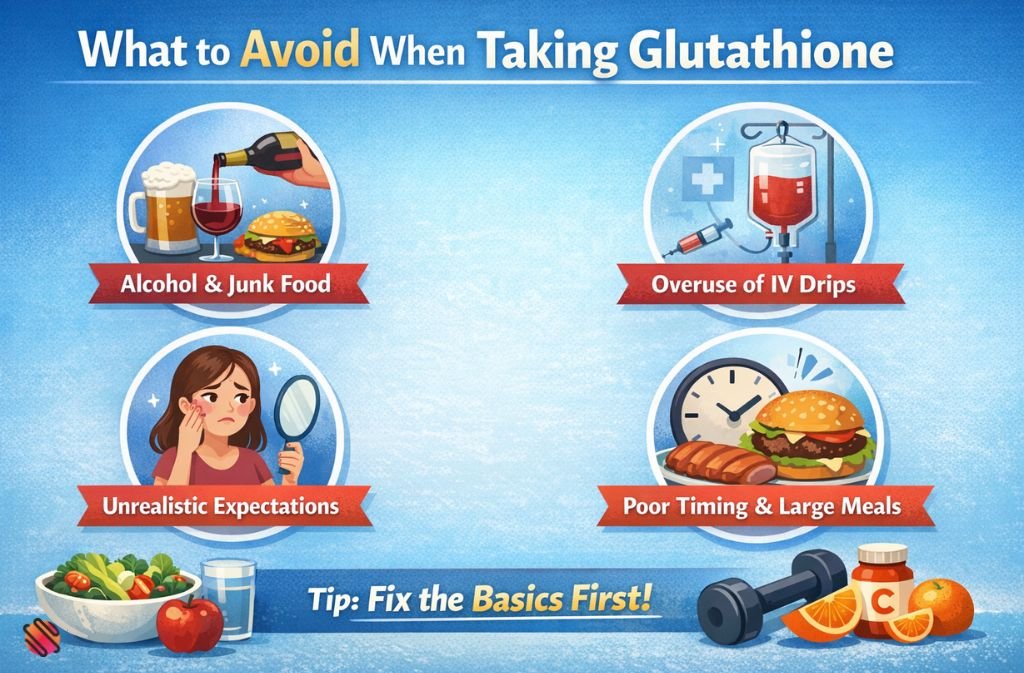
| What Should You Avoid When Taking Glutathione? (Quick Answer)
Avoid alcohol, highly processed foods, poor timing, unrealistic expectations, and unsupervised IV use. These are the most common reasons glutathione supplementation feels ineffective. |
First, a Reality Check (Most Articles Skip This)
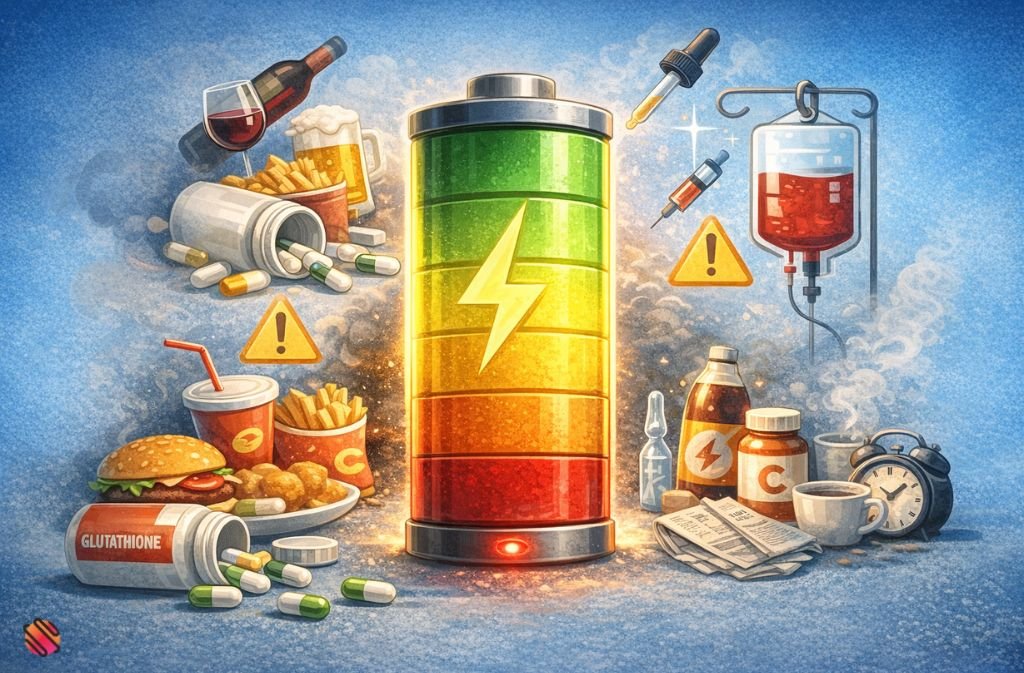
Glutathione isn’t a magic switch. It’s more like a battery.
If your lifestyle keeps draining it, supplements just slow the decline. They don’t reverse it overnight. And definitely not in a week.
That’s why this guide focuses on avoidance and context rather than promises—especially important with supplements, where outcomes vary widely, and no single result applies to everyone.
So when people ask “what to avoid when taking glutathione,” what they’re really asking is:
“Why am I not seeing results?”
Let’s talk about that honestly.
1. Alcohol (Even the “Moderate” Kind)
This is the biggest issue for most people—and also the most ignored.
Your liver relies heavily on glutathione to process alcohol. That means if you’re drinking regularly, glutathione gets pulled into detox duty first. Skin, immunity, and general wellness come second.
Or not at all.
What to avoid:
-
Weekend binge drinking
-
Frequent “social” drinking
-
Using glutathione to offset alcohol habits
You don’t need perfection here. But if alcohol is a weekly thing, glutathione results tend to stall. That’s just how the body prioritizes.
2. Ultra-Processed Foods (They Drain More Than You Think)
This part sneaks up on people.
Processed foods increase oxidative stress. When that happens, your body burns through glutathione faster just to stay balanced. Supplements can’t keep up if the drain never stops.
Foods that cause the most trouble:
-
Sugary snacks and soft drinks
-
Fried fast food
-
Packaged meats
-
Highly refined oils
You don’t need a “clean” diet. You just need fewer foods that actively work against antioxidant balance.
3. Expecting Fast or Guaranteed Skin Whitening
Let’s clear this up gently—but clearly.
Glutathione does not bleach skin. When skin-related changes happen, they’re usually subtle, gradual, and tied to overall skin health rather than color alone.
Some people notice a brighter or more even tone over time. Others notice nothing visible at all.
That’s normal.
Genetics, sun exposure, baseline antioxidant levels, and diet all play a role—and supplements don’t override those factors. Chasing fast cosmetic results is one of the quickest ways to be disappointed.
4. Taking Glutathione at the Wrong Time
Timing matters more than most people realize.
A common mistake is taking glutathione right after a heavy meal—especially one high in protein. Digestion competes for absorption, which means less glutathione actually makes it into circulation.
What usually works better:
-
Take oral glutathione on an empty stomach
-
Morning is fine for most people
-
Be consistent (this matters more than dose)
IV glutathione bypasses digestion, but it comes with different considerations.
5. Overusing IV or Drip Glutathione
More isn’t better here.
Some people assume frequent IV sessions mean faster results. In reality, the body adapts, and benefits often flatten out. Overuse can also lead to headaches, nausea, or simple diminishing returns.
Avoid:
-
Weekly IVs for long stretches without breaks
-
Skipping blood work
-
Treating IV therapy like skincare maintenance
If you have underlying medical conditions or take prescription medications, IV glutathione should only be used with clinician oversight—not as a routine wellness habit.
6. Ignoring Medications and Health Context
This isn’t the exciting part—but it matters.
Certain medications and health conditions affect how glutathione is used or recycled in the body. That doesn’t make supplementation unsafe by default, but it does mean it shouldn’t be treated casually.
If you’re on long-term medications or managing a chronic condition, professional guidance matters more than online advice.
Foods to Be Careful With While Taking Glutathione
This isn’t a “never eat” list. It’s an awareness list.
| Food Type | Why It Matters |
|---|---|
| Sugary foods | Increase oxidative stress |
| Fried foods | Damage cell membranes |
| Alcohol | Rapidly depletes glutathione |
| Processed meats | Add to toxin load |
| Excess caffeine | Can disrupt antioxidant balance |
Think reduction, not restriction.
Capsules vs Liposomal vs IV: Different Rules Apply
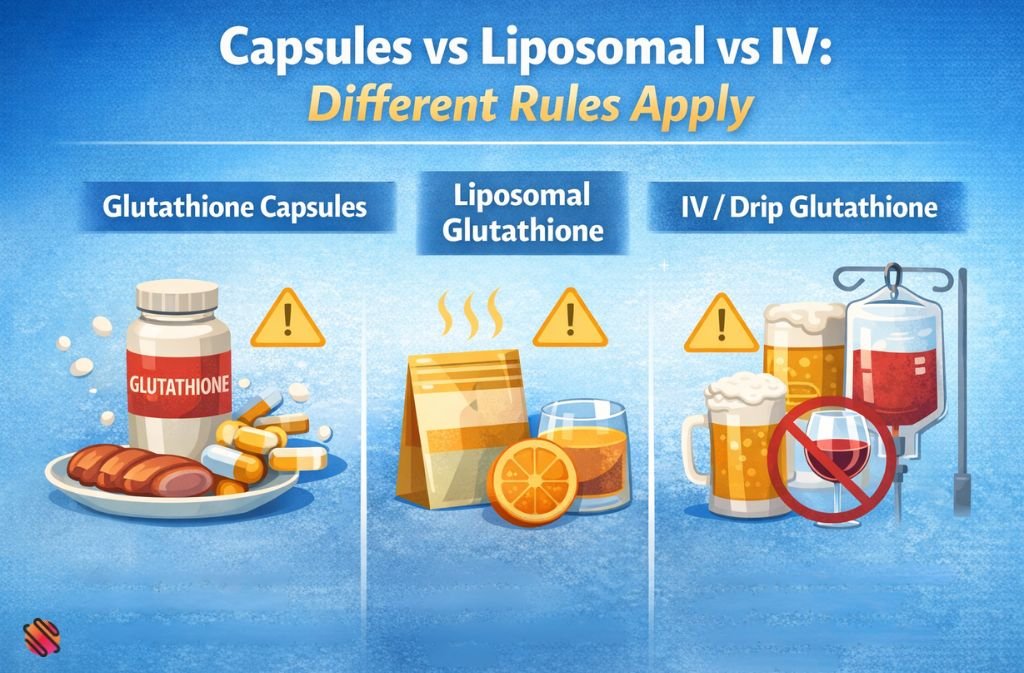
Glutathione Capsules
-
Avoid low-quality brands with fillers
-
Don’t take with heavy meals
-
Expect gradual, not dramatic, changes
Liposomal Glutathione
-
Avoid heat exposure
-
Don’t mix with acidic drinks
-
Store properly (many people don’t)
IV / Drip Glutathione
-
Avoid stacking sessions too close together
-
Don’t combine with alcohol-heavy weeks
-
Use it as a tool, not a routine
Common Mistakes That Quietly Kill Results
Most people make at least one of these:
-
Taking glutathione but eating poorly
-
Drinking regularly while supplementing
-
Expecting visible results in weeks
-
Never taking breaks
-
Ignoring supportive nutrients like vitamin C
Fixing just one or two often changes everything.
A Simple Way to Approach This (Without Overthinking)
You don’t need a protocol. You need alignment.
-
Fewer processed foods
-
Less alcohol
-
Consistent timing
-
Reassessment after 8–12 weeks
That’s enough for most people.
FAQs
Q. Can I drink alcohol while taking glutathione?
Yes, but alcohol significantly reduces glutathione’s effectiveness. The body prioritizes using glutathione to process alcohol in the liver, which leaves less available for antioxidant support, immune function, or skin health. Regular or heavy drinking often cancels out many of the benefits people expect from glutathione supplementation.
Q. What foods interfere with glutathione?
Highly processed foods, sugary snacks, fried foods, and refined oils can interfere with glutathione by increasing oxidative stress. When oxidative stress rises, the body uses up glutathione more quickly just to stay balanced. This can make supplementation feel less effective, especially if these foods are consumed frequently.
Q. Is IV glutathione safe long-term?
IV glutathione is generally considered safe for short-term use when administered properly. Long-term or frequent use, however, should be medically supervised. Individual health conditions, medications, and dosing frequency all affect safety, which is why ongoing IV use is best guided by a qualified healthcare professional.
Q. When is the best time to take glutathione?
Most people absorb oral glutathione best when it’s taken on an empty stomach, often in the morning. Taking it away from heavy meals—especially high-protein meals—may improve absorption. Consistency matters more than the exact hour, so choosing a routine you can maintain is key.
Q. Does vitamin C help glutathione?
Yes. Vitamin C helps recycle glutathione back into its active form after it’s used by the body. This supportive relationship can improve overall antioxidant balance. For many people, taking vitamin C alongside glutathione helps maintain glutathione levels rather than depleting them quickly.
Final Thoughts
Glutathione isn’t fragile—but it is honest.
If your habits work against it, it won’t pretend otherwise. If you support it properly, any benefits tend to show up quietly and steadily, not dramatically.
So when asking what to avoid when taking glutathione, the real answer is this:
avoid the idea that supplements work in isolation.
Fix the basics first. Everything else works better after that.
Also Read: Why People Think Palliative Care Is Bad — And the Truth You Need to Know