TL;DR
|
Online research often begins with a simple question: Is a website trustworthy, legitimate, or technically reliable? Businesses evaluate competitors, researchers investigate online platforms, and everyday internet users frequently examine unfamiliar domains before interacting with them.
Interest in trupeek com reflects this growing need for structured website intelligence. Instead of manually checking several technical resources, domain analysis platforms collect and organize publicly available data about websites into a single report.
These tools help reveal information about domain registration, technical infrastructure, hosting signals, and website performance indicators. For analysts, journalists, cybersecurity observers, and digital researchers, having consolidated access to this data simplifies the process of evaluating online platforms.
The following guide explains what trupeek com is, how the platform works, what features matter most, and how it compares with other website intelligence tools used for online investigation and technical research.
What Is Trupeek Com?
Trupeek com is an online platform designed to analyze and present information about websites and domain names. Tools in this category gather publicly available internet records and organize them into readable reports.
Instead of generating proprietary data internally, the platform aggregates signals from several internet sources and converts them into structured insights that can be interpreted more easily.
These insights commonly include information such as:
- Domain registration records
- Infrastructure and hosting indicators
- Website technology signals
- Technical performance metrics
- DNS and configuration details
The primary purpose of trupeek com is convenience. Information that would normally require several different technical tools can be accessed through a single interface.
For researchers and analysts, the platform often serves as a starting point for investigating unfamiliar websites or verifying online platforms.
How Trupeek Com Works
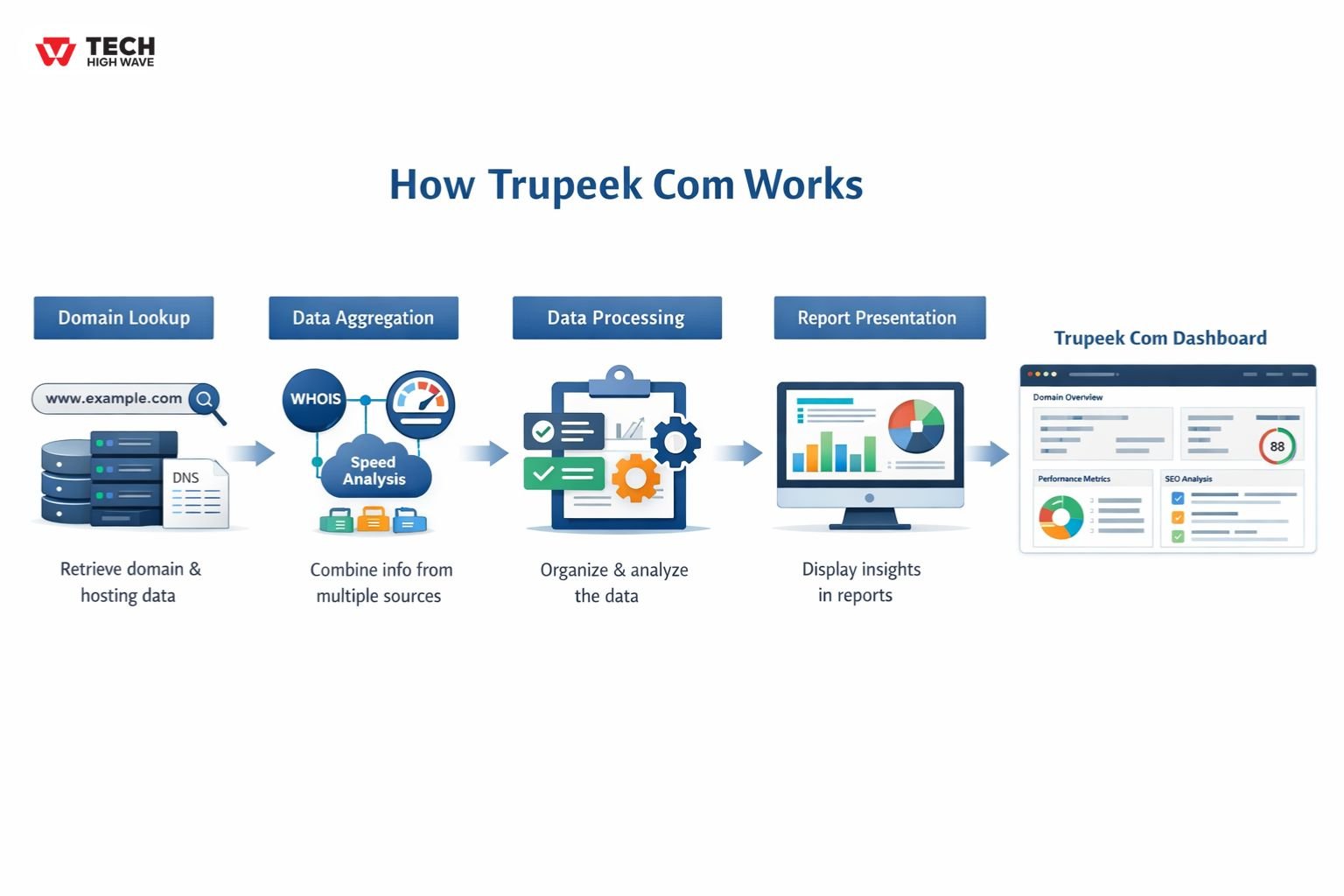
Website intelligence tools follow a relatively structured workflow when generating reports. The process involves retrieving domain data, organizing it into categories, and presenting it in a readable format.
Domain Lookup
The process begins when a domain name is entered into the system. The platform then queries several internet databases associated with that domain.
These datasets may include registration records, DNS configuration data, hosting infrastructure information, and indexing signals.
Data Aggregation
After retrieving the domain information, the platform compiles data from multiple public sources.
Domain registration records often come from services such as Whois, which provide details about domain creation dates, registrars, and administrative records.
Performance indicators may be connected to tools like Google PageSpeed Insights, which analyze loading speed and technical optimization factors.
Combining multiple datasets allows the platform to build a consolidated domain overview.
Data Processing
Raw internet data can be complex and difficult to interpret. The platform therefore organizes information into structured categories and metrics that highlight the most relevant technical signals.
This transformation converts scattered internet records into summaries that can be interpreted more easily by analysts or researchers.
Report Presentation
Once the data has been processed, the platform presents the findings through a dashboard or structured report.
Reports typically include charts, summaries, and categorized indicators that provide a quick overview of the website’s technical structure and domain history.
When publishing this guide online, including a screenshot of the platform dashboard can help readers visualize how the data appears in practice.
Is Trupeek Com Legit or Safe to Use?
Many people researching unfamiliar tools ask whether a platform is legitimate or reliable.
In general, platforms like trupeek com function primarily as data aggregation services. They retrieve publicly available information about websites rather than hosting or operating the analyzed domains themselves.
Several factors typically determine whether a website intelligence tool can be considered reliable:
Transparency of Data Sources
Platforms that clearly reference their data sources are generally easier to evaluate. Domain records obtained through widely recognized services such as Whois databases are typically considered reliable starting points for domain verification.
Accuracy Limitations
Domain intelligence platforms rely on publicly available records. Because those records may not update instantly, some information may occasionally appear outdated.
Contextual Interpretation
Technical indicators alone rarely provide a definitive conclusion about a website’s credibility. Analysts usually combine domain intelligence tools with other verification methods when conducting deeper research.
As a result, tools like trupeek com are best viewed as preliminary research platforms rather than final verification systems.
Platform Comparison: Trupeek Com vs Larger Website Intelligence Tools
People exploring trupeek com often want to understand how it compares with larger analysis platforms.
One widely known competitor is Semrush, which provides advanced marketing and competitive research data.
Other tools in the same ecosystem include Ahrefs, BuiltWith, and SimilarWeb.
These platforms differ significantly in depth and purpose.
| Feature | Trupeek Com | Semrush |
| Domain Lookup | Yes | Yes |
| Website Infrastructure Signals | Yes | Limited |
| Keyword Research | No | Yes |
| Backlink Analysis | No | Yes |
| Marketing Analytics | Limited | Extensive |
| Competitive SEO Data | Limited | Advanced |
In practice, the tools often serve different roles.
Trupeek com focuses on quick domain-level insights and technical signals, while platforms like Semrush and Ahrefs provide deeper marketing analytics used by SEO professionals.
Understanding this difference helps researchers choose the most appropriate tool for a particular investigation.
Also Read: What Is Hyperfixation? Understanding Hyperfiksaatio in ADHD and Autism
Key Features to Look for in Trupeek Com
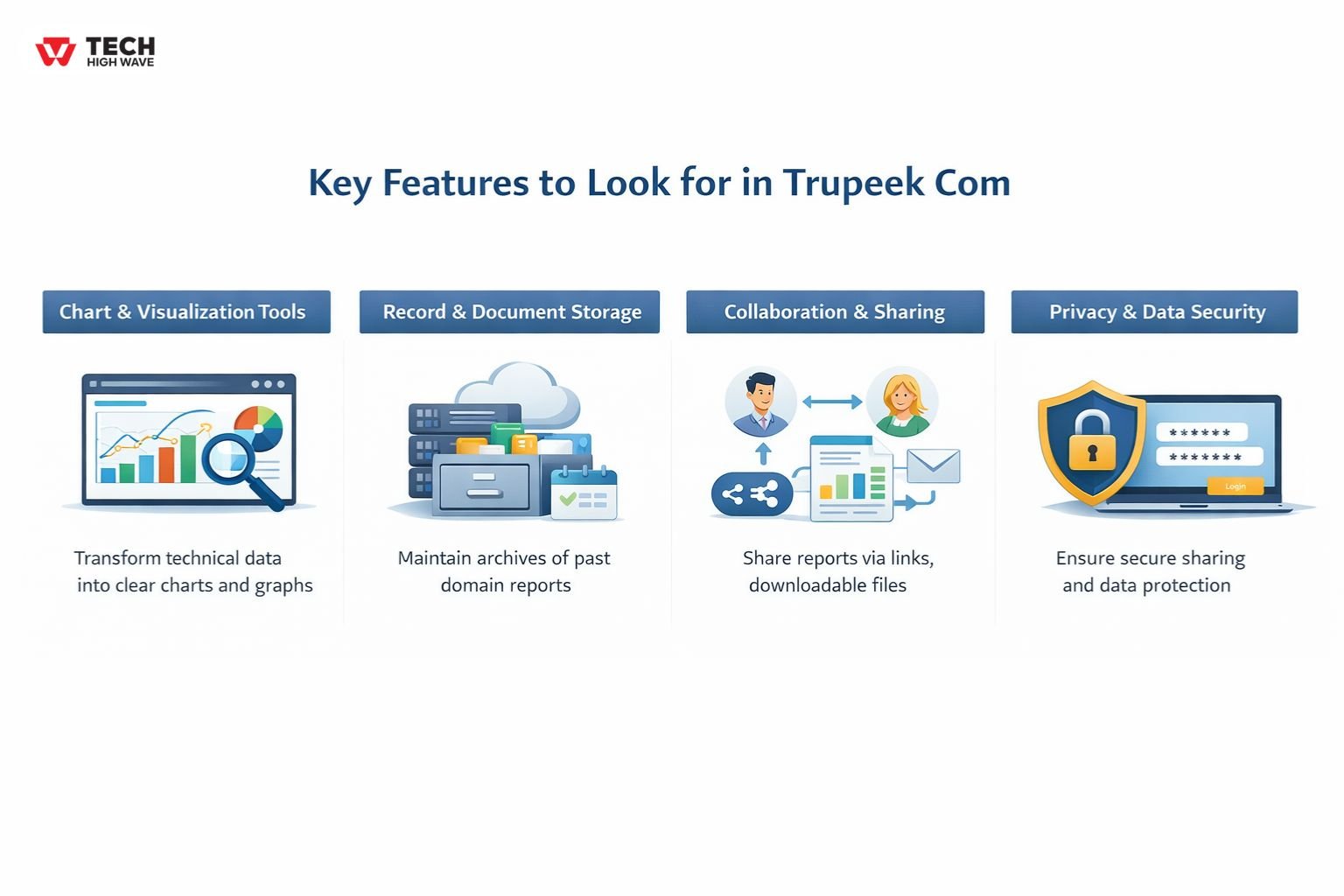
The usefulness of a website intelligence platform depends largely on how effectively it organizes and presents domain data.
Several features determine whether the platform delivers meaningful insights.
Chart & Visualization Tools
Technical information can be difficult to interpret in raw form. Visualization tools transform data into charts or graphs that reveal patterns more clearly.
Performance trends, infrastructure changes, or unusual activity can become easier to identify when displayed visually.
Clear visualizations reduce the need for manual interpretation of complex technical records.
Record & Document Storage
Some platforms maintain archives of previously analyzed domains. This allows researchers to revisit earlier reports without repeating the lookup process.
Historical records can be valuable when tracking changes in domain infrastructure or monitoring websites over time.
Collaboration & Sharing
Website analysis frequently involves teams rather than individuals. Collaboration features allow domain reports to be shared with colleagues or external partners.
Common capabilities include downloadable reports, shareable links, and exportable summaries.
These tools simplify communication during collaborative investigations.
Privacy & Data Security
Researchers analyzing competitors or suspicious websites often value strong data protection practices.
Secure report sharing, encrypted connections, and controlled access to stored reports help ensure that research activities remain confidential.
Best Uses for Trupeek Com
Website intelligence tools support several types of digital research.
Website Verification
Before interacting with an unfamiliar online platform, researchers often examine domain history and technical signals. This helps provide context about how long a website has existed and how its infrastructure is configured.
Competitive Research
Businesses sometimes review competitor websites to understand technical infrastructure, hosting environments, and web technologies used in their digital presence.
Digital Investigations
Journalists and investigators occasionally use domain intelligence platforms when examining online sources. Structured domain reports help simplify early-stage research.
Academic and Industry Studies
Students and industry analysts studying online ecosystems can use domain analysis platforms to gather structured technical information about websites.
How to Analyze a Website Using Trupeek Com
The platform can be used as a quick evaluation tool for investigating a domain.
A typical workflow may follow these steps:
- Enter the domain name into the search field.
- Review domain registration data, including creation date and registrar information.
- Examine infrastructure signals such as hosting indicators and DNS configuration.
- Check performance indicators related to loading speed or optimization signals.
- Compare findings with external tools to confirm accuracy.
This process provides a structured starting point for evaluating unfamiliar websites.
Who Should Use Trupeek Com?
Domain intelligence platforms serve a range of users who conduct regular online research.
Digital Researchers
Individuals studying internet infrastructure or online ecosystems benefit from centralized domain information.
Business Analysts
Companies evaluating partners, vendors, or competitors sometimes perform preliminary website analysis before deeper engagement.
Cybersecurity Observers
Early-stage domain investigation can provide context during broader cybersecurity research.
Students and Educators
Academic research projects exploring digital markets or internet infrastructure may rely on structured domain data.
Who May Not Benefit
Individuals who rarely analyze websites may find limited value in specialized domain intelligence tools.
Trupeek Com Alternatives for Website Analysis
Several other platforms provide website intelligence or domain analysis capabilities.
Some widely recognized tools include:
- Semrush
- Ahrefs
- BuiltWith
- SimilarWeb
Each platform offers different strengths.
BuiltWith focuses heavily on website technology detection, while SimilarWeb specializes in traffic analysis and market intelligence. Semrush and Ahrefs provide broader marketing analytics used in search engine optimization and competitive research.
Selecting the right tool depends on the type of data required.
Common Mistakes to Avoid
Domain intelligence platforms provide useful insights, but incorrect interpretation can lead to misleading conclusions.
Assuming Complete Accuracy
Public datasets occasionally contain outdated information. Domain records may take time to update after infrastructure changes.
Overinterpreting Metrics
Individual technical indicators rarely provide definitive conclusions about a website’s legitimacy or reliability.
Ignoring Context
An unusual technical signal may have a harmless explanation. Interpreting data without context can lead to incorrect assumptions.
Relying on a Single Tool
Cross-checking information through multiple sources improves reliability when evaluating unfamiliar domains.
Future Trends in Trupeek Com (2026 Outlook)
Website intelligence tools continue evolving as the online ecosystem becomes more complex.
Several trends are shaping the future of domain analysis platforms.
Expanded Data Integration
Platforms increasingly combine datasets from multiple internet sources to provide more comprehensive domain intelligence reports.
Improved Visualization Interfaces
User interfaces are becoming more intuitive, allowing complex data to be interpreted through clearer visual dashboards.
Automated Pattern Detection
Some systems are introducing automated pattern recognition that highlights unusual domain behavior or infrastructure changes.
Greater Transparency Standards
As online credibility becomes more important, domain intelligence platforms are emphasizing clearer documentation of their data sources.
FAQs
Q1: What is trupeek com used for?
Trupeek com is used to analyze websites by presenting domain-level information, infrastructure indicators, and technical signals that help researchers understand how a website is structured.
Q2: Is trupeek com similar to Semrush?
Both platforms analyze websites, but their focus differs. Semrush specializes in marketing and SEO analytics, while trupeek com emphasizes quick domain intelligence and technical overview reports.
Q3: Does trupeek com show domain ownership details?
Domain intelligence tools often retrieve registration records from Whois databases, which may include domain creation dates, registrars, and administrative information when publicly available.
Q4: Can trupeek com detect suspicious websites?
Domain intelligence tools may highlight unusual technical indicators, but identifying fraudulent websites requires broader investigation using multiple verification sources.
Q5: Is trupeek com useful for business research?
Businesses sometimes use domain analysis platforms when evaluating competitors, vendors, or unfamiliar online services during early-stage research.
Q6: Does trupeek com provide website performance insights?
Some reports include performance indicators connected to tools such as Google PageSpeed Insights, which measure loading speed and technical optimization signals.
Q7: What are alternatives to trupeek com?
Alternatives include platforms such as Semrush, Ahrefs, BuiltWith, and SimilarWeb, each offering different forms of website intelligence, marketing analytics, or traffic analysis.
Conclusion
This guide explains how trupeek com functions within the broader ecosystem of website intelligence tools and how it can support structured research, domain verification, and online platform evaluation.
Also Check: Hunan FN-Link Technology Limited: Why It Appears on WiFi Networks What It Really Means