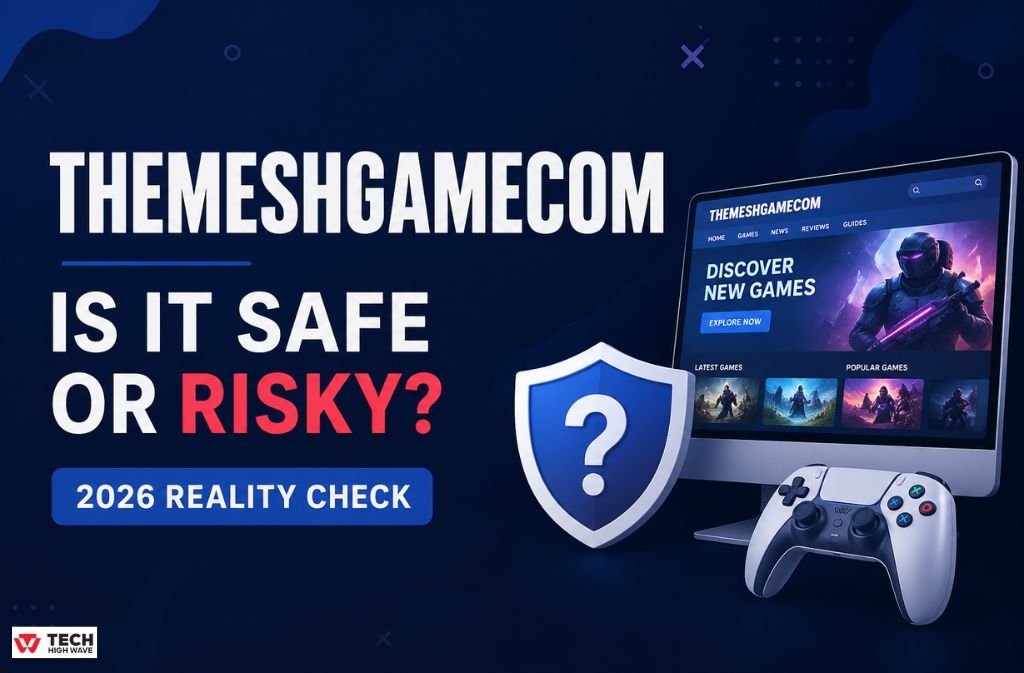
I went down the rabbit hole—checking domain patterns, digging through old discussions, and comparing what actually exists versus what’s being claimed—because the search results for the meshgamecom don’t give clear answers.
Here’s what most pages miss.
You’re probably not even looking for this website. You’re looking for a lost game.
That game is The Mesh, developed by Creatiu Lab—a minimalist puzzle title that disappeared from app stores years ago. And now, in 2026, sites like the meshgamecom are quietly appearing where that demand still exists.
This article gives you something different:
- A clear explanation of what the meshgamecom actually is
- The critical difference between the real game and the site
- A realistic safety verdict based on how these sites operate today
If you’ve been unsure whether to trust it, this will settle it.
What Is TheMeshGamecom?
The meshgamecom is a low-trust, content-driven gaming website that targets users searching for online or abandoned games, but it does not function as a verified gaming platform or official distributor.
At first glance, it looks like a place to discover or download games. The layout, page titles, and keywords all suggest that. But when you look closer, it behaves very differently.
Instead of acting like a real gaming platform, it works more like a traffic hub—designed to attract users searching for specific games and guide them through pages that don’t clearly lead to verified sources.
What it appears to be:
- A gaming download platform
- A hub for old or rare games
- A resource for reliving past titles
What it actually is:
- A content-based site targeting gaming keywords
- Likely monetized through ads or redirects
- Not connected to any official game publisher
👉 Bottom line: It looks functional—but lacks real ownership and trust.
The Core Confusion: “The Mesh” Game vs TheMeshGamecom
This is where most of the confusion comes from—and where the real SEO opportunity exists.
“The Mesh” was a well-known iOS puzzle game developed by Creatiu Lab, featured by Apple, and later removed from official stores.
Over time, the developer became inactive, and the game effectively disappeared. That turned it into what people now call “lost mobile game content.”
In 2026, people are still searching for it.
They want:
- A way to download it
- A version to play again
- A safe source to access it
That’s where sites like the meshgamecom step in.
They don’t create the demand—but they capture it.
The mismatch looks like this:
| What Users Want | What They Expect | What They Find |
|---|---|---|
| The Mesh game | Official or safe download | Unclear content site |
| Trusted source | Verified platform | Low-authority pages |
| Nostalgic gameplay | Working version | No confirmed access |
👉 Important insight:
There is no verified official download of The Mesh in 2026. Any site claiming otherwise should be treated carefully.
Domain Reality Check (Why Timing Matters)
Sites like the meshgamecom often appear after the demand already exists, not during the lifecycle of the original product.
That matters.
- The original game launched years ago
- The developer is no longer actively promoting it
- New domains claiming access show up much later
👉 This creates a disconnect.
A legitimate source would have continuity.
These sites appear after the opportunity.
What Is a “Review-Skin” Site? (2026 Context)
A review-skin site is designed to look like a review or download page but is primarily built to rank in search engines and capture traffic.
Instead of offering real value, it mimics structure:
- Game descriptions
- “Download” buttons
- Feature lists
But without real verification behind them.
Common signs include:
- Generic or templated content
- No identifiable author or publisher
- Multiple similar pages targeting slight keyword variations
- Calls to action without clear sources
👉 It’s less about helping you—and more about positioning itself between you and what you’re searching for.
Visual Trust Markers: Real vs Low-Trust Sites
This is one of the easiest ways to tell what you’re dealing with.
What a real platform shows:
- Official branding (Steam, App Store, etc.)
- Clear developer attribution
- Verified file sources
- Transparent download process
What low-trust sites often show:
- “Download Now” buttons styled like system popups
- No clear file origin
- Multiple redirects before reaching anything
- No developer or publisher information
| Feature | Trusted Platform | Low-Trust Site |
|---|---|---|
| Ownership | Clear | Unclear |
| Downloads | Verified | Unknown |
| UI Design | Consistent | Mimics system alerts |
| Transparency | High | Low |
👉 Real platforms show who they are.
These sites focus on how they look.
The “Vibe Check” (Human-Level Evaluation)
To be fair, not every simple site is dangerous.
But in the gaming space, patterns matter.
When a site lacks identity, transparency, and consistency, it usually points in one direction: monetization over trust.
Subtle signals people notice:
- Stock images used as “team members.”
- Contact pages that don’t actually work
- Repetitive content across multiple URLs
- No real user interaction or community
These aren’t proof of harm—but together, they paint a picture.
Technical Red Flags (2026 Reality)
Modern low-trust sites don’t rely on obvious scams. They rely on subtle interaction traps.
Key risks to watch:
- Browser notification prompts
(“Click allow to continue”) Often leads to ad spam systems - Redirect chains
Multiple clicks before reaching a destination - System-style buttons
Designed to look like real OS download prompts
👉 These techniques are widely used in 2026 to guide users into unintended actions.
The Bigger Trend: Shadow Gaming Sites
The meshgamecom is not an isolated case.
It fits into a growing category of shadow sites—websites built quickly to target specific search queries without offering real depth or ownership.
Why these sites exist:
- Low competition keywords
- High curiosity topics (like lost games)
- Easy traffic through SEO
How they operate:
- Publish keyword-focused pages
- Capture search traffic
- Monetize through ads or redirects
👉 They don’t need to be useful—they just need to rank.
Safer Alternatives (What Actually Works)
If your goal is to find old or unavailable games, there are better options.
Trusted platforms:
These platforms focus on preservation, not traffic capture.
They:
- Provide transparency
- Avoid misleading interfaces
- Focus on accessibility rather than clicks
👉 They may not have everything—but what they do offer is real.