TL;DR (What This Guide Covers)
|
Gaming didn’t suddenly get more complex — it got more intelligent.
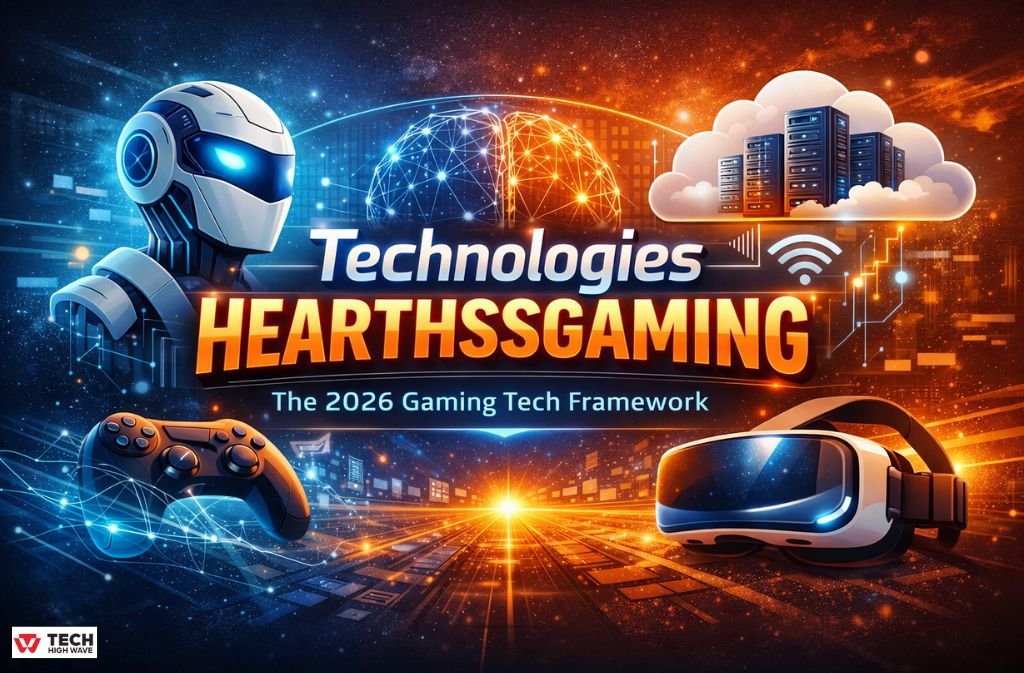
Behind every smooth match, instant respawn, or eerily well-timed difficulty adjustment is a stack of technologies working in real time to read you, respond to you, and keep you playing. That’s why technologies HearthssGaming has become a breakout search term in 2026. Players aren’t just asking what games look like anymore. They’re asking how they work.
Today’s gaming experience is shaped by AI agents, cloud-native infrastructure, neural networks, and personalization systems that adapt faster than players consciously notice. The result is a modern gaming technology ecosystem that feels seamless when it works — and instantly frustrating when it doesn’t.
This guide breaks down the HearthssGaming framework, explains the technologies underneath it, and connects them to the biggest conversations happening in gaming right now: latency, digital ownership, security, accessibility, and trust.
No hype. No buzzword soup. Just a clear, opinionated explanation of how gaming actually works in 2026.
The Big 3 of Gaming Technology in 2026
1. AI Agents (Not Just NPCs)
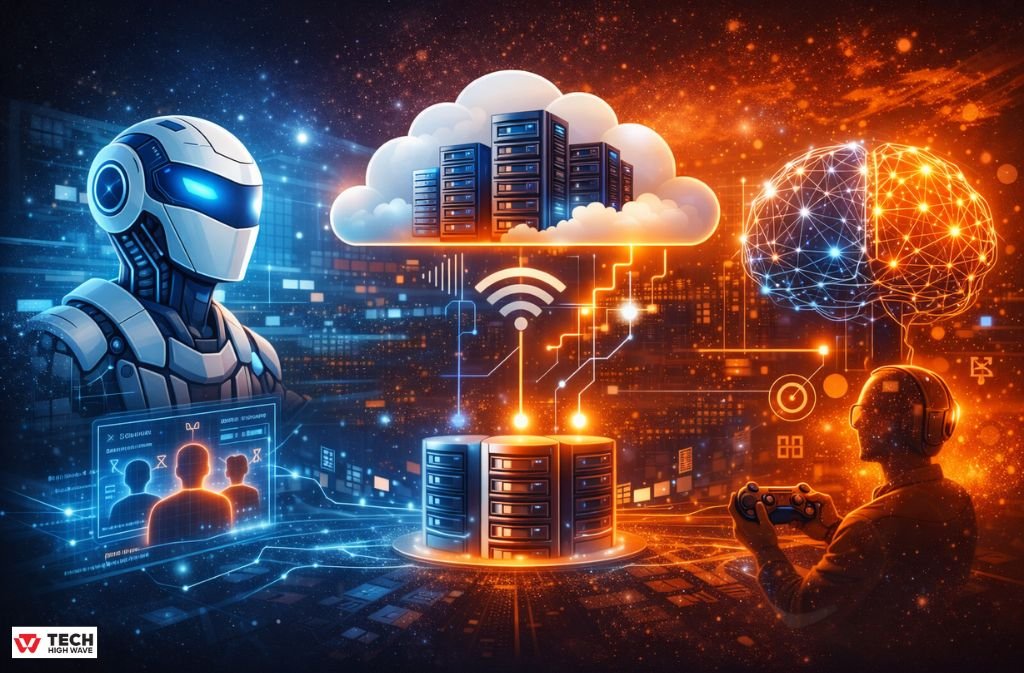
Modern games use AI agents to manage difficulty, pacing, matchmaking, content drops, and player retention — not just enemy behavior.
2. Cloud-Edge Hybrid Infrastructure
Games now split processing between cloud servers and local devices to meet strict latency budgets.
3. Neural Network Personalization
Neural networks analyze playstyle, reaction patterns, and decision timing to personalize experiences in real time.
These three pillars define technologies HearthssGaming.
The HearthssGaming Framework: Decoding the 2026 Cloud-Edge Standard
HearthssGaming isn’t a single engine or company. It’s a player-centric gaming technology framework built around adaptability.
At a high level, it combines:
-
AI-driven gaming platforms
-
Cloud-native gaming infrastructure
-
Edge computing for latency control
-
Neural network-powered DSPs (for input, haptics, and feedback)
-
Generative LiveOps for ongoing content evolution
The goal is simple:
Deliver high-quality gaming experiences without forcing players to own high-end hardware.
Technologies HearthssGaming Explained in One Flow
Detect → Adapt → Respond → Reward
-
Detect: Player behavior, latency, device limits
-
Adapt: AI tunes difficulty, pacing, visuals
-
Respond: Cloud-edge systems rebalance workloads
-
Reward: Dopamine micro-loops reinforce engagement
This loop runs continuously — often dozens of times per minute.
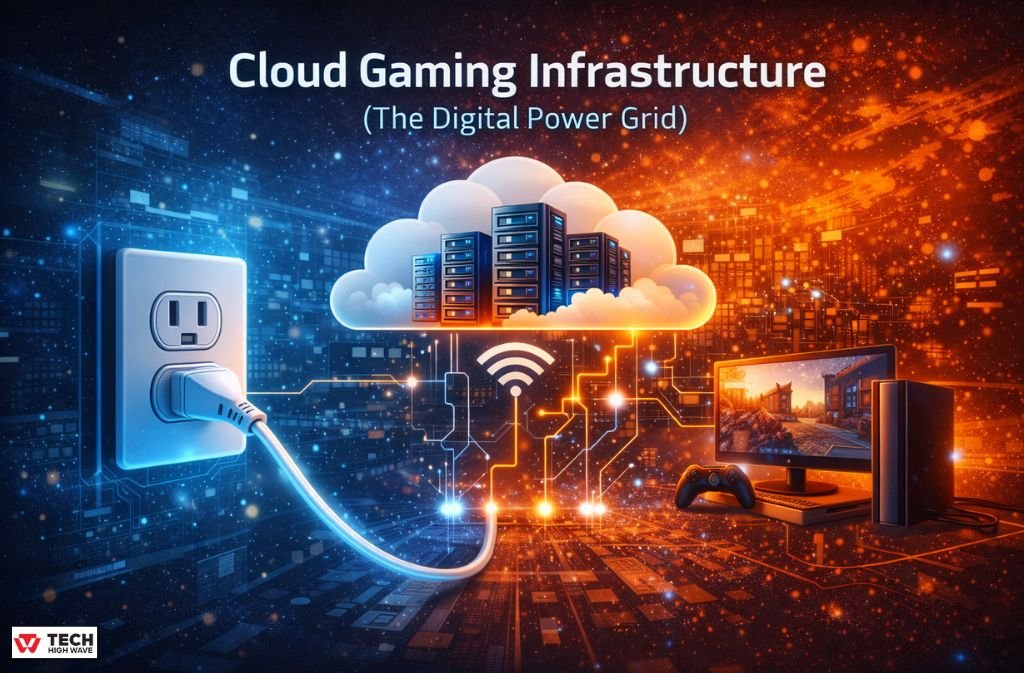
Cloud Gaming Infrastructure (The Digital Power Grid)
Cloud gaming works like a digital power grid.
You don’t need a generator at home anymore.
You just need a reliable socket.
Instead of relying on a powerful local GPU, HearthssGaming platforms stream processing from cloud servers, while edge nodes handle time-critical tasks like input response and physics.
Why this matters:
-
Lower hardware barriers
-
Instant updates
-
Consistent experiences across devices
The real constraint in 2026 isn’t graphics — it’s latency budgets.
Competitive games are now designed around sub-30ms response windows.
AI-Driven Gameplay and Dopamine Micro-Loops
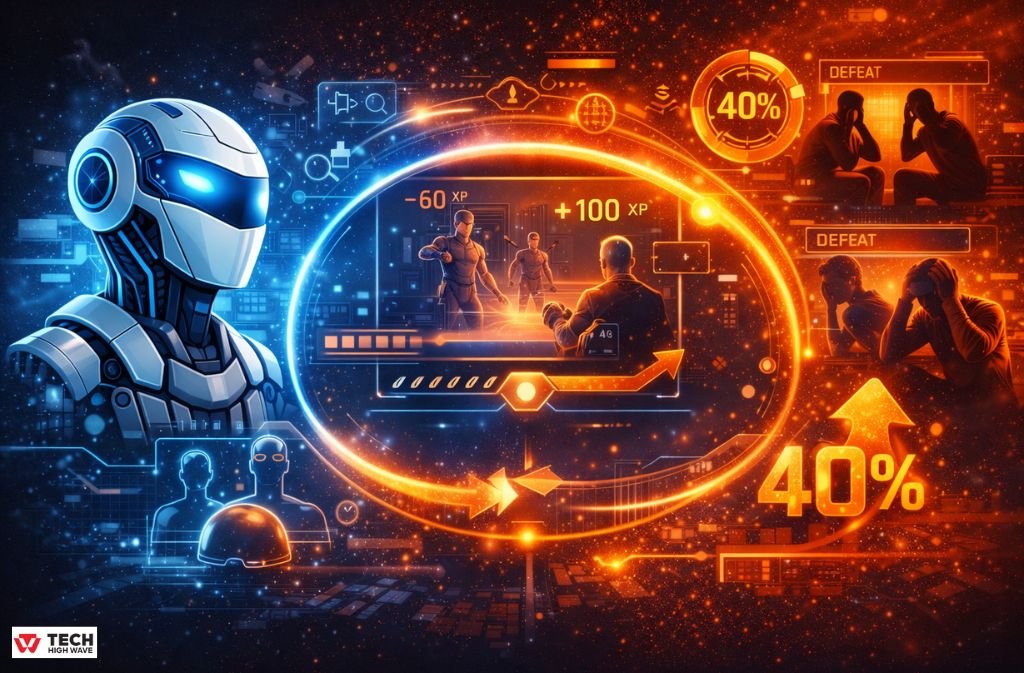
From a developer’s perspective, the 40-Second Rule isn’t theory — it’s survival.
In 2026, internal telemetry shows that if a game fails to trigger a dopamine micro-loop within the first minute, session abandonment increases by roughly 40%.
That’s why modern games use:
-
AI pre-fetching
-
DirectStorage 2.0
-
Adaptive onboarding flows
Ever notice how a game eases up right after you lose twice in a row?
That’s not mercy. That’s AI reading your behavior.
Real-Time Rendering, Ray Tracing, and Information Design
Ray tracing isn’t just visual candy.
Its real value is information.
Shadows teach players where threats might emerge.
Reflections reveal movement before sound cues do.
In HearthssGaming systems, rendering is treated as gameplay data — not decoration.
Hardware-Bound vs Hearthss-Driven Gaming
| Aspect | Hardware-Bound Gaming | Hearthss-Driven Gaming |
|---|---|---|
| Performance | Device-limited | Cloud-edge balanced |
| AI Usage | Static | Adaptive, real time |
| Personalization | Manual settings | Neural networks |
| Accessibility | Optional | Built-in |
| Security | Account-based | Behavioral AI |
Digital Ownership & Asset Interoperability
One of the biggest 2026 shifts: players want ownership.
HearthssGaming technologies increasingly support:
-
Portable cosmetic assets
-
Cross-game identities
-
Interoperable inventories
This doesn’t mean every item is tradable — it means players aren’t locked into dead ecosystems anymore.
HearthssGaming Security: Zero Trust for Players
MFA alone is outdated.
Modern platforms use Zero Trust Gaming Security, which assumes breaches will happen and focuses on detection.
Behavioral AI analyzes:
-
Movement patterns
-
Aim cadence
-
Input timing
These in-game biometrics flag hijacking attempts faster than passwords ever could.
Accessibility 2.0: Cognitive-Friendly Modes
Accessibility in 2026 goes beyond mobility.
Cognitive-friendly modes dynamically adjust:
-
Information density
-
UI complexity
-
Decision timing
Games now tune complexity based on focus levels, not just settings menus.
Green Gaming & Digital Carbon Footprints
Cloud efficiency matters.
HearthssGaming platforms reduce emissions by:
-
Offloading heavy computation to optimized data centers
-
Scaling resources dynamically
-
Reducing hardware churn
Green gaming isn’t marketing anymore — it’s infrastructure math.
Real Games Using These Technologies
-
Roguelikes using AI difficulty smoothing
-
Cloud-first titles for low-spec regions
-
Stealth games leveraging ray-traced visibility
-
VR titles optimizing comfort via neural DSPs
These aren’t experiments — they’re becoming standard.
Also Check: Neptune Navigation Software in 2026: A Legacy Planning Tool That Still Has a Place at Sea
Performance vs Immersion: The Real Trade-Off
More realism always costs something.
-
Higher fidelity = more latency risk
-
More AI = more data collection
-
More personalization = less predictability
The best HearthssGaming systems manage these tensions transparently.
Common Mistakes Platforms Still Make
-
Over-personalizing until player agency disappears
-
Hiding AI decisions
-
Treating accessibility as a toggle, not a system
-
Ignoring trust signals
Players notice. And they leave.
What Changes After 2026?
-
Tighter AI regulation
-
Edge computing expansion
-
Player-owned data models
-
Creator-first engines
HearthssGaming is evolving — not stabilizing.
FAQ
Q. What is technologies HearthssGaming?
Technologies HearthssGaming is a modern gaming technology framework that combines artificial intelligence (AI), cloud-edge hybrid infrastructure, and neural personalization systems to create adaptive, real-time gaming experiences that respond to player behavior, device capability, and network conditions.
Q. Is HearthssGaming cloud-only?
No. HearthssGaming is not cloud-only. It uses a hybrid cloud-edge model, where latency-sensitive tasks run locally or at the network edge, while heavy processing like AI computation and rendering is handled in the cloud for better performance and scalability.
Q. What is the 40-second rule in gaming?
The 40-second rule in gaming states that players must experience meaningful interaction, feedback, or reward within the first 40 seconds of gameplay. In 2026, games that fail to do this see significantly higher session abandonment rates, especially in online and mobile gaming.
Q. Are there privacy risks with adaptive AI in gaming?
Yes. Adaptive AI in gaming can introduce privacy risks if player data is not handled transparently. Modern HearthssGaming systems mitigate this by using behavior-based security, anonymized telemetry, and Zero Trust models that focus on detecting abnormal activity rather than collecting personal data.
Q. Does HearthssGaming replace traditional consoles?
No. HearthssGaming does not replace traditional consoles. Instead, it changes how consoles are used by shifting heavy processing to cloud-edge systems, enabling faster load times, cross-platform play, and AI-driven personalization without eliminating dedicated gaming hardware.
Q. What technologies power HearthssGaming platforms?
HearthssGaming platforms are powered by AI agents, cloud-native gaming infrastructure, edge computing, real-time rendering, neural networks, and generative LiveOps systems that continuously update and personalize gameplay.
Q. Why is HearthssGaming important in 2026?
HearthssGaming is important in 2026 because it addresses key player demands: lower hardware requirements, faster performance, personalized experiences, stronger security, and greater accessibility, all while supporting the rapidly evolving gaming industry.
Conclusion
Technologies HearthssGaming represents a shift from hardware obsession to player-centric design.
AI agents, cloud-edge hybrids, and neural personalization are redefining how games respond, adapt, and earn trust. The platforms that win aren’t the loudest — they’re the ones that respect players, manage latency intelligently, and stay transparent about how their systems work.
If you understand the technology, you understand the future of gaming.
Related: Tech Trends GFXProjectality: Where Visual Systems Are Quietly Changing Digital Work