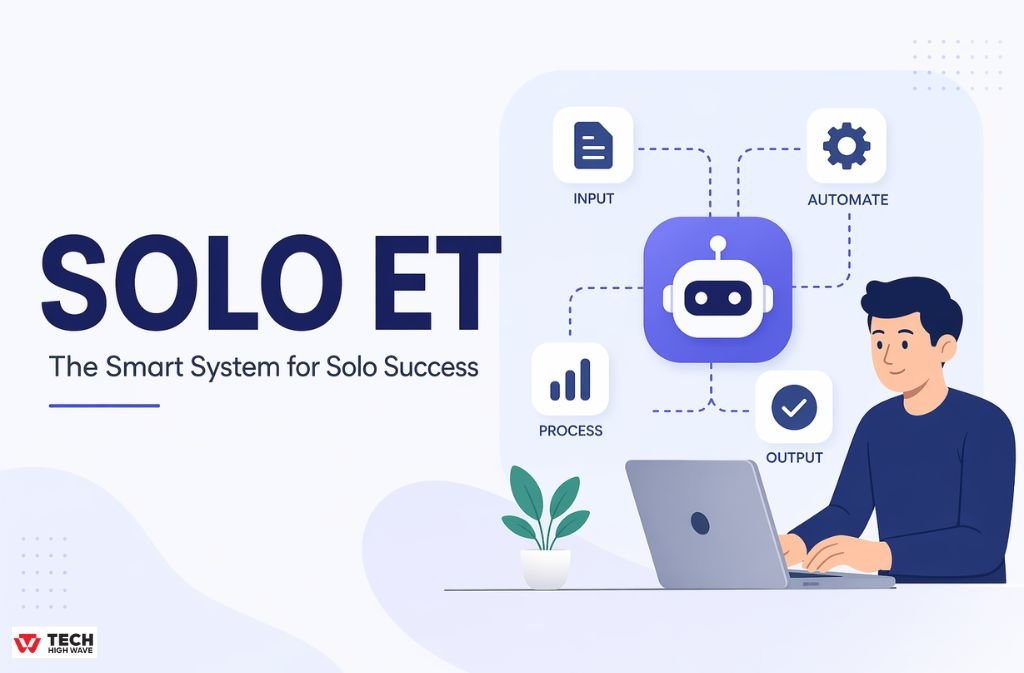
Solo ET is an emerging 2026 concept that refers to a lightweight, often AI-powered system designed for solo operators to automate workflows, manage tasks, and run a business with minimal overhead. Depending on context, it can describe a micro-SaaS setup, a modular automation stack, or a flexible naming pattern used across tech, music, and branding.
Search results for solo et are inconsistent. Some pages suggest a digital platform, others point toward music or branding, while a few appear unrelated. This lack of clarity creates friction for users trying to understand what the term actually represents.
The reason is simple: solo et is still an emerging keyword with fragmented intent. It hasn’t settled into a single meaning yet, which creates both confusion and opportunity.
This guide breaks it down in a clear, structured way. It explains what solo et means, where it is used, and how it can be applied in real-world scenarios—especially in the context of automation, AI workflows, and solo business systems.
What Does “Solo ET” Actually Mean?
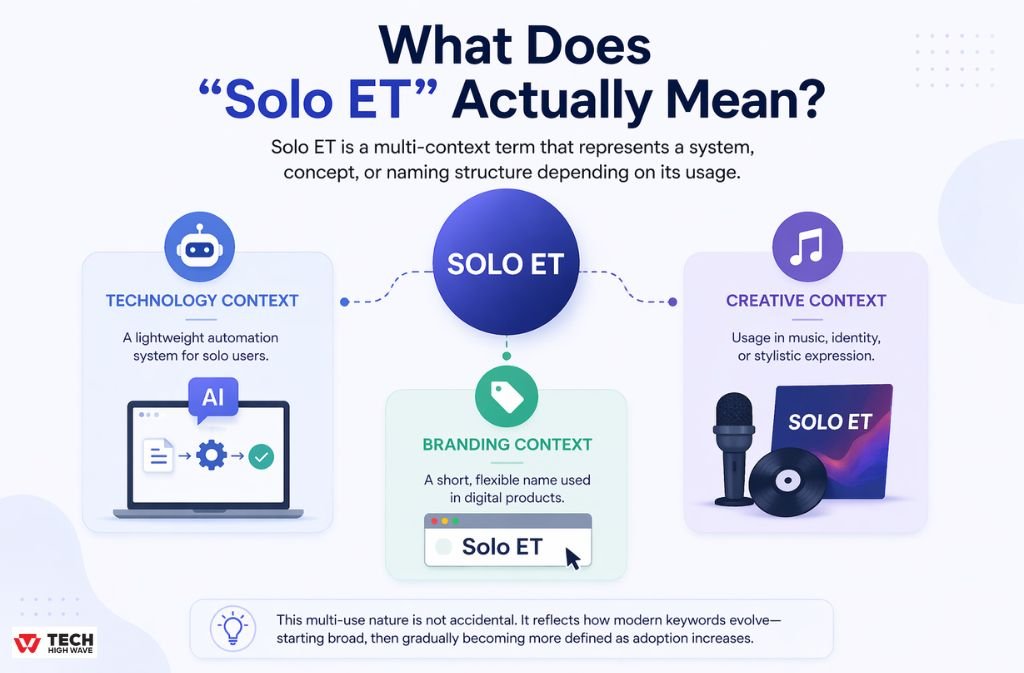
Solo ET is a multi-context term that represents a system, concept, or naming structure depending on its usage.
It generally appears in three primary contexts:
- Technology context: a lightweight automation system for solo users
- Branding context: a short, flexible name used in digital products
- Creative context: usage in music, identity, or stylistic expression
This multi-use nature is not accidental. It reflects how modern keywords evolve—starting broad, then gradually becoming more defined as adoption increases.
The Solo ET Framework (Simple Explanation)
Solo ET can be understood using a three-layer framework: surface meaning, functional role, and contextual use.
| Layer | What It Represents | Example |
|---|---|---|
| Surface | The keyword itself | “solo et” search |
| Functional | A system or tool | automation workflow |
| Contextual | Industry usage | SaaS, music, branding |
This model helps clarify intent quickly. Instead of asking what the term means universally, it becomes easier to identify how it is being used in a specific situation.
What a Solo ET System Looks Like in Practice
A Solo ET system is not a single tool—it is a connected workflow made up of multiple lightweight technologies.
These systems typically include:
- An AI decision layer
- An automation engine
- A simple interface for control
Common tools used in such setups include Lindy AI for AI-driven decisions, Zapier for execution, Notion for organization, and Gemini CLI for custom logic.
Basic Workflow Structure
| Step | Action |
|---|---|
| Input | User action (form, request) |
| Processing | AI interprets task |
| Execution | Automation runs workflow |
| Output | Result delivered |
This structure allows a single operator to manage processes that would traditionally require multiple tools or team members.
What Using a Solo ET System Feels Like
Solo ET-style systems prioritize speed and flexibility, but they are not fully polished.
Once configured, workflows can operate with minimal manual involvement. Tasks such as onboarding, notifications, and data tracking run automatically in the background.
However, there are trade-offs:
- Setup is relatively fast, but not always seamless
- Automation can occasionally break and require debugging
- Integration between tools is not always perfect
This creates a balance between efficiency and control. Users gain flexibility but must manage occasional technical friction.
How to Use the Solo ET Concept
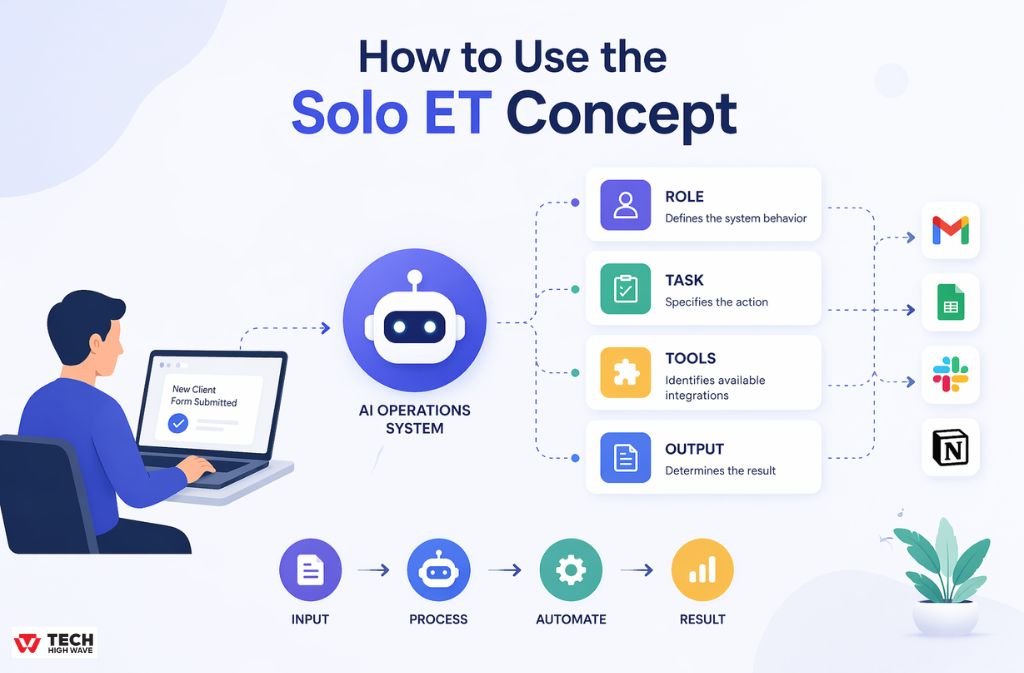
It becomes practical when treated as a system design approach rather than a single product.
A simple way to apply it is through structured workflow prompts that guide automation systems.
Core Structure
- Role: defines the system behavior
- Task: specifies the action
- Tools: identifies available integrations
- Output: determines the result
Example
When a new client submits a form, store the data, send a welcome email, and notify the user.
This type of instruction can trigger automated workflows across multiple tools, reducing manual work.
Solo ET vs Traditional Tools
Solo ET systems differ from traditional SaaS platforms by focusing on modular automation instead of fixed features.
| Feature | Solo ET Systems | Traditional SaaS |
|---|---|---|
| Structure | Modular | Fixed |
| Flexibility | High | Limited |
| Setup | Fast | Slower |
| Maintenance | User-managed | Platform-managed |
| Cost | Often lower | Subscription-heavy |
This comparison highlights why this approach appeals to independent operators—it offers control without requiring large infrastructure.
How Solo ET Can Generate Value
The primary benefit of Solo ET is increased output without proportional increases in effort.
Common applications include:
- Automating client onboarding and communication
- Managing workflows without manual intervention
- Scaling freelance or consulting operations
- Creating repeatable systems that can be reused or sold
A typical outcome is improved efficiency, where routine tasks are handled automatically, allowing more focus on high-value work.
Limitations of Solo ET Systems
Despite its advantages, it is not a complete replacement for traditional platforms.
Key limitations include:
- No standardized definition or ecosystem
- Potential complexity in managing multiple tools
- Occasional workflow failures requiring troubleshooting
- Learning curve for beginners
These limitations are important to consider when deciding whether to adopt this approach.
The Future of Solo ET
It is likely to evolve into a more clearly defined category as adoption increases.
Potential developments include:
- Recognition as a micro-SaaS or automation category
- Integration into AI-driven workflow platforms
- Increased use as a branding pattern for digital tools
As systems become more automated and modular, the concept behind Solo ET is expected to become more mainstream.
FAQs
Q. What is Solo ET in simple terms?
Solo ET is a lightweight system where a single person uses AI tools and automation workflows to manage tasks and run a business efficiently. It is commonly used by solopreneurs to reduce manual work and increase productivity in 2026.
Q. Is Solo ET a software or a concept?
Solo ET is primarily a concept, not a single software. It describes a system of connected tools and automated workflows, although the term may also be used as a product or platform name in some cases.
Q. Why is Solo ET trending in 2026?
Solo ET is trending due to the rise of AI automation, no-code tools, and solo business models. More individuals are running businesses independently, increasing demand for simple, automated workflow systems.
Q. Can beginners use Solo ET systems?
Yes, beginners can use Solo ET systems, especially with no-code tools. However, basic knowledge of automation workflows and AI tools can make setup easier and more effective.
Q. Is Solo ET related to “sol et soleil”?
Solo ET and “sol et soleil” are not the same, although they share linguistic similarities. “Sol et soleil” is a French phrase meaning “earth and sun,” while Solo ET is used in technology and automation contexts.
Q. How does Solo ET help scale a business?
It helps scale a business by automating repetitive tasks such as onboarding, communication, and data management. This allows one person to handle more work efficiently without increasing the workload.
Q. Is Solo ET a SaaS platform?
It is not a specific SaaS platform but can function like one. It often refers to a modular system built using multiple SaaS tools combined into a single automated workflow.
Q. What tools are commonly used in a Solo ET system?
A system typically uses AI tools, automation platforms, and workflow software such as Zapier, Notion, and AI agents like Lindy AI to automate tasks and processes.
Conclusion
Solo et is not a single product or definition. It represents a broader shift toward lightweight, automated systems designed for individual operators.
The key takeaway is straightforward:
- It combines automation, AI, and modular tools
- It enables solo users to manage complex workflows
- It offers flexibility at the cost of some technical involvement
As the keyword matures, its meaning will likely become more precise. For now, understanding how to use the concept provides the greatest advantage.
For More Visit: TechHighWave