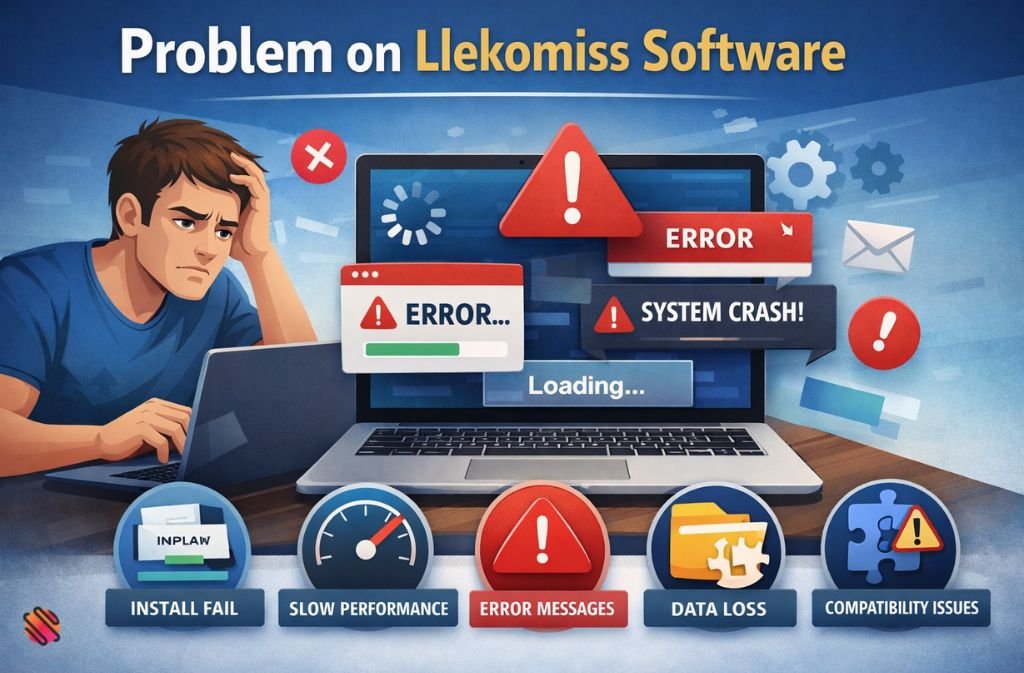
Reports of a problem on Llekomiss software have steadily increased, with users describing installation failures, slow performance, recurring error messages, and occasional data issues. However, what makes this topic unusual is that “Llekomiss software” does not appear in official documentation as a clearly defined, standalone product name.
Instead, the term shows up primarily in user searches, blogs, and troubleshooting discussions—often used to describe software that behaves unpredictably or fails to work as expected. As a result, many people searching this phrase are not looking for vendor-specific documentation. They are looking for practical fixes that actually solve the problem they are experiencing.
This guide focuses on exactly that.
Rather than assuming proprietary behavior, this article breaks down the most common problems associated with Llekomiss software–type issues, explains why they happen, and shows how to fix them using proven, system-level troubleshooting steps. The approach is symptom-based, platform-agnostic, and aligned with current best practices as of 2025.
| Quick Fix Summary
How to fix the problem on the Llekomiss software
|
What Does “Llekomiss Software” Typically Refer To?
Before diving into fixes, it’s important to clarify terminology.
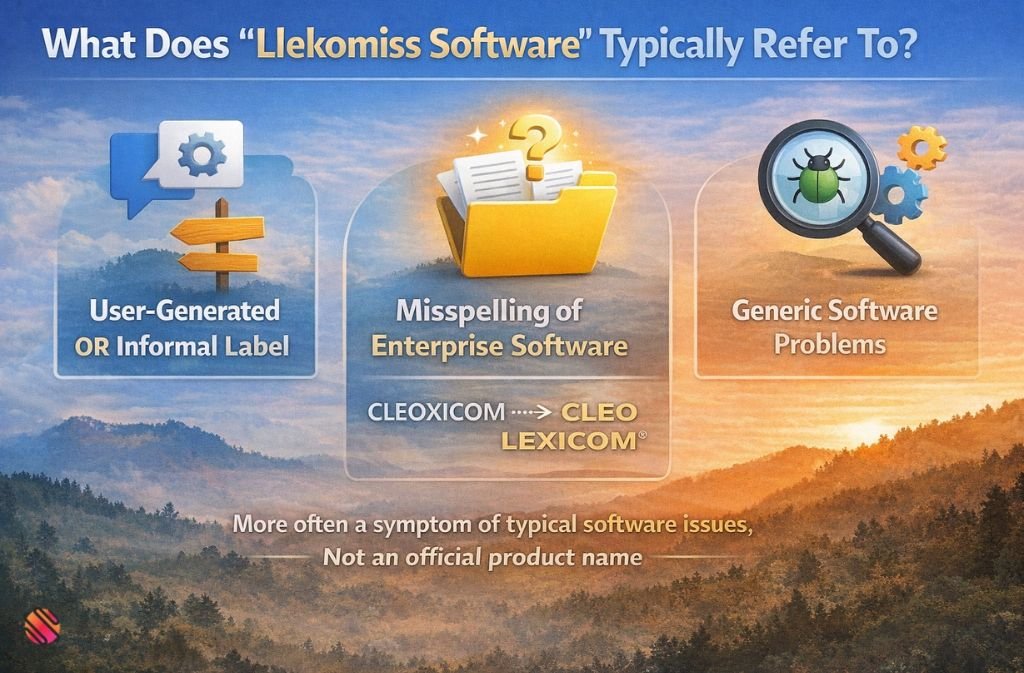
There is no widely documented consumer application officially named “Llekomiss software.” Based on search patterns and ranking pages, the phrase is most likely:
-
A user-generated or informal label
-
A misspelling or phonetic reference to another tool (commonly enterprise file-transfer clients such as Cleo LexiCom®)
-
Or a generic term used to describe recurring software problems, rather than a specific brand
Because of this, a problem on Llekomiss software should be treated as a set of common software symptoms, not a confirmed product-specific defect. The fixes below are designed to work across desktop, mobile, and enterprise applications that exhibit similar behavior.
Understanding the Problem On Llekomiss Software
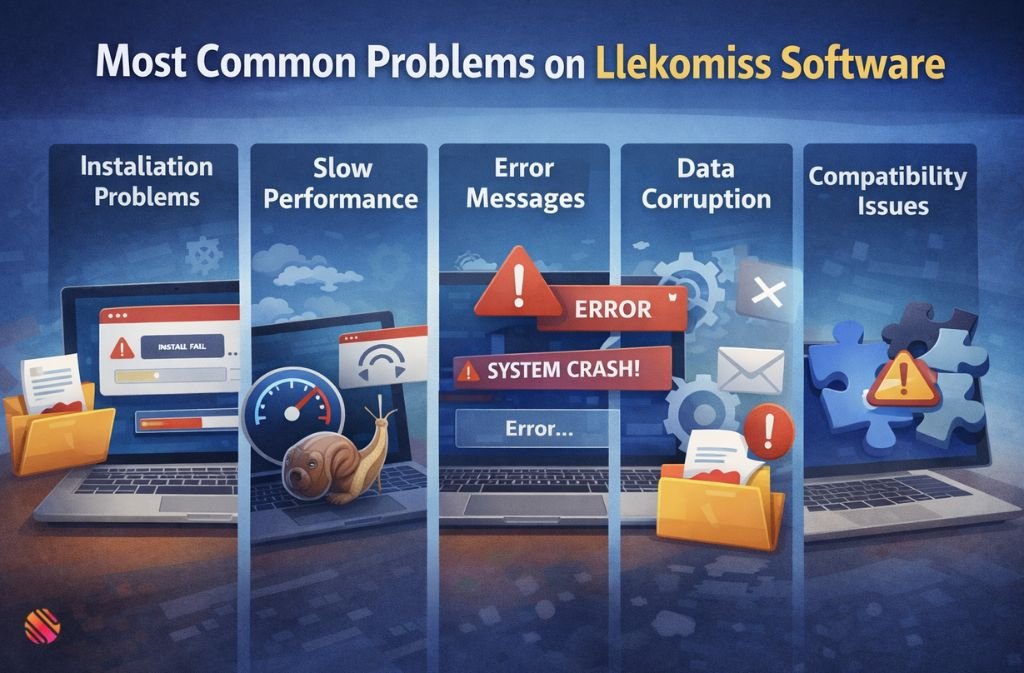
Although the name varies, the underlying issues follow consistent patterns. In most cases, users encounter one or more of the following:
-
Installation problems
-
Performance slowdowns
-
Repeated error messages
-
Data corruption or loss
-
Compatibility conflicts
Identifying which category your issue falls into is the fastest way to resolve it. Otherwise, troubleshooting becomes guesswork.
Most Common Problems on Llekomiss Software (And Why They Happen)
1. Installation Problems
Installation issues are one of the most frequently reported problems on Llekomiss software–type applications.
Common symptoms
-
Installation fails or freezes
-
Software installs but does not open
-
Missing or incomplete files
Why this happens
Most installation failures are caused by incomplete downloads, insufficient storage space, or background processes interfering with setup. Additionally, installing on unsupported systems can cause silent failures.
How to fix it
-
First, remove any partially installed files
-
Next, download a fresh installer from the official source
-
Then, close unnecessary background applications
-
After that, confirm available storage space
-
Finally, run the installer with administrator privileges
As a result, installation succeeds in the majority of cases.
2. Slow Performance and Freezing
Performance problems rarely appear suddenly. Instead, they develop gradually.
Symptoms
-
Slow startup times
-
Lag during normal use
-
Freezing or unresponsiveness
Underlying causes
-
Accumulated cache files
-
Limited system resources
-
Outdated software versions
Steps to improve performance
-
Start by clearing the cache and temporary files
-
Then restart your system
-
Afterward, update the application to the latest version
-
Finally, disable unnecessary startup programs
Consequently, users often notice immediate improvements.
3. Repeated Error Messages
Another common problem with Llekomiss software searches involves recurring error alerts.
Typical signs
-
Generic error messages
-
Errors reappearing after restart
-
Features failing to load
Why errors persist
In many cases, error messages are caused by corrupted configuration files, partial updates, or permission conflicts.
What to do
-
Reset application settings
-
Perform a clean reinstall (remove old files first)
-
Check user permissions
-
Update system drivers
Therefore, recurring errors should be addressed early to avoid deeper instability.
4. Data Loss or Corrupted Files
Data-related issues are less common but more disruptive.
What users experience
-
Files failing to open
-
Missing saved data
-
Crashes when accessing specific files
Common causes
-
Interrupted save processes
-
Sudden shutdowns
-
Storage-related errors
Prevention steps
-
Enable automatic backups
-
Avoid force-closing the software
-
Maintain sufficient free storage
-
Shut down systems properly
As a result, long-term data reliability improves.
5. Compatibility Issues
Compatibility conflicts often appear after system or OS updates.
Common scenarios
-
Software works on one device but not another
-
Errors appear after upgrades
Main causes
-
Unsupported operating systems
-
Outdated drivers or dependencies
-
Conflicts with third-party software
How to resolve
-
Verify current system requirements
-
Update drivers and dependencies
-
Temporarily disable conflicting tools
In some cases, rolling back a recent update may help.
The 5-Step Troubleshooting Framework
Instead of random fixes, use this structured approach:
-
Identify the primary symptom
-
Check system basics (storage, RAM, OS version)
-
Clear cache and temporary files
-
Update or reinstall cleanly
-
Test after each change
This framework resolves most problems associated with Llekomiss software–type issues without advanced technical support.
Real-World Example
A user reported repeated crashes at startup and searched for a “problem with Llekomiss software.” The issue initially appeared software-related. However, the investigation showed outdated cache files and limited system memory due to background processes.
After clearing cache files and disabling unnecessary startup apps, the crashes stopped completely. The software has remained stable since.
Common Mistakes to Avoid
Many users unintentionally worsen the problem by:
-
Reinstalling without removing old files
-
Ignoring system requirements
-
Running outdated versions
-
Skipping backups before troubleshooting
-
Assuming every issue is a software bug
Avoiding these mistakes saves time and prevents repeat failures.
Best Practices for Long-Term Stability (As of 2025)
To reduce future issues:
-
Keep applications updated
-
Clear cache files regularly
-
Maintain at least 20% free storage
-
Monitor system resource usage
-
Back up important data
These steps prevent most recurring problems.
FAQs
Q. What is the most common problem on Llekomiss software?
The most common problem with Llekomiss software is installation failure and slow performance. These issues are usually caused by cache buildup, outdated files, or system incompatibility, and can often be fixed by clearing the cache, updating the software, and checking system requirements.
Q. Is Llekomiss software a real application?
Llekomiss software is not a clearly documented standalone application. The term is commonly used as a generic or informal label to describe recurring software problems rather than a specific branded product, which is why troubleshooting is best done by symptom.
Q. Does clearing the cache fix problems on Llekomiss software?
Yes, clearing cache files can fix many problems on Llekomiss software, especially slow performance, freezing, and recurring error messages. Cache files can become corrupted over time and interfere with normal software operation.
Q. Should I reinstall the software to fix the problem with the Llekomiss software?
Reinstalling should be a last resort. Most problems on Llekomiss software can be resolved by updating the application, clearing the cache and temporary files, and restarting the system before attempting a full reinstall.
Q. Can a problem on Llekomiss software cause data loss?
A problem on Llekomiss software does not usually cause data loss directly. Data loss typically occurs due to system interruptions, sudden shutdowns, or storage errors, which is why regular backups are strongly recommended.
Conclusion
A problem on Llekomiss software is best understood as a collection of common software symptoms rather than a confirmed product-specific fault. In nearly every case, the root cause comes down to system conflicts, outdated files, or neglected maintenance.
By focusing on symptoms instead of assumptions and following a structured troubleshooting process, most users can restore stability quickly—and keep it that way.
Stay updated with the latest in technology at TechHighWave.