A strange pattern has been playing out across search results in 2025: software names that look more like error codes than real products are suddenly gaining attention. New software 418dsg7 is one of the clearest examples.
The name appears in blog posts, automated reviews, and search suggestions — yet there is no official website, no verified developer, and no public documentation confirming it as a legitimate software release. That disconnect raises an important question: what exactly is 418dsg7, and why are people searching for it?
This article provides a clear, evidence-based explanation. Rather than treating 418dsg7 as a confirmed application, it examines what the term most likely represents, why it surfaced in search data, how similar keywords behave, and what users should do if they encounter files or downloads associated with it.
The focus is clarity, context, and safety.
What Is New Software 418dsg7?
As of 2025, new software 418dsg7 is not a publicly verifiable software product.
There is no confirmed:
-
Company or developer
-
Official website or domain
-
Product documentation
-
App store listing
-
Press release or launch announcement
Instead, 418dsg7 fits the profile of what analysts and SEO professionals call a “ghost keyword.”
What Is a Ghost Keyword?
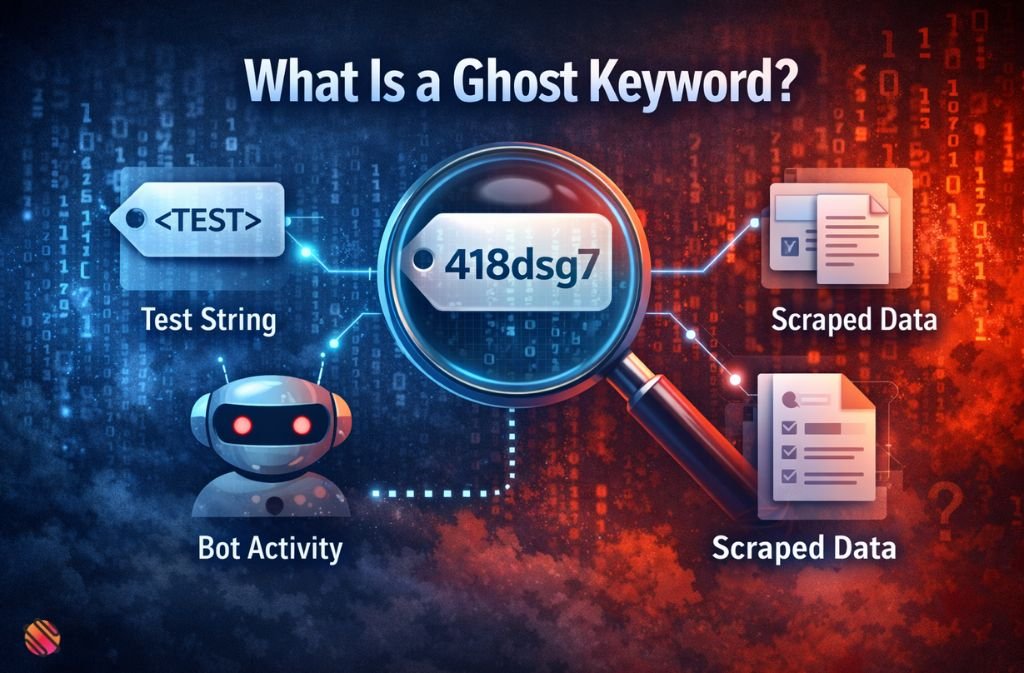
A ghost keyword is a term that:
-
Appears to describe a product, app, or service
-
Gains measurable search volume
-
Lacks a real-world, verifiable entity behind it
These keywords often originate from:
-
Internal test strings
-
Automated content generation
-
Bot-driven search activity
-
Scraped identifiers are leaking into public indexes
Once search volume crosses a threshold, automated content systems begin producing articles around the term — creating the illusion of legitimacy.
418dsg7 follows this exact pattern.
Also Read: What Is UStudioBytes Software? Is It Safe to Download (2025)
Why Is “418dsg7” Appearing in Search Results?
Several factors explain how a non-existent or undefined software name can trend:
1. Automated Content Ecosystems
AI-generated content pipelines frequently invent placeholders that resemble software names. When these placeholders are indexed, they can quickly propagate.
2. SEO Experimentation
Some content farms intentionally publish articles targeting random alphanumeric strings to test ranking behavior in low-competition environments.
3. Bot and Scraper Traffic
Non-human traffic can artificially inflate interest in meaningless identifiers, causing them to surface in keyword tools.
4. Early-Stage or Abandoned Identifiers
In rare cases, internal development names escape into public data without ever becoming real products.
No public evidence currently supports 418dsg7 being a released or active software platform.
Why Many Articles Describe “Features” of 418dsg7
You may encounter pages claiming that new software 418dsg7 includes:
-
Task management
-
Workflow automation
-
Real-time collaboration
-
Analytics dashboards
These descriptions are not proof of functionality.
They are examples of generic productivity software language — reusable copy commonly applied to any hypothetical tool. Similar wording appears across descriptions of project management platforms like Jira, Notion, or Asana.
In this context, such feature lists should be understood as template-based explanations, not verified specifications.
Is New Software 418dsg7 Real or Safe?
Reality Check
There is currently no evidence that 418dsg7 exists as a legitimate, downloadable product.
Safety Implications
This uncertainty matters because undefined software names are frequently exploited by scammers.
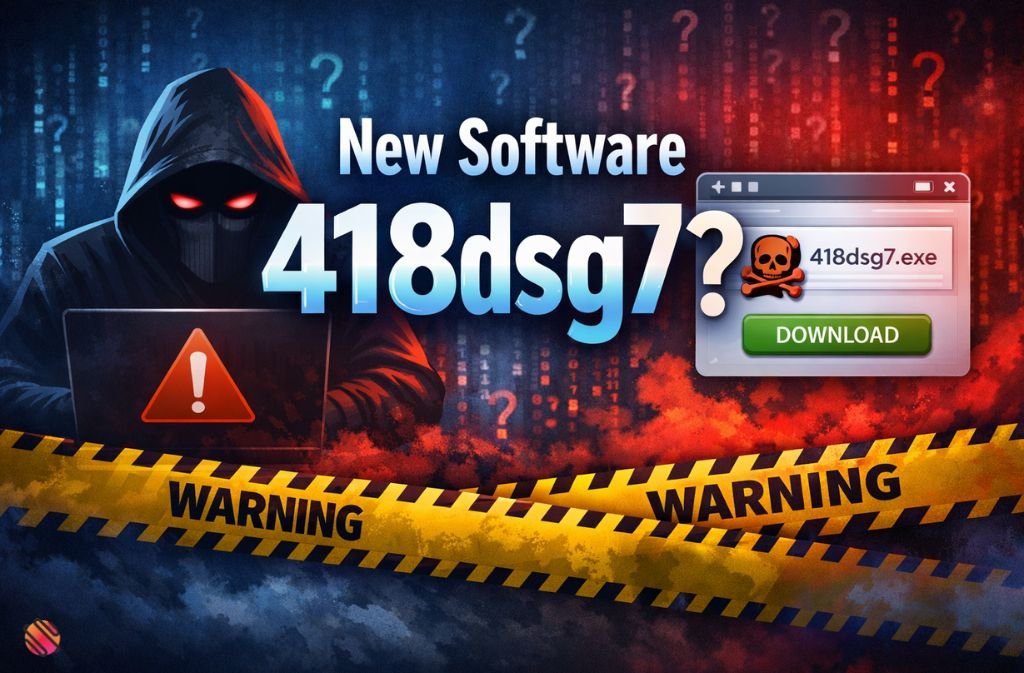
⚠️ Security Warning: Downloads Labeled “418dsg7.exe”
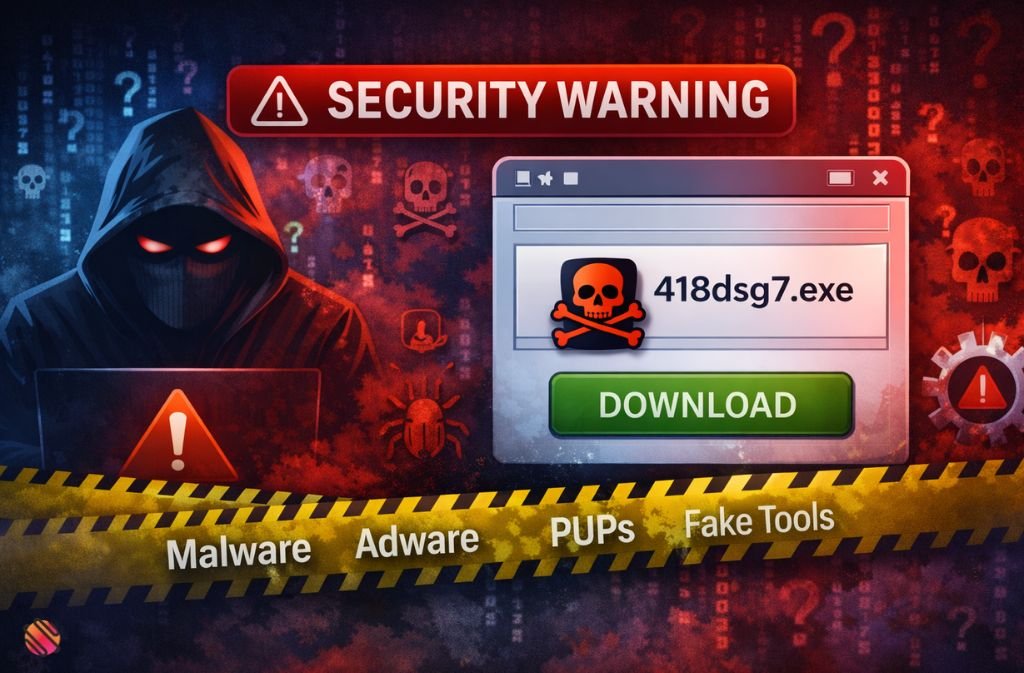
If you encounter:
-
418dsg7.exe
-
Installers referencing “418dsg7 software”
-
Ads promoting downloads using this name
Do not run them.
Cybercriminals often use trending but undefined keywords to distribute:
-
Malware
-
Adware
-
Fake system utilities
These campaigns succeed because there are no official warnings, reviews, or vendor pages for users to cross-check.
Until a verified publisher exists, any executable associated with 418dsg7 should be treated as untrusted.
How to Evaluate Any “New Software” With a Random Name
Use this checklist before trusting or installing unfamiliar software:
-
Is there an official website with a real company name?
-
Is the domain older than a few months?
-
Are there independent reviews from recognized tech outlets?
-
Is pricing transparent and consistent?
-
Are support channels verifiable?
-
Does documentation include version history or changelogs?
If most answers are “no,” caution is warranted.
Why Ghost Software Keywords Are Increasing in 2025
The rise of generative AI has changed how information enters search ecosystems:
-
Automated publishing at massive scale
-
Synthetic keywords created unintentionally
-
AI summaries amplifying unverified content
-
Faster indexing of low-signal pages
Search engines are adjusting, but lag exists. During that gap, clarification content becomes essential.
Risks of Treating Ghost Keywords as Real Products
Short-Term Effects
-
Pages may rank quickly
-
AI Overviews may summarize claims as fact
-
Confused users may trust misleading information
Long-Term Consequences
-
Loss of credibility
-
Algorithmic downgrades
-
User trust erosion
-
Potential security harm
Transparent framing protects both readers and publishers.
Also Check: 8tshare6a Software Download: What It Is, Safety & Truth (2025)
Who Should Be Most Cautious?
-
Non-technical users searching for “new software.”
-
Small businesses looking for quick tools
-
Users downloading software outside app stores
-
Anyone encountering paid ads tied to undefined software names
Undefined branding is a known tactic in social engineering and malware distribution.
FAQs
Q1. What is the new software 418dsg7?
New software 418dsg7 is a term appearing in search results without verified documentation. It is most likely a ghost keyword, meaning it does not correspond to any real or publicly released software product.
Q2. Is 418dsg7 a legitimate application?
No. As of 2025, there is no official company, website, or software release linked to 418dsg7. Any claims about its features or downloads are unverified.
Q3. Why do websites describe features of 418dsg7?
Many sites use generic productivity software language or AI-generated content to describe 418dsg7. These descriptions are not based on a real product but mimic common features of cloud-based workflow and task management software.
Q4. Is it safe to download 418dsg7.exe?
No. Any file labeled 418dsg7.exe or similar should be treated as untrusted. Undefined or ghost software names are often exploited by scammers to distribute malware, adware, or potentially unwanted programs.
Q5. Why does Google show results for non-existent software?
Google may show results for 418dsg7 due to automated indexing, AI-generated content, or bot-driven search trends. Placeholder or ghost keywords can temporarily appear in search results even when no real software exists.
Q6. How can users avoid fake software scams?
To stay safe, users should:
-
Verify the software’s official website and publisher
-
Look for trusted reviews from recognized tech sources
-
Avoid downloading unknown or unverified files
-
Be cautious with random, trending, or undefined software names
Final Verdict
New software 418dsg7 should be treated as a ghost keyword, not a confirmed application.
Its presence in search results reflects how automated systems, AI-generated content, and indexing behavior intersect — not proof of a real product launch.
Until credible documentation, a verified vendor, and trusted third-party validation exist, any claims about 418dsg7’s features or benefits remain speculative. Any software download using this name should be avoided.
Clarity and caution are the safest responses.
Related: What Is Moxhit4.6.1 Software? Real or Fake? (Verified 2025 Guide)
| Disclaimer: The information in this article about new software 418dsg7 is provided for educational and informational purposes only. There is no verified evidence that 418dsg7 is a real or publicly released software product. Readers should exercise caution and avoid downloading any files or executables associated with this name. The publisher is not responsible for any loss, damage, or security issues arising from the use of unverified software. |