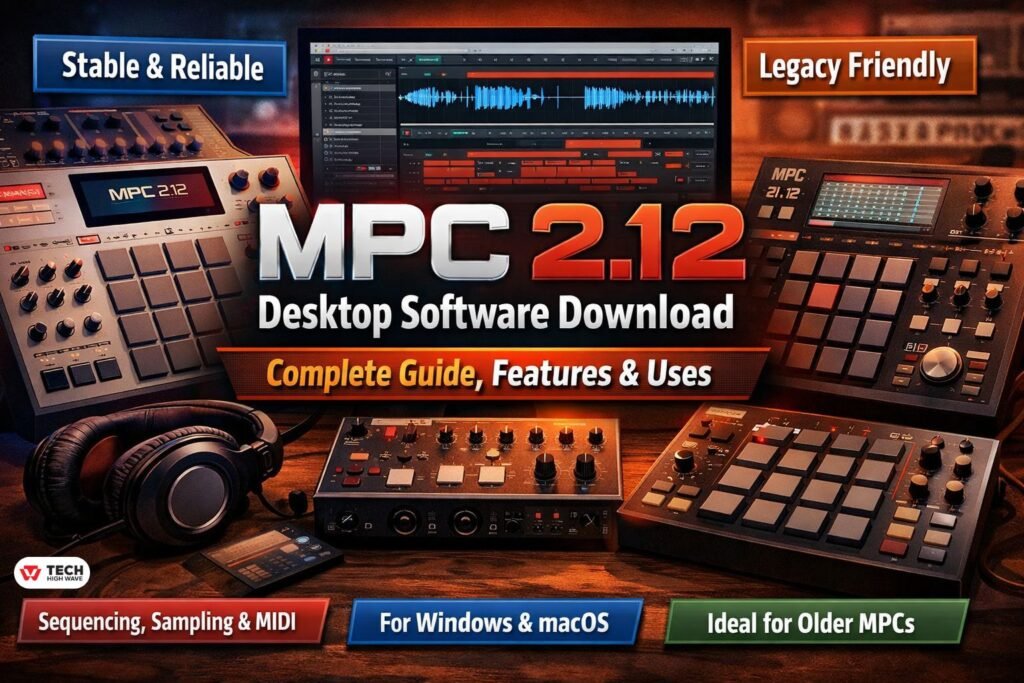
Looking for an MPC 2.12 desktop software download can be… well, a bit stressful, honestly. Sometimes it’s friction, sometimes it’s frustration, sometimes a little panic. A system update breaks something that’s worked fine forever. Projects that used to open fine now refuse, or load weird. Hardware still works, yet the software feels slow, heavier, or just… off, you know?
Often the problem isn’t missing features, it’s too many changes at once, too many small tweaks that break a workflow that used to be smooth.
MPC 2.12 is kinda like that sweet spot, a version where the desktop MPC platform just clicked—stable, balanced, predictable. Not flashy, not overcomplicated, just reliable. For anyone with legacy setups, older projects, or who just wants things to work without headaches, it’s still relevant in 2026.
This guide will explain what MPC 2.12 desktop software is, how it works, who still uses it, and what to watch for when installing it today, and yeah, probably tomorrow too.
What Is MPC 2.12 Desktop Software Download?
MPC 2.12 desktop software download basically means the installer for Akai Professional’s MPC Software, version 2.12. It’s built for Windows and macOS… though compatibility depends on your OS version, drivers, etc. Works as a full desktop music production app, also as a controller-based environment when paired with supported MPC hardware, old or newer.
It handles sampling, sequencing, audio recording, MIDI, plugins… the usual stuff. Projects can be created entirely on a computer, or through hardware—pads, knobs, hybrid units, desktop controllers.
Even though it’s not new anymore, MPC 2.12 is still used because it’s stable, predictable, and hasn’t had major workflow changes that later versions brought. Some people call it “the last version that just worked” before 3.x came along with its flashy touch interface and timeline stuff.
For troubleshooting or community insights, MPC-Forums is a helpful hub where producers discuss version 2.12 quirks, stability, and hardware compatibility.
How MPC 2.12 Desktop Software Works
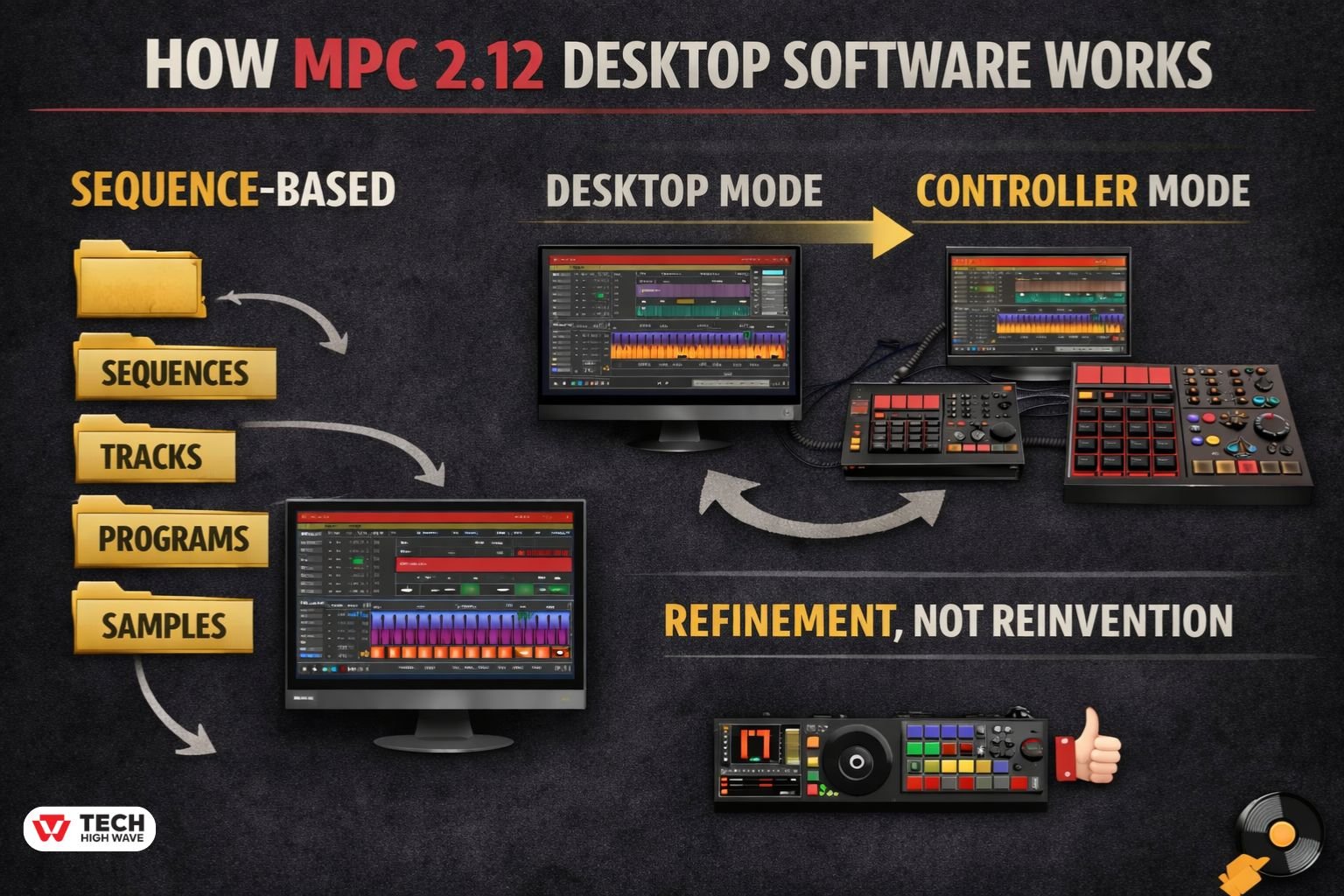
MPC 2.12 is sequence-based. That means music is organized in sequences, tracks, programs, samples. Stored neatly in folders. Easy to understand, easy to back up, not confusing.
Desktop-only mode uses your computer’s CPU, audio interface, storage. Add compatible MPC hardware? Switches to Controller Mode, mirrors the software interface, pads and knobs do their thing. Everything works, predictable, mostly.
Focus is refinement, not reinvention. Timing, project loading, export reliability… that’s version 2.12. Stable, steady. Which is why it still has a fanbase, even after newer versions came out. for direct downloads and additional resources, The MPC Store provides official installers and documentation.
Also Read: Software for 3D Scientific Visualization: What People Actually End Up Using in 2026
Key Features to Look for in MPC 2.12 Desktop Software Download
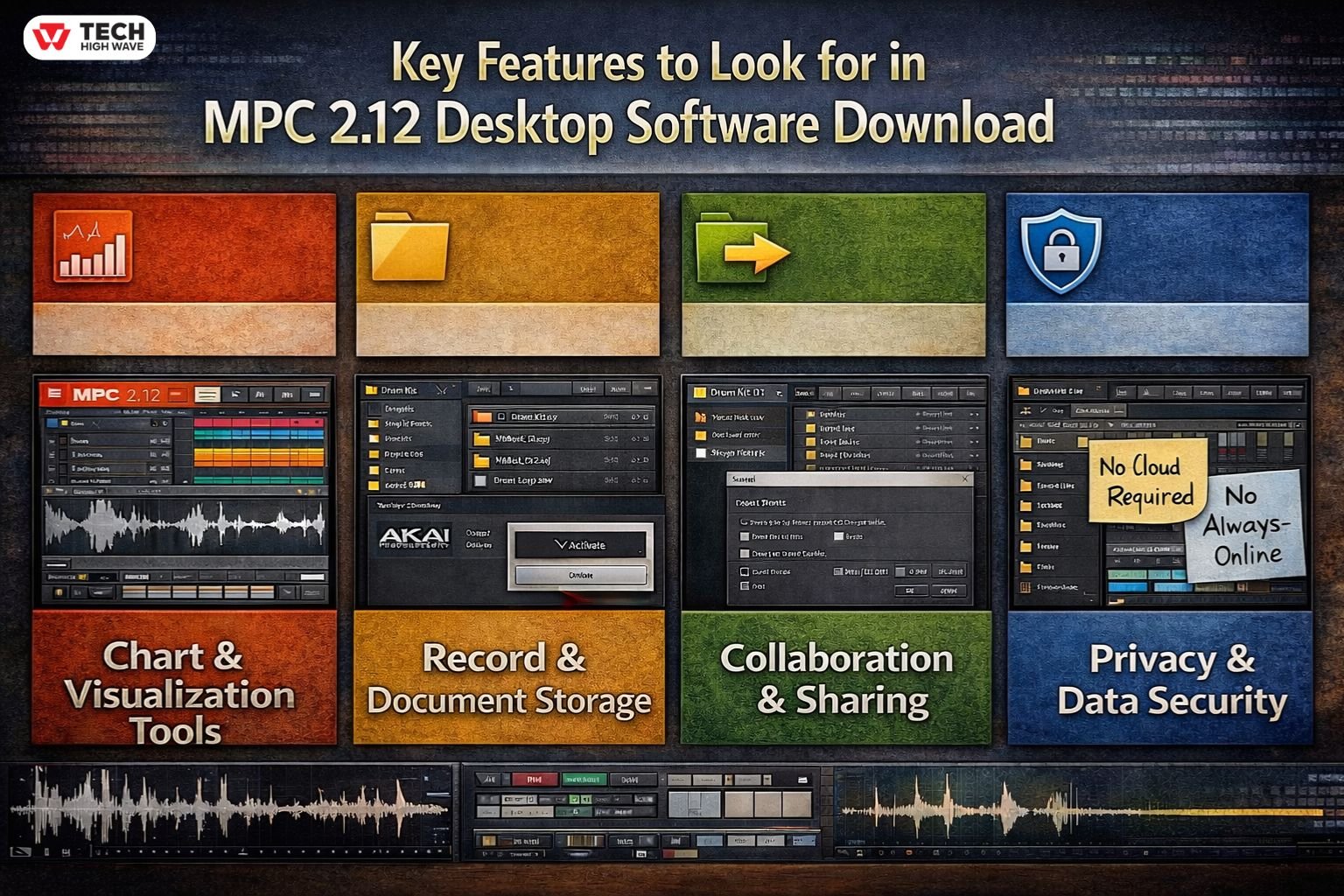
Chart & Visualization Tools
Waveforms, MIDI charts, automation lanes… all clear, no unnecessary clutter. You can trim, slice, see timing, velocity, duration… everything readable. Interface isn’t flashy. That’s kinda the point. Stays out of the way.
Record & Document Storage
Projects stored in folders, samples and programs inside. Predictable. Easy to back up. Transfer. Archive. Works offline once activated. Initial install? Needs internet. Activation handshake via InMusic Software Manager. After that… done. Offline forever if you want.
Collaboration & Sharing
File-based collaboration. Share folders, everything loads fine. Export stems, MIDI, full mixes. Not cloud-based, not fancy, but reliable. Enough for most producers.
Privacy & Data Security
Local-first. Projects stay local unless shared manually. No auto cloud, no always-online requirement. Data stays yours. Projects can be opened years later without worrying about disappearing services. Big plus.
Best Uses for MPC 2.12 Desktop Software Download
Beat production, sample-based composition, MIDI-driven workflows… pattern-heavy genres love this. Hip-hop, electronic, stuff like that.
Also sketching ideas, rough arrangements. Export stems or MIDI to DAWs. Simple, repeatable, works.
Education too. Stable, consistent interface. Legacy projects from 2.x era? Perfect. Teaching, archiving, production… all works.
Who Should Use MPC 2.12 Desktop Software?
Producers who want stability, predictability, not constant “new features, new issues.”
Users of older MPC hardware, especially Renaissance, Studio Black—3.x can mess with mapping, introduce UI quirks.
Studios with fixed systems, educators teaching sequencing, anyone restoring older machines… 2.12 is dependable.
Not great if you want the new 3.x interface, touch-first workflow, cloud stuff. Different approach. Different priorities.
MPC 2.12 vs. MPC 3.x: Feature Comparison
| Feature | MPC 2.12 (Classic Workflow) | MPC 3.x (Modern Workflow) |
| Primary Interface | Traditional “Main Mode,” menu-based | Linear arranger, touch-centric |
| Hardware Focus | Desktop controllers, legacy units | Standalone-first design |
| Workflow Consistency | Pattern and sequence-driven | Unified timeline focus |
| Project Structure | Sequence-based composition | Linear project flow |
| MPC Stems | Original AI separation engine | Enhanced, real-time AI separation |
| Plugin Support | VST2, VST3, AU | Optimized for Fabric engine |
| System Load | Lower, optimized for older CPUs | Moderate, heavier UI animations |
Classic Main Mode = muscle memory, fast, predictable. 3.x = visual, touch-based, linear. Both work, but feel different. People stick with what works for them.
Hardware Compatibility Checklist (2026)
The “Stay on 2.12” Group
- MPC Renaissance – drivers stable, smooth timing.
- MPC Studio Black – predictable mapping, avoids 3.x jumps.
- MPC Element – light load, simple, stress-free.
The “Upgrade to 3.x” Group
- MPC Key 37/61 – modern interface, standalone workflow.
- MPC Live II / One+ / X SE – tighter parity in 3.x, smoother live use.
How to Choose the Right MPC 2.12 Desktop Software Download
Start with operating system compatibility. If you’re on older versions of macOS or Windows, MPC 2.12 usually installs and runs without drama. On newer platforms—macOS 16/17 or Windows 12—it can still work, but you may need extra steps like compatibility modes, driver tweaks, or emulation. Checking this first saves a lot of wasted time.
Next, look at hardware pairing. Some MPC controllers behave noticeably better with version 2.12. Legacy units in particular tend to have tighter mapping, fewer UI quirks, and more predictable performance compared to newer software branches.
Finally, be honest about how you like to work. If your muscle memory lives in Classic Main Mode—sequences, programs, and a fast, menu-driven flow—MPC 2.12 fits naturally. If you prefer a more visual, touch-first experience with a linear timeline, MPC 3.x may suit you better. Neither is “better” overall, but they feel very different in daily use.
Related: QuikConsole Com Explained: What It Is & How It Works (2026)
Common Mistakes to Avoid
Opening 2.12 projects in newer versions then going back = broken plugins, altered layouts, sometimes ruined sequences.
- Ignoring plugin compatibility = problems after OS updates.
- Skipping backups = stress, lost work.
- Thinking “newer is better” = sometimes disaster. It happens.
Future Trends in MPC Desktop Software (2026 Outlook)
3.x gets updates, UI changes, tighter hardware integration.
2.12? Settling into stable, legacy-friendly role. Works for education, archives, classic workflows. Not flashy, not cloud-based. Just reliable.
Frequently Asked Questions
Q.1 Is MPC 2.12 still usable in 2026?
Yes. Works on compatible systems, especially for legacy projects, stable workflows, and even newer machines with tweaks.
Q.2 Is MPC 2.12 free?
Included with registered Akai hardware, standalone access depends on licensing.
Q.3 Can it run without hardware?
Yes. Desktop-only mode works fine. Hardware optional.
Q.4 Does it support plugins?
Yes, VST, AU supported. OS and plugin versions may matter.
Q.5 Why prefer 2.12 over 3.x?
Classic interface, Main Mode layout, predictable workflow. Works reliably.
Q.6 Can 2.12 projects open in 3.x?
Mostly yes, minor adjustments may be needed.
Q.7 Suitable for professional studios?
Absolutely. Stability, consistency, and predictable behavior make it studio-ready.
Final Thoughts
MPC 2.12 desktop software download remains relevant not because it competes with modern releases, but because it preserves a workflow many producers still trust. It reflects a stage in the MPC software timeline where functionality, interface design, and hardware integration aligned without unnecessary complexity.
For users maintaining legacy MPC hardware, restoring older systems, or simply preferring the classic MPC structure, version 2.12 continues to offer a dependable production environment. Its strength lies in predictability, not novelty.
Also Check: Data Softout4.v6 Python Explained: What It Is (and Why It Doesn’t Exist)