People don’t usually search for lufanest out of curiosity, they search because, well, something in their current setup isn’t working—data is scattered, records are hard to trace, collaboration feels risky, or audits take longer than they should, and sometimes, nobody really knows why.
One reason for the confusion is that lufanest can mean different things, in different contexts. This guide is strictly about Lufanest as a digital data and collaboration platform—not the anesthetic drug mentioned in medical literature, and not any cultural or artistic usage of the term, though, you might run into those too.
In 2026, professionals are under pressure to move faster, without losing accuracy or control. Lufanest exists to solve that exact tension. This guide explains how it works, where it fits best, and, honestly, how to figure out if it’s right for you.
What Is Lufanest?
Lufanest is a digital platform, built for organizing, analyzing, and collaborating on structured records in a controlled environment. It goes beyond basic file storage by adding context—relationships, timelines, permissions, and visual insight, which, if you’ve dealt with messy data before, you know is a big deal.
It’s commonly used in settings where information must be reliable over time. Research groups, clinical operations, and regulated organizations rely on lufanest to keep records usable, defensible, and accessible, without turning work into bureaucracy, or driving everyone crazy trying to figure out where things are.
At its core, lufanest is about reducing uncertainty around data, not eliminating it—just shrinking the grey areas enough to work with, and yeah, sometimes things still slip through.
How Lufanest Works
Lufanest functions as a centralized workspace, with clearly defined rules, though, naturally, the rules need some setup. Instead of information floating across drives, inboxes, and dashboards, everything lives in one system, with structure built in, even if it doesn’t feel perfect at first.
A typical workflow looks like this:
- Data input – Records, documents, or datasets are added manually, or through integrations, or sometimes both, depending on your environment.
- Structuring – Information is organized using metadata, timelines, and defined fields, rather than loose folders, which helps later when someone actually searches for something.
- Visualization – Charts and summaries are generated directly from source records, hopefully making sense even to people who didn’t enter the data.
- Collaboration – Teams comment, review, or share specific views, without exposing everything, which is sometimes tricky to set up right.
- Audit trail – Changes, access, and activity are logged automatically, or mostly automatically, depending on the provider.
The result is a system where data stays understandable long after it’s created, even months later, when context usually fades, and you realize half the team forgot what certain entries meant.
Key Features to Look for in Lufanest
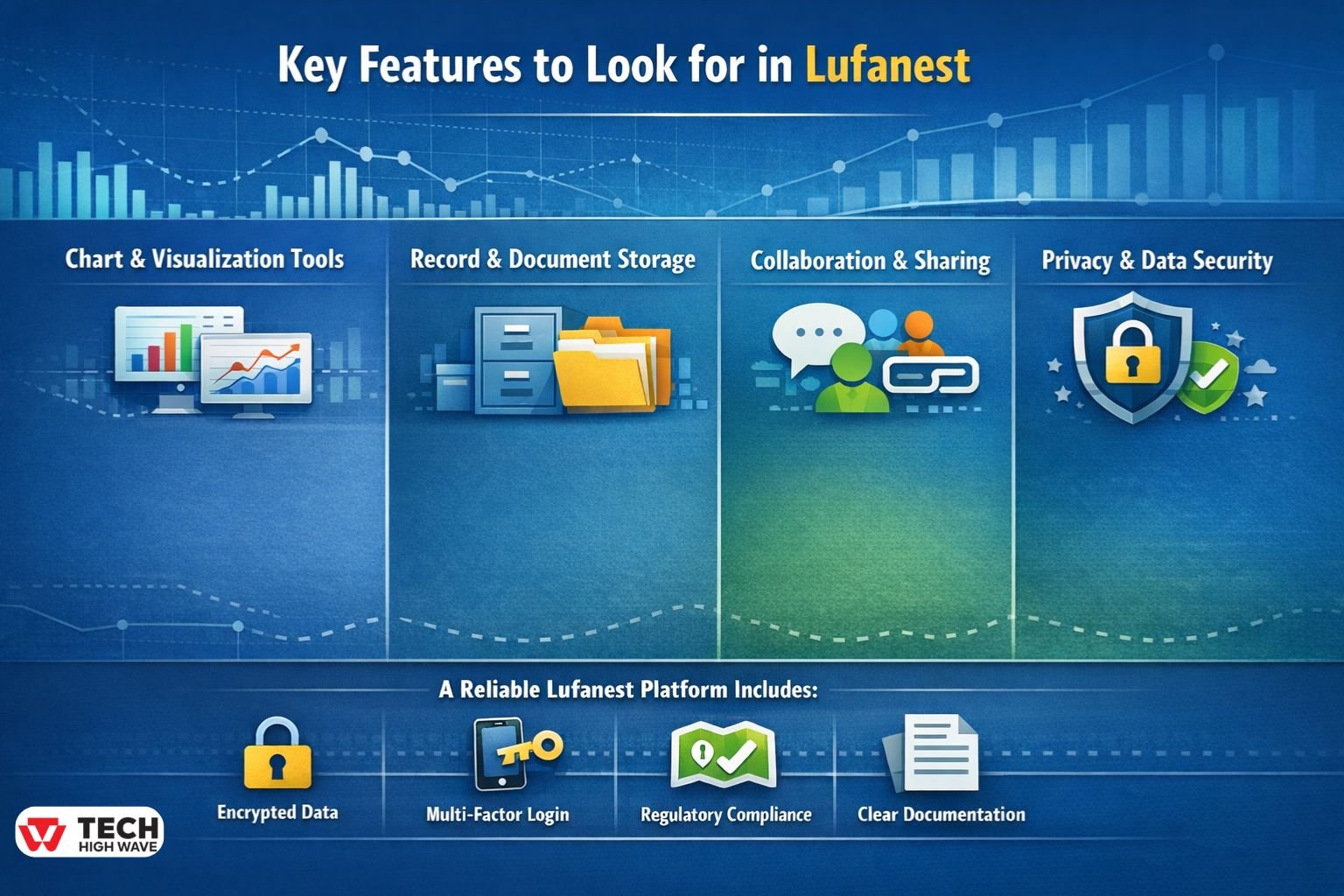
Not all lufanest platforms are built the same. The differences usually show up after a few months of real use, and sometimes in ways you wouldn’t expect.
Chart & Visualization Tools
Good visualization in lufanest isn’t about flashy dashboards, anyone can build those, it’s about helping people see what matters, and not just what looks nice.
Strong platforms allow users to:
- Create charts directly from live records, though sometimes adjustments are needed
- Adjust time ranges and groupings without rework, or at least minimal rework
- Export visuals for reports or reviews, often with a bit of formatting
- Trust that numbers match the underlying data, if everything is set up correctly
This matters most when decisions depend on subtle trends, not headline metrics.
Record & Document Storage
Storage is where many systems quietly fail, usually not on day one, more like after several months, when you start looking for that one file and it’s nowhere to be found. Lufanest works best when storage is intentional.
Look for:
- Clear version histories
- Searchable metadata
- Support for mixed formats
- Retention policies that don’t degrade data
When records stay readable years later, teams move faster with less re-verification, and less swearing.
Collaboration & Sharing
Collaboration inside lufanest should feel deliberate, not noisy, though, in practice, some noise is almost unavoidable.
Effective implementations include:
- Role-based permissions
- Share links with limits and expiration, or at least reminders
- Comments tied to exact records or visuals
- Activity logs that explain what changed and why, ideally without confusion
This keeps collaboration productive without eroding control.
Privacy & Data Security
Security is not optional. In 2026, a serious lufanest platform typically includes:
- Strong encryption
- Multi-factor authentication
- Compliance alignment with regional regulations
- Transparent data handling policies, or at least clear documentation
If security feels bolted on, that’s a warning sign.
Best Uses for Lufanest
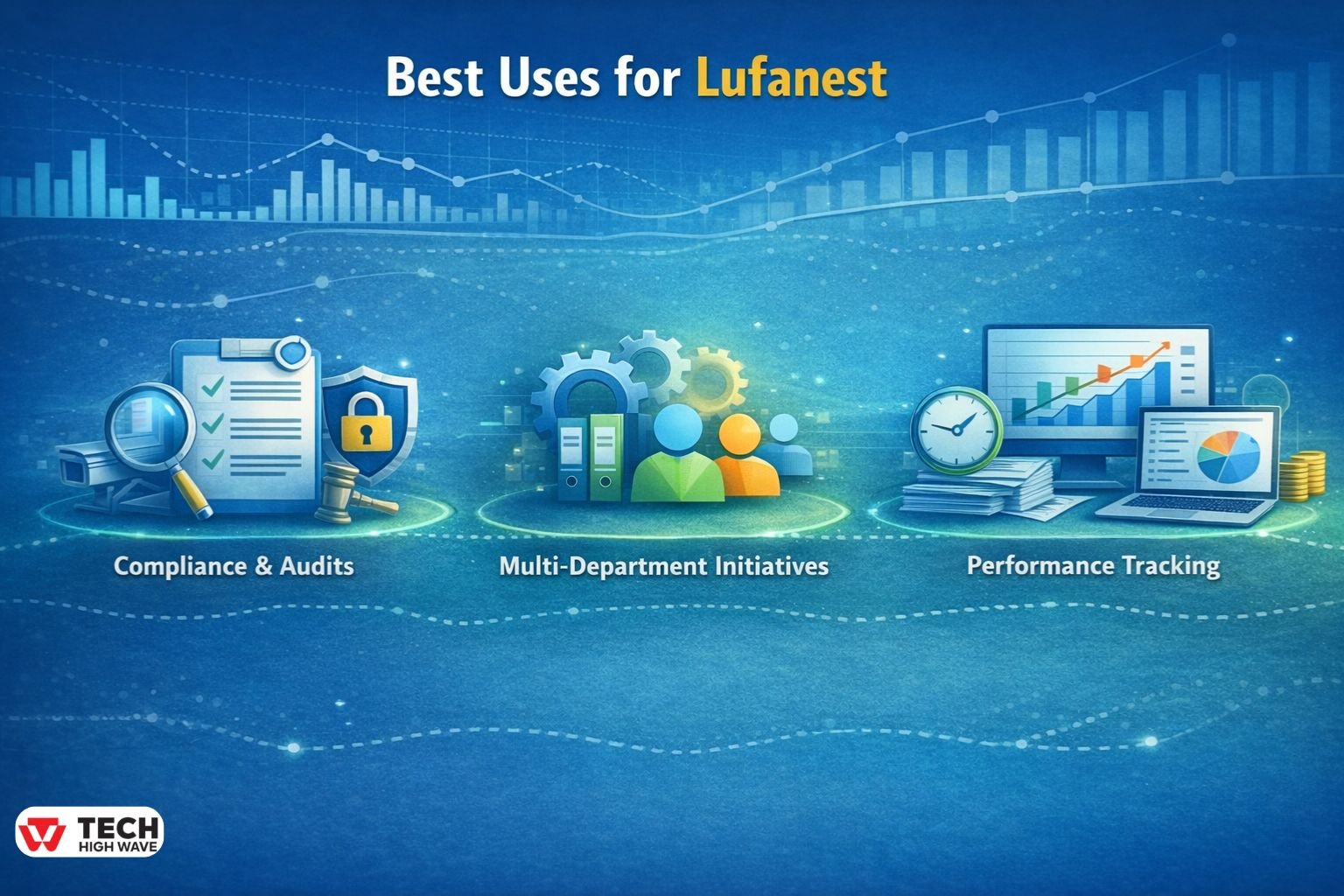
Lufanest is most effective when information needs context and accountability, and sometimes even then, human oversight is needed.
Industry Spotlight: Research Laboratories
In research environments, lufanest replaces a patchwork of notebooks, spreadsheets, and shared folders. Experimental records, datasets, and results live together. This improves reproducibility, shortens review cycles, and prevents knowledge loss when team members change, though, it’s never perfect.
Industry Spotlight: Clinical and Healthcare Operations
Clinical teams use lufanest to manage sensitive records, while maintaining strict access boundaries. Visual summaries help identify trends without exposing raw data, and audit logs support compliance reviews without extra manual work, even if someone forgets to update a field.
Other common uses include:
- Compliance and internal audits
- Multi-department initiatives
- Long-term performance tracking
Who Should Use Lufanest?
Lufanest isn’t meant for quick notes, or casual file sharing.
It’s a strong fit for people who:
- Work with sensitive, or regulated data
- Need consistency across time, and teams
- Share information with clear accountability
- Make decisions based on traceable evidence
If structure feels like a burden, lufanest may be too much. If structure feels missing, it’s often the right tool, though you might tweak it over time.
How to Choose the Right Lufanest
Choosing lufanest is less about features, and more about alignment, and honestly, a bit of trial and error.
Ask practical questions:
- Does it match the way your data actually flows?
- Can new users get productive quickly, or will they need training?
- Are permissions flexible enough for real scenarios?
- Is the provider clear about data ownership?
- Will it still work when volume and complexity grow?
Running a pilot with real data usually reveals the answer faster than demos, and sometimes the surprises are informative.
Comparison: Lufanest vs Generic Data Platforms
| Aspect | Lufanest | Generic Data Platforms |
| Primary focus | Structured records, and traceability | Broad storage or analytics |
| Organization | Schema-driven, with metadata | Often folder-based |
| Visualization | Directly tied to records | Often detached dashboards |
| Collaboration | Permissioned, and auditable | Basic sharing |
| Compliance readiness | Built-in by design | Usually layered on |
| Best use case | Regulated, or long-term data | Ad-hoc analysis |
In short, lufanest favors reliability over flexibility, that trade-off is intentional, and sometimes a little annoying for casual use.
Also check: BE1 Crypto Explained: What It Is, How It Works & Is It Legit (2026)
Common Mistakes to Avoid
Most problems with lufanest come from setup choices, not the platform itself, although human error can amplify issues.
Common missteps include:
- Overengineering before workflows are clear
- Ignoring permission design early
- Treating it like a file dump
- Skipping onboarding
- Choosing based only on price
Avoiding these saves months of friction, sometimes more, and sometimes just headache.
Future Trends in Lufanest (2026 Outlook)
Lufanest platforms are becoming quieter, and more capable, but nothing is ever perfect.
Trends to watch:
- Automation for repetitive record handling
- Better integration with external systems
- AI assistance that explains its reasoning, sometimes better than humans
- Stronger governance transparency
The focus is shifting from novelty to trust, which, frankly, is overdue, and probably overdue for many teams.
Frequently Asked Questions
Q.1 What is lufanest mainly used for?
Lufanest is used to manage structured records where accuracy, traceability, and controlled access matter, though humans still need to check their work. It supports long-term data use in research, clinical, and regulated environments.
Q.2 Is lufanest a software or a platform?
Lufanest functions as a platform. It combines storage, visualization, collaboration, and governance into a single system, rather than solving only one task, at least in theory.
Q.3 Who benefits most from lufanest?
Teams handling sensitive, or long-lived data benefit most. This includes research groups, healthcare operations, and organizations that rely on documented decision-making, though adoption still requires training.
Q.4 How secure is lufanest in 2026?
Security depends on the provider, but modern lufanest platforms typically include encryption, access controls, audit logs, and compliance support, though setup mistakes can weaken these.
Q.5 Can lufanest replace multiple tools?
Often yes. Lufanest can consolidate storage, visualization, and collaboration into one system, reducing fragmentation over time, although nothing is perfect.
Q.6 Is lufanest suitable for small teams?
It can be, if the work involves complex, or regulated data. For simple tasks, it may offer more structure than needed, but still useful sometimes.
Final Thoughts
Lufanest works best when clarity matters more than speed alone. Used well, it becomes infrastructure—quiet, dependable, and easy to trust, even when things aren’t perfect.
Also Read: Car Key Programmer Software 2026: What Actually Works, What Doesn’t, and What to Buy