Every few years, search engines surface a strange phenomenon: a keyword with thousands of searches, no clear definition, and no official owner.
In early 2026, kz43x9nnjm65 became one of those terms.
People didn’t search for it out of curiosity. They searched because they saw it—inside system logs, analytics dashboards, URLs, automated messages, and occasionally even product pages. With no explanation attached, the string triggered a familiar reaction: Is this a bug? A tracking code? A scam?
What kz43x9nnjm65 represents is not a product or brand, but a growing category of search behavior known as a “Ghost Keyword.” These are identifiers that escape backend systems and enter public visibility, creating real search demand despite having no single, official meaning.
This guide explains what kz43x9nnjm65 is, why it’s trending globally, how it’s used in modern digital infrastructure, and how to tell the difference between a legitimate system reference and a phishing attempt that abuses technical-looking codes.
What is kz43x9nnjm65?
kz43x9nnjm65 is a machine-generated alphanumeric identifier used internally by digital systems to reference data, sessions, or processes.
It is not:
-
A password
-
A product name
-
A virus signature
-
A user account
-
An access key
It is a reference token—a label machines use to point to something stored elsewhere.
In modern systems, identifiers like this are intentionally:
-
Non-descriptive
-
Unique
-
Short-lived or context-bound
Their purpose is efficiency, not communication.
The Emergence of “Ghost Keywords”
A Ghost Keyword is a term that:
-
Has measurable search volume
-
Lacks a canonical definition
-
Appears across unrelated platforms
-
Exists due to system leakage, not marketing
Why Ghost Keywords Exist in 2026
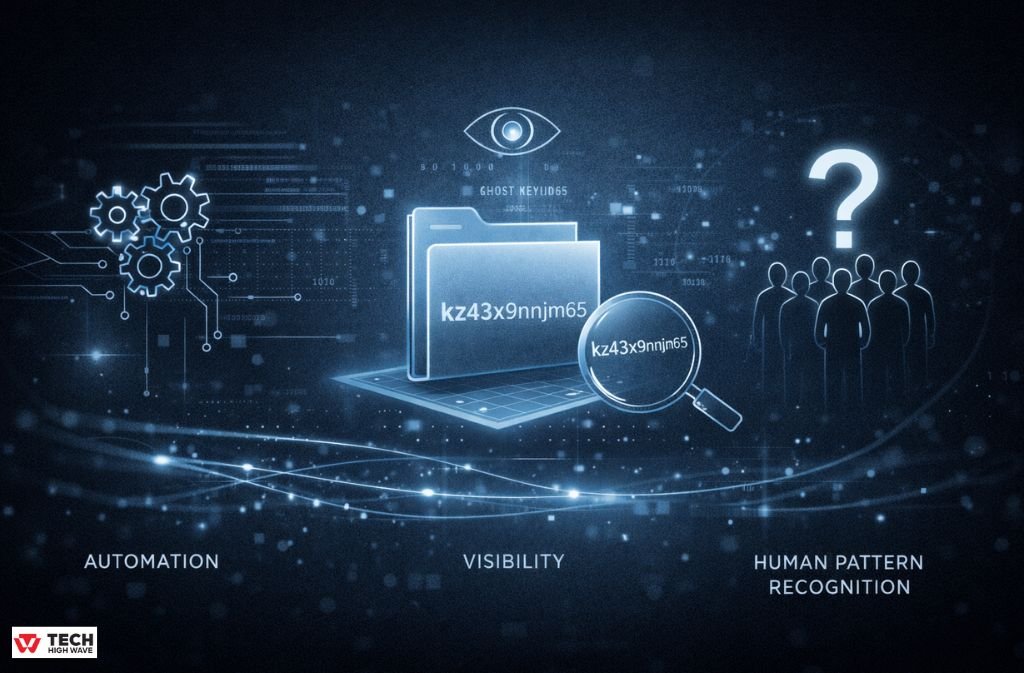
Three forces drive this phenomenon:
-
Automation at scale
Backend identifiers are now generated constantly by analytics tools, AI models, and distributed systems. -
Visibility leaks
Logs, placeholders, and debug references increasingly surface in public-facing environments. -
Human pattern recognition
When people see the same unfamiliar string repeatedly, they search it.
kz43x9nnjm65 fits this pattern perfectly.
Where kz43x9nnjm65 Commonly Appears
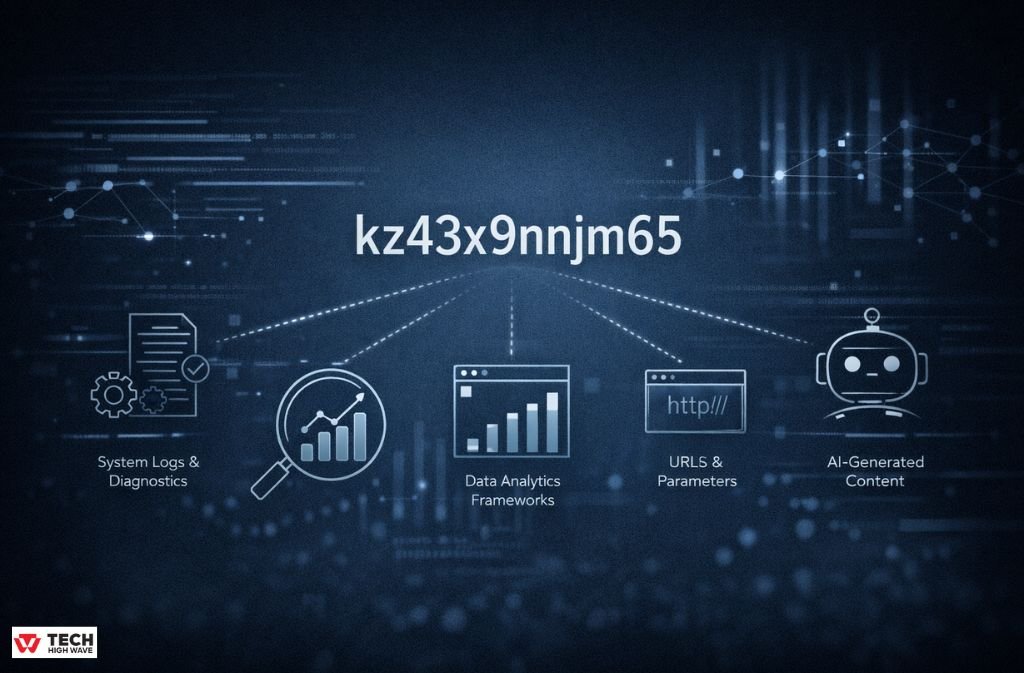
Based on 2026 search data and technical environments, this identifier is most often seen in:
1. System Logs & Diagnostics
-
Session migration events
-
Edge-computing handoffs
-
Error tracing
2. Data Analytics Frameworks
-
Dataset identifiers
-
Experiment or model references
-
Industrial integration pipelines
3. URLs & Parameters
-
Dynamic page generation
-
A/B testing variants
-
Cached or temporary resources
4. AI-Generated Content (By Accident)
-
Product placeholders
-
Auto-generated descriptions
-
Unreplaced internal references
Also Read: Is Coomersu Legit? What You Should Know Before Visiting
Why kz43x9nnjm65 Is Trending in Early 2026
The spike in interest is not random.
Confirmed Drivers
-
Synchronized software updates
Large platforms often deploy identical placeholders globally. -
Session migration architecture
Many edge and AI-driven systems now use 12-character Base32/Base64-style identifiers to track user movement across nodes. -
AI-assisted publishing
When placeholder replacement fails, identifiers leak into public content.
When millions of users encounter the same unfamiliar code, search engines reflect that confusion instantly.
Are These “Semantic Identifiers”?
In 2026, some identifiers contain structured metadata, though it’s still machine-oriented.
Contextual (Not Universal) Patterns
-
“KZ” prefix
Commonly observed in industrial IoT and logistics systems to denote Key Zone or routing clusters. -
“65” suffix
Frequently used to reference:-
Cluster numbers
-
Deployment groups
-
Versioning segments
-
Important: these interpretations depend entirely on the generating system. There is no universal dictionary for identifiers like kz43x9nnjm65.
Reference vs. Authentication: The Most Important Distinction
This distinction is critical in 2026.
kz43x9nnjm65 is a Reference
It points to data inside a system.
It Is Not Authentication
This alphanumeric code does not:
-
Verify identity
-
Grant access
-
Approve transactions
Many modern scams rely on technical mimicry, using identifiers to appear legitimate. The risk lies in how the string is presented, not the string itself.
Legit System Log vs. Scam Message: How This ID Is Used (and Abused)
This is where real-world confusion happens.
Legitimate vs. Phishing Usage Comparison
| Attribute | Legitimate System Log | Phishing / Scam Message |
|---|---|---|
| Where it appears | Logs, dashboards, internal tools | SMS, email, pop-ups |
| Tone | Neutral, technical | Urgent, threatening |
| Context | Timestamp, service name, node info | Vague or missing |
| Instruction | None | “Verify now”, “Click immediately” |
| Example | Session migrated: kz43x9nnjm65 → node-65 |
“Account linked to kz43x9nnjm65 is compromised” |
| Links | Internal or none | External shortened links |
| Role of ID | Reference only | Pretends to be authentication |
| Risk | Harmless | High |
The Golden Rule
A real system identifier never asks you to take action. If it does, it’s not the system—it’s a scam.
AI Hallucinations vs. System Artifacts
Another reason kz43x9nnjm65 appears publicly is automation failure, not intent.
How These Leaks Happen
-
Backend system generates placeholder IDs
-
AI generates content dynamically
-
Placeholder replacement fails
-
Content is published anyway
Hallucination vs. Artifact
| Scenario | Meaning |
|---|---|
| AI invents a code | Hallucination |
| AI repeats real ID | System artifact |
| Same ID across sites | Shared backend |
| ID as product name | Placeholder leak |
In e-commerce and analytics-heavy platforms, this has become increasingly common in 2026.
Real-World Example: Analytics & E-Commerce
In early 2026:
-
Analytics IDs appeared as product SKUs
-
A/B test labels were indexed by Google
-
Session tokens leaked into URLs
These incidents transformed backend references into high-volume ghost keywords almost overnight.
Also Check: What Is Zvodeps? Clear 2025 Explanation & Meaning
The R.E.F.E.R. Framework (How to Interpret Any Identifier)
R — Reference, not description
It points elsewhere.
E — Environment matters
Context beats interpretation.
F — Function over meaning
The purpose is technical.
E — Ephemeral by design
Often temporary.
R — Risk comes from misuse
Not existence.
Common Mistakes to Avoid
-
Assuming identifiers store personal data
-
Treating reference IDs as login credentials
-
Sharing them publicly without context
-
Trying to “decode” random strings
What to Do If You See kz43x9nnjm65
Do this:
-
Note where it appeared
-
Check the platform context
-
Ignore it unless action is explicitly required
Don’t do this:
-
Click links tied to it
-
Share it publicly
-
Assume malicious intent
2026 Trends: The Future of Identifiers
-
Short-lived, privacy-first tokens
-
Context-bound session references
-
Reduced semantic meaning
-
Increased automation visibility
Identifiers will become more common and less noticeable, not more informative.
FAQs
Q1. What is kz43x9nnjm65?
kz43x9nnjm65 is a system-generated alphanumeric identifier used by digital platforms to reference data, sessions, or backend processes. It’s a unique code designed for machines, not a password or personal identifier.
Q2. Is kz43x9nnjm65 a virus or malware?
No. kz43x9nnjm65 is completely safe by itself. Malware does not use static, public reference identifiers like this. Risk only arises if it appears in a suspicious email, link, or phishing attempt.
Q3. Can kz43x9nnjm65 track me?
No. The identifier alone cannot track you. Any tracking depends on the system context where it’s used. kz43x9nnjm65 functions purely as a reference ID within digital systems.
Q4. Why does kz43x9nnjm65 appear on websites?
It commonly appears due to:
-
Analytics tracking references
-
A/B or multivariate testing identifiers
-
Unreplaced placeholders in AI-assisted or automated content
Seeing it on a page doesn’t mean your device is compromised.
Q5. Is kz43x9nnjm65 a password or login key?
No. This identifier does not authenticate users or grant access. It is purely a system reference.
Q6. Should I worry if I see kz43x9nnjm65?
Generally, no. Only be cautious if you are prompted to click a link, download files, or enter personal information. Otherwise, it’s safe to ignore.
Q7. Can scammers use kz43x9nnjm65?
Yes. Scammers sometimes embed realistic-looking identifiers like kz43x9nnjm65 in emails, SMS, or fake delivery notifications to appear legitimate. Always verify the sender, hover over links, and never provide sensitive info.
Conclusion
kz43x9nnjm65 isn’t mysterious—it’s infrastructural. Its rise as a ghost keyword reflects how modern systems operate: automated, distributed, and occasionally leaky. Understanding the difference between reference and risk allows users to stay informed without panic.
In 2026, digital literacy isn’t about decoding strings—it’s about recognizing systems.
Related: CNLawBlog Explained: Which One Is Real and Which One Isn’t