Ever notice how “innovation” is thrown around everywhere? People say it like it’s simple—just a buzzword. But anyone who’s actually tried to lead change knows it’s messy, unpredictable, and sometimes frustrating. That’s where the Kellogg Innovation Network, or KIN, comes in.
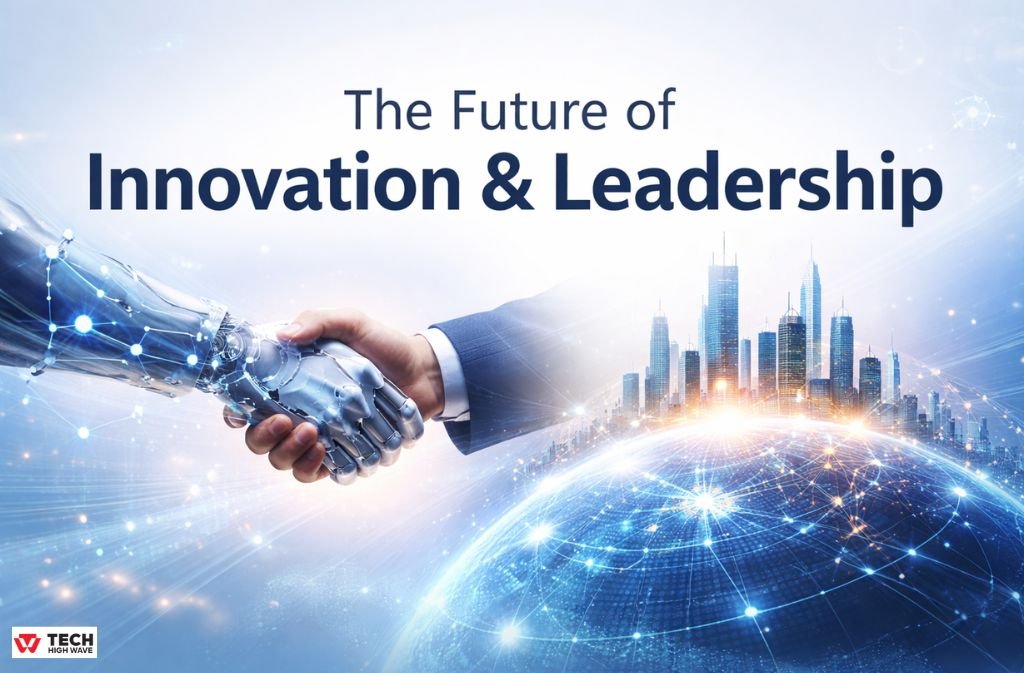
Back in the day, KIN was mostly a networking platform. Leaders met, shared ideas, and maybe left with a few notes. But fast forward to 2026, and things look very different. KIN has evolved. It’s now more about reinventing leadership itself—especially in a world where AI isn’t just a tool; it’s a teammate.
Why KIN Feels Different
Picture this: a room—or a virtual space—full of people who all think they know the right answer. And then someone asks a question that nobody expected. The room gets quiet. Tension. But then, slowly, ideas start to collide, recombine, and spark new possibilities. That’s KIN in action.
It’s not just about exchanging business cards. It’s about messy, human problem-solving at a global scale. Leaders wrestle with questions like:
- What happens if AI can do half the decisions my team does today?
- How do we redesign work so humans focus on what only humans can do?
- What systems do we need to make innovation repeatable, not just lucky?
These aren’t questions with easy answers. And that’s exactly the point.
The Human-AI Partnership
By 2026, AI will have stopped being “just a tool.” It’s now a collaborator. It spots patterns we can’t see, highlights opportunities we might miss, and keeps track of things humans simply forget. But—and this is important—it doesn’t decide what matters. Humans still do that.
KIN teaches leaders how to use AI without losing their own judgment. How to let it handle repetitive tasks so humans can focus on strategy, empathy, creativity, and messy judgment calls. Some leaders report their teams move almost twice as fast with this kind of collaboration. Crazy, right?
Real-World Lessons
KIN isn’t theoretical. For example, some projects with UNICEF used KIN principles to design medical devices in communities that are hard to reach. Teams didn’t just brainstorm—they prototyped, tested, failed fast, learned, and scaled. The lessons weren’t in a slide deck; they were in trial, error, and human judgment.
Another example: companies exploring renewable energy used KIN’s systems-thinking approach to rethink entire supply chains. The results? Not just efficiency gains, but entirely new business models that might have taken years to emerge otherwise.
From Summits to Systems
You may have heard of KIN Global, their big summits where leaders meet. That’s still part of it. But most of the heavy lifting now happens in the Northwestern Innovation Institute. They combine AI, big data, and KIN thinking to spot trends and emerging technologies before the rest of the world notices. It’s a way of turning curiosity into actionable insight.
In short, KIN is no longer an event you attend. It’s a method for thinking and acting differently, in real time.
How You Can Think Like KIN
Even if you’re not part of the network, you can borrow some ideas:
- Embrace friction. If everyone agrees with you, you’re probably not learning anything.
- Test ideas quickly, accept failure, and iterate.
- Look at systems, not individual problems. A fix in one corner might break another.
- Collaborate across industries, not just your own. Innovation often comes from unexpected places.
It’s not a formula. There’s no checklist. That’s the beauty of it.
Why It Matters Now
The world isn’t slowing down. AI is changing how we work, what humans focus on, and what decisions even look like. Organizations that cling to old management styles are falling behind. KIN shows a way forward: a human-centered, adaptable approach that makes innovation part of how you think, not just what you do.
FAQs
Q1. What is the Kellogg Innovation Network (KIN)?
The Kellogg Innovation Network (KIN) is a global leadership network where executives, academics, and policymakers tackle complex challenges. Participants learn to think differently, experiment with innovative strategies, and continuously adapt in the fast-changing world of 2026. KIN blends human insight with AI-driven intelligence for real-world impact.
Q2. Who can join KIN?
KIN welcomes leaders from business, academia, government, and social impact sectors. Executives, entrepreneurs, researchers, and policymakers can all benefit from KIN’s programs, workshops, and collaborative projects designed to solve global-scale problems and foster long-term innovation.
Q3. Do you need to study at Kellogg to benefit from KIN?
No. While KIN is based at the Kellogg School of Management, its principles and practices can be applied anywhere. Leaders outside Kellogg can adopt KIN’s mindset of creative experimentation, systems thinking, and AI-human collaboration to drive innovation in their organizations.
Q4. How does AI fit into the Kellogg Innovation Network?
In KIN, AI is treated as a strategic collaborator, not a replacement for human decision-making. It helps leaders analyze data, spot emerging trends, and identify opportunities faster. By combining human judgment with AI insights, KIN participants accelerate innovation and make more informed strategic decisions.
Q5. Why is the Kellogg Innovation Network important in 2026?
KIN is crucial in 2026 because modern leadership requires navigating complexity, uncertainty, and AI-human collaboration. Leaders who adopt KIN principles can innovate continuously, respond to global trends faster, and turn complex challenges into scalable, impactful solutions.
Q6. What are the key benefits of participating in KIN?
Leaders gain access to global perspectives, cross-sector collaboration, and real-world experimentation. KIN enhances strategic thinking, equips participants with tools for AI integration, and fosters a mindset of perpetual innovation—essential for thriving in the Intelligent Age.
For More Visit: TechHighWave