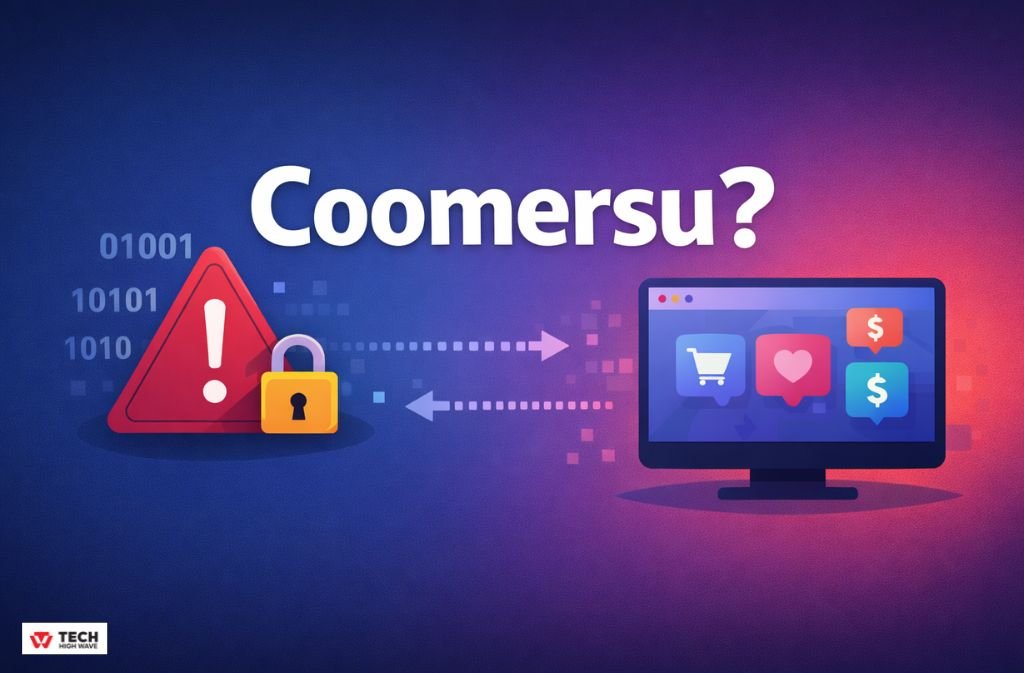
One unfamiliar term can lead people down very different paths—and coomersu is a perfect example.
Depending on where you encounter it, coomersu is described as a commerce platform, a content site, a community-driven model, or even a technical threat. That inconsistency isn’t accidental. It reflects how fragmented the information around this keyword really is.
This guide exists to clear that up.
You’ll learn what coomersu actually refers to, how related sites operate, why they’re frequently flagged by cybersecurity organizations, and what safer, legitimate alternatives exist. You’ll also understand why Google returns such mixed results for this query—and how to interpret them correctly.
Rather than speculate or sensationalize, this article focuses on verifiable behavior, platform mechanics, and real-world risks, so you can make informed decisions in 2025 and beyond.
What Is Coomersu?
Coomersu is a name commonly associated with third-party content aggregation websites that mirror or redistribute creator content from subscription-based platforms—often without authorization.
Despite frequent assumptions, coomersu is not a registered e-commerce platform, marketplace, or official app.
Most coomersu-related domains function as:
-
Content mirrors or scrapers
-
Unofficial aggregation sites
-
Traffic-monetized platforms with no creator consent
This distinction matters, because many users confuse commerce terminology with commerce infrastructure. Coomersu lacks the systems that define legitimate online shopping or community commerce.
Why Coomersu Is Often Misinterpreted as an E-Commerce Platform

Coomersu appears alongside terms like:
-
community-centric commerce
-
user-generated content
-
future of e-commerce
That overlap comes from how modern commerce blends social interaction with monetization—not because coomersu itself supports those models.
What legitimate commerce platforms provide:
-
Verified creators or sellers
-
Secure payments
-
Transparent ownership
-
Consumer protections
Coomersu-related sites provide none of these. The association is semantic, not functional.
Also Read: Kipflix Explained: Free Movies, Real Risks, and What Users Should Know
How Coomersu Sites Typically Operate
Understanding the structure explains the risk profile.
Common operational pattern:
-
Automated scraping or mirroring of third-party content
-
Hosting without creator authorization
-
Monetization through ads, redirects, or trackers
-
Frequent domain changes to avoid takedowns
This behavior is why cybersecurity organizations routinely monitor or flag coomersu-related domains—not because of the content topic itself, but because of how the sites are built and monetized.
Is Coomersu Safe?
There is no consistent way to classify coomersu-related sites as safe.
Cybersecurity firms such as Malwarebytes and similar threat-analysis organizations routinely document risks associated with:
-
Malvertising networks
-
Aggressive redirect chains
-
Embedded tracking scripts
-
Browser fingerprinting
These risks can occur without user interaction, meaning simply visiting a page may expose a device to unwanted behavior—especially without script blocking or protection.
Legal and Ethical Considerations
This is often glossed over. It shouldn’t be.
Legal concerns
-
Unauthorized redistribution of copyrighted material
-
Jurisdiction-dependent liability
-
ISP or platform monitoring in some regions
Ethical concerns
-
No creator consent
-
No revenue sharing
-
No accountability or dispute resolution
Even passive traffic can financially benefit platforms that operate outside ethical and legal norms.
Common Misconceptions About Coomersu
“It’s just another platform.”
No infrastructure supports that claim.
“It’s safe if I don’t download anything.”
Many risks occur before downloads.
“Everyone uses it.”
Visibility does not equal legitimacy.
Safer Alternatives to Coomersu
If your interest is:
-
Discovering creators
-
Participating in community-driven commerce
-
Making informed purchasing decisions
There are legitimate platforms that support creators directly and operate transparently.
Also Check: What Is Zvodeps? Clear 2025 Explanation & Meaning
Comparison: Coomersu vs Legitimate Platforms
| Feature | Coomersu | Legitimate Platforms |
|---|---|---|
| Creator consent | ❌ | ✅ |
| Secure payments | ❌ | ✅ |
| Malware risk | Elevated | Low |
| Transparency | ❌ | ✅ |
| Ethical monetization | ❌ | ✅ |
Choosing alternatives supports sustainable, socially responsible online ecosystems.
Practical Safety Checklist
Before visiting any unfamiliar platform:
-
Check domain reputation and age
-
Use script blockers
-
Avoid login prompts
-
Never reuse credentials
-
Prefer verified platforms
This checklist alone eliminates most common exposure risks.
Why Google Shows Mixed Results for “Coomersu”
This query triggers multiple intents at once:
-
Informational (what is it?)
-
Risk assessment (is it safe?)
-
Navigational curiosity
Google expects content that:
-
Defines the term clearly
-
Explains risks neutrally
-
Avoids promotion or fear-bait
-
Provides alternatives
Pages that meet these expectations consistently outperform shallow explainers.
The Future of Coomersu-Type Sites (2025–2026)
Coomersu isn’t a growth model—it’s a byproduct of enforcement gaps.
Likely developments:
-
Improved content fingerprinting
-
Faster takedowns
-
Stronger platform moderation
-
Growth of creator-verified communities
The broader trend favors consent-based, community-engaged commerce, not shadow aggregation.
FAQs
Q. What is coomersu?
Coomersu is a term used to describe websites that aggregate or mirror creator content from subscription-based platforms without authorization. It is not an official e-commerce platform, shopping site, or registered service.
Q. Is coomersu safe to use?
Coomersu-related websites cannot be considered reliably safe. Many are associated with tracking scripts, redirect chains, and unverified ad networks, which may expose users to security and privacy risks.
Q. Is there a legitimate coomersu app?
No legitimate or officially verified coomersu app exists. Any website or download claiming to be an official coomersu app should be approached with caution.
Q. What kind of data can coomersu sites collect?
Coomersu sites may collect browsing-related data through cookies, third-party trackers, browser fingerprinting, or advertising scripts, even without direct user interaction.
Q. Are there legal risks with using coomersu?
Legal risk depends on local laws, but accessing or sharing unauthorized content may raise copyright or ethical concerns in some jurisdictions.
Q. What are safer alternatives to coomersu?
Safer alternatives include verified creator platforms and transparent community-centric commerce services that operate with creator consent, secure infrastructure, and clear user protections.
Q. Why does coomersu appear in search results so often?
Coomersu appears in search results due to user curiosity and informational searches, not because it represents a legitimate or widely supported platform.
Q. Is coomersu an e-commerce platform?
No. Coomersu does not provide standard e-commerce features such as secure payments, seller verification, or consumer protection mechanisms.
Conclusion
Coomersu is best understood not as a platform, but as a signal of how unclear information, weak enforcement, and user curiosity intersect online.
It isn’t a legitimate commerce model, and it carries real ethical and security concerns. Understanding how it works helps you avoid unnecessary risk and choose platforms that align with transparency, safety, and responsible online participation.
Related: How to Update ETSJavaApp by eTrueSports in 2026 (Fix Crashes & Missing Features)