A blank page.
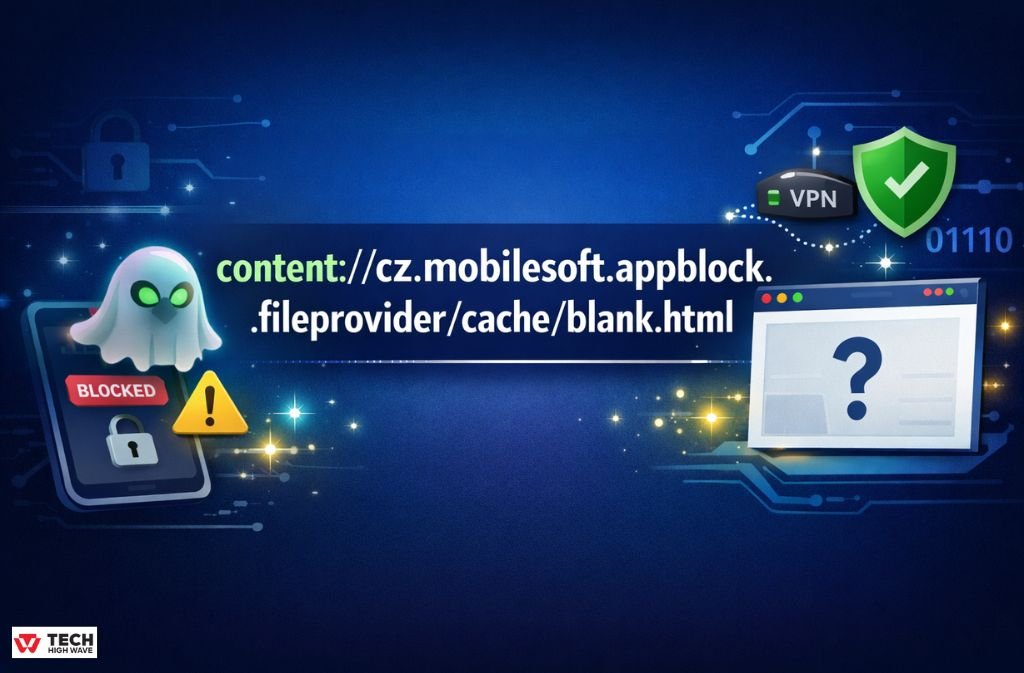
No website. No warning. Just a strange line of text sitting in your address bar:
content://cz.mobilesoft.appblock.fileprovider/cache/blank.html
It feels unsettling. Like something broke—or worse, slipped past your phone’s defenses.
But here’s the reality: this isn’t malware, a hack, or a privacy breach. It’s a digital ghost—a harmless artifact left behind when Android’s security system does exactly what it’s supposed to do.
This guide explains what this URI really is, why it suddenly appears more often in 2026, how AppBlock triggers it, and what—if anything—you need to fix. We’ll also unpack why Google sometimes indexes it, why VPN-based blockers make it worse, and how to verify that your data is still fully sandboxed and secure.
If you want clarity instead of speculation, read on.
What is content://cz.mobilesoft.appblock.fileprovider/cache/blank.html?
Think of this string as a receipt without a product.
The link you clicked was intercepted and quietly erased by AppBlock—often to block distractions, trackers, or restricted sites. Your browser, however, didn’t get the memo. It tries to open something and is left holding only a blank internal file and a technical label it doesn’t understand.
That label is this URI.
It’s not a webpage.
It’s not meant for you.
And it was never designed to appear in a browser.
Breaking Down the URI (Visually & Simply)
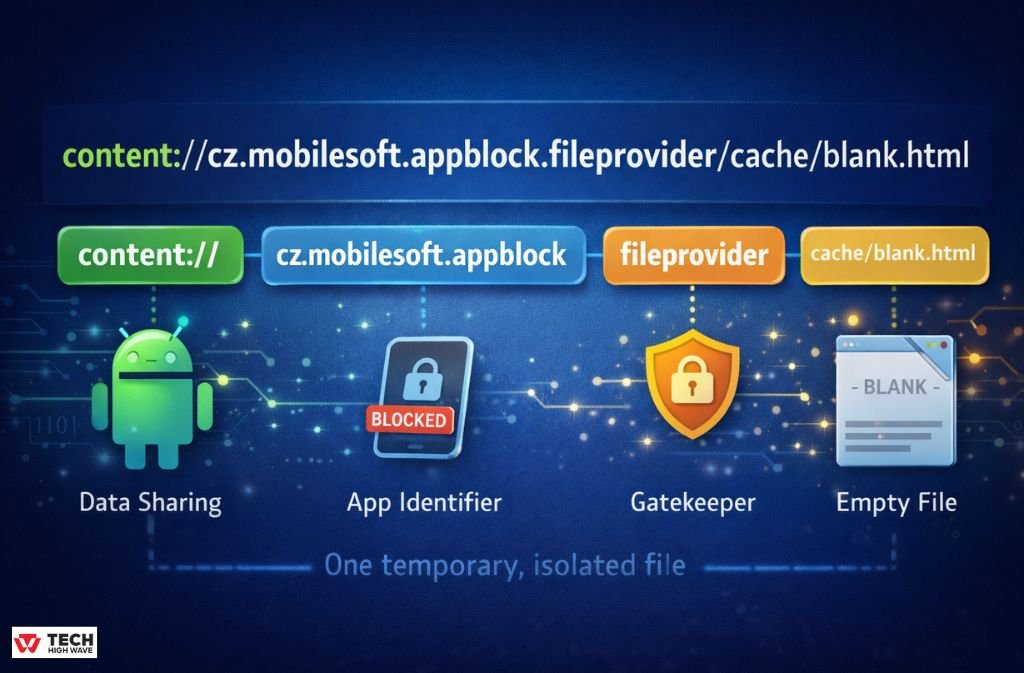
content://

cz.mobilesoft.appblock

fileprovider

cache/blank.html
What Each Part Means
-
content:// → Android’s private data-sharing system
-
cz.mobilesoft.appblock → AppBlock’s internal identifier
-
fileprovider → A secure Android gatekeeper
-
cache/blank.html → A temporary placeholder file
In plain terms:
Android gave your browser permission to see one empty file—and nothing else.
Is content://cz.mobilesoft.appblock.fileprovider a Virus?
No. Unequivocally no.
What It Is NOT
-
❌ Not malware
-
❌ Not spyware
-
❌ Not phishing
-
❌ Not remote access
What It IS
-
A blocked link artifact
-
A sandboxed placeholder
-
Proof that app isolation is working
If this were malicious, your browser wouldn’t be able to see it at all.
Also Read: Dropbox 8737.idj.029.22 Error: Fix It Fast (2026 Guide)
Why This Happens More Often in 2026 (The Systemic “Why”)
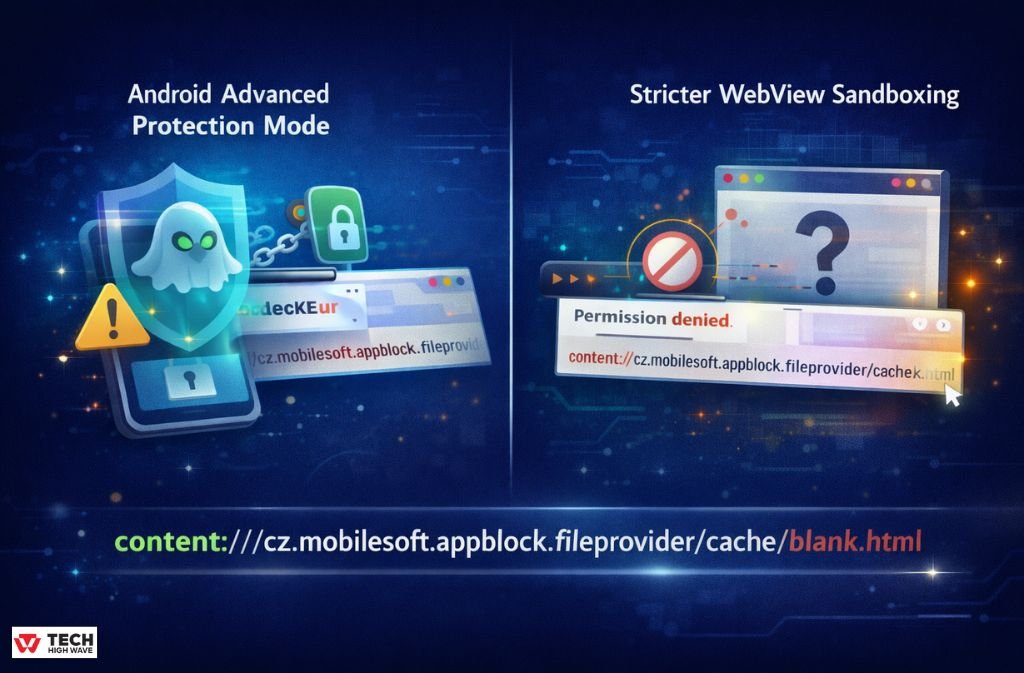
This issue didn’t suddenly appear—it became visible.
1. Android Advanced Protection Mode
Modern Android versions aggressively isolate apps. When AppBlock blocks a link, it can no longer “explain” that block to your browser. It can only pass a sanitized reference.
2. Stricter WebView Sandboxing
Browsers are now forbidden from resolving foreign content:// URIs unless permissions are explicitly granted—and even then, only narrowly.
The result is URI context leakage:
An internal AppBlock reference escapes its sandbox and lands in your address bar, where it looks alarming but means nothing.
This is a side effect of stronger privacy, not instability.
Web Filter vs Local VPN: Why AppBlock Triggers This
AppBlock can block links in two very different ways.
AppBlock Blocking Methods Compared
| Method | How It Works | Why blank.html Appears |
|---|---|---|
| Web Filter | Blocks URLs at the app layer | Clean redirect |
| Local VPN Mode | Intercepts traffic before the browser | Handshake may stall |
Why VPN Mode Causes More “Hanging” Pages
In 2026, many users enable AppBlock’s local VPN to block trackers system-wide. If that VPN fails to handshake cleanly with the browser—even briefly—the request never completes.
Your browser waits.
The page never loads.
You’re left staring at cache/blank.html.
The 10-Second Fix (The Toggle That Solves Most Cases)
Before clearing caches or reinstalling anything, do this:
-
Open AppBlock
-
Turn Web Shield / Web Blocking OFF
-
Wait 5–10 seconds
-
Turn it back ON
This refreshes the FileProvider permission bond between AppBlock and your browser. For most users, the issue disappears immediately.
When You Can Ignore It vs When You Should Fix It
You Can Ignore It If:
-
You saw it once
-
No apps are malfunctioning
-
Links generally work
You Should Fix It If:
-
Links frequently open blank
-
It happens across multiple apps
-
You rely on blocked content for work
Why Google Sometimes Indexes This Link
Google doesn’t discover this URI on its own.
People accidentally share it.
Common scenarios:
-
Posting it in forums asking, “Is this a virus?”
-
Copying the address bar without noticing
-
Sharing via Android Quick Share
Google indexes what people share—even if the link is device-locked and unusable elsewhere.
That’s why others click it and see nothing.
Also Read: NippyBox in 2026: What Happened + Safe Alternatives
Technical Verification (For Power Users)
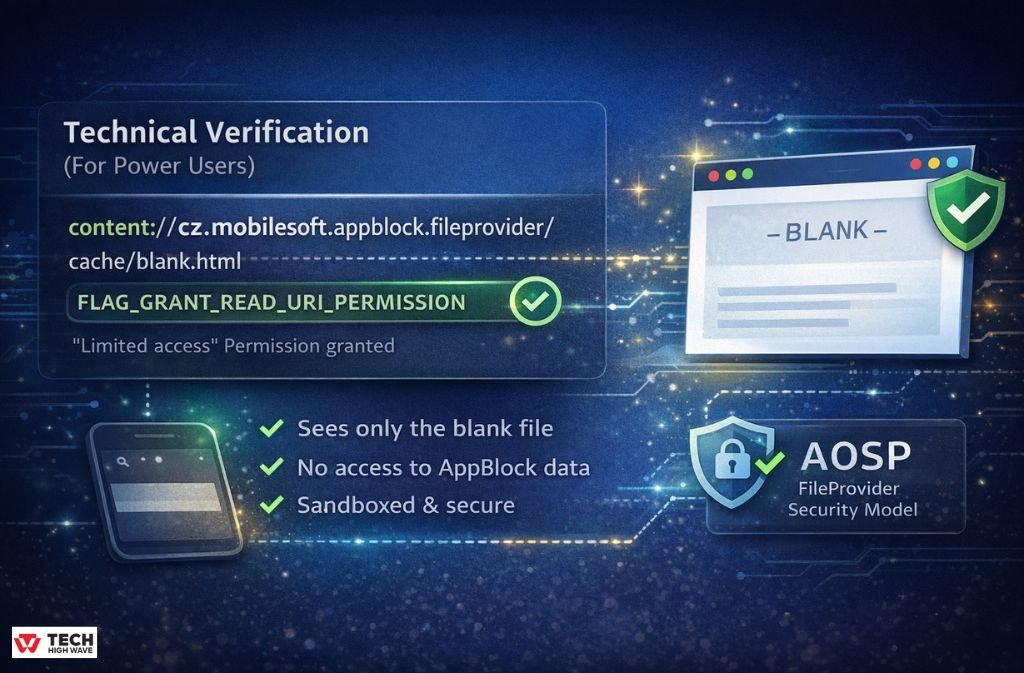
Here’s something most articles miss—and it matters.
If you see this URI, it confirms AppBlock is using
FLAG_GRANT_READ_URI_PERMISSION correctly.
That means:
-
Your browser can see only one blank file
-
It cannot browse AppBlock’s storage
-
It cannot escape the sandbox
According to Android Open Source Project documentation, this is the intended FileProvider security model.
Ironically, the blank page is evidence that your data is protected.
Normal URL vs AppBlock Internal URI
| Feature | Normal URL | AppBlock URI |
|---|---|---|
| Format | https://example.com | content://cz.mobilesoft… |
| Audience | Public web | App-only |
| Browser Support | Full | None |
| Security Model | Network-based | Sandbox-based |
| Risk Level | External | Internal & isolated |
Common Mistakes to Avoid
-
❌ Reinstalling Android
-
❌ Installing “URI cleaner” apps
-
❌ Granting extra permissions
-
❌ Assuming compromise
-
❌ Factory resetting blindly
FAQs
Q. Is cz.mobilesoft.appblock fileprovider a virus?
No. It’s a legitimate Android FileProvider reference used by AppBlock. It does not indicate malware or hacking.
Q. Why does content://cz.mobilesoft.appblock.fileprovider/cache/blank.html open instead of a website?
AppBlock intercepted and blocked the original link, leaving your browser with a blank placeholder file.
Q. Can this URI steal my data?
No. The browser is granted access to only one empty file—nothing else.
Q. Why does this show up in Google Search?
Users accidentally share it. Google indexes what people post, even if the link cannot function publicly.
Q. How do I stop it from appearing again?
Toggle AppBlock’s Web Shield, review VPN mode settings, or exclude affected apps from blocking.
Q. Does this affect iPhones?
No. This behavior is specific to Android’s content provider system.
Conclusion
content://cz.mobilesoft.appblock.fileprovider/cache/blank.html looks frightening because it’s unfamiliar—but it’s simply the shadow of a blocked link.
It appears when Android’s modern privacy systems collide with aggressive app-level blocking. Nothing more.
In most cases, you can ignore it.
If it’s persistent, a simple toggle or rule adjustment fixes it.
And if you ever see it, know this: your sandbox is intact.
Related: Android Backup Software 2026: A Definitive, Practical Guide