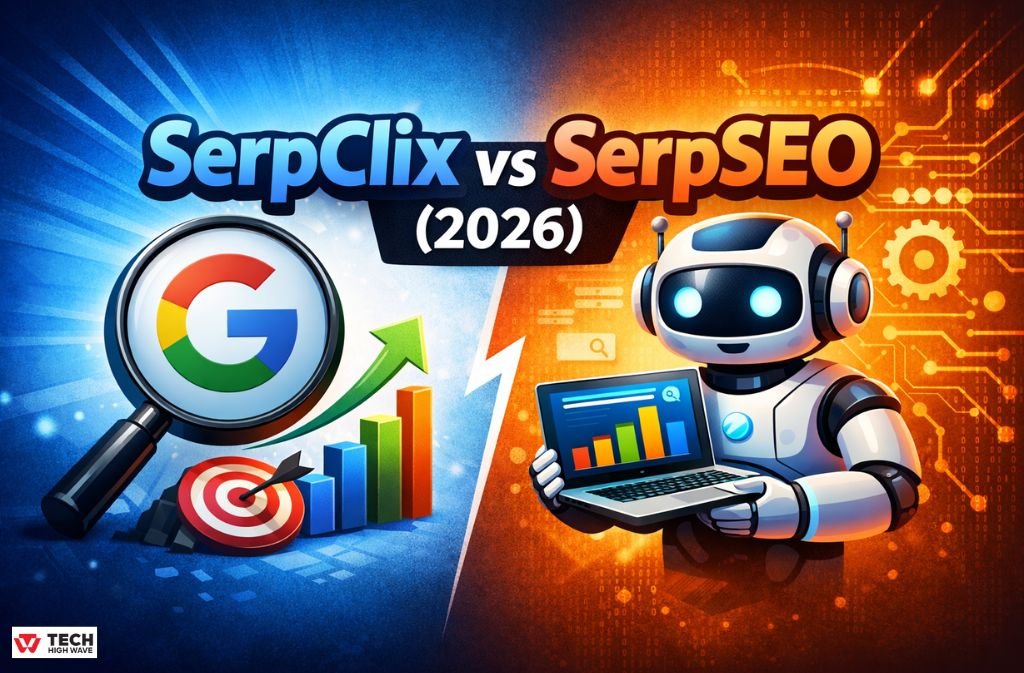
In 2026, SerpClix is the gold standard for high-authority, human-validated behavior, while SerpSEO is a budget automation tool best used for short-term testing on non-critical sites.
CTR manipulation still works.
But it’s riskier now. Period.
Google’s Navboost system tracks 13 months of interaction data — clicks, pogo-sticking, scroll depth, dwell time, and query satisfaction. If your behavioral signals look fake, flat, or time-compressed, your rankings don’t just stall… they decay.
This guide breaks down SerpClix vs SerpSEO in 2026, what actually works, what gets flagged, and how pros use CTR tools without blowing up money sites.
TL;DR (Quick Verdict)
|
What Are SerpClix and SerpSEO?
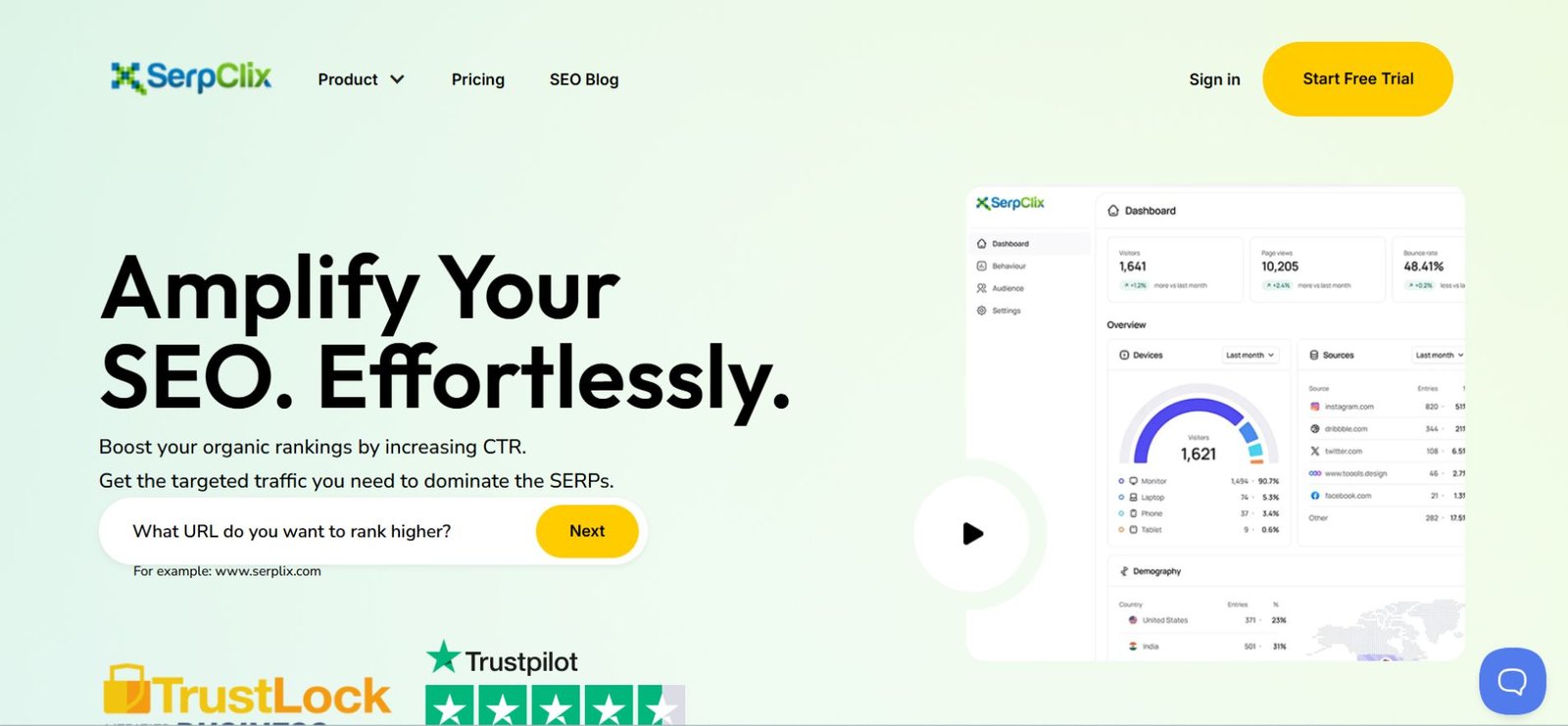
SerpClix
A human-click marketplace. You pay real users to search for your keyword and click on your result. The clicks originate from residential IPs, with natural scroll and reading behavior.
SerpSEO
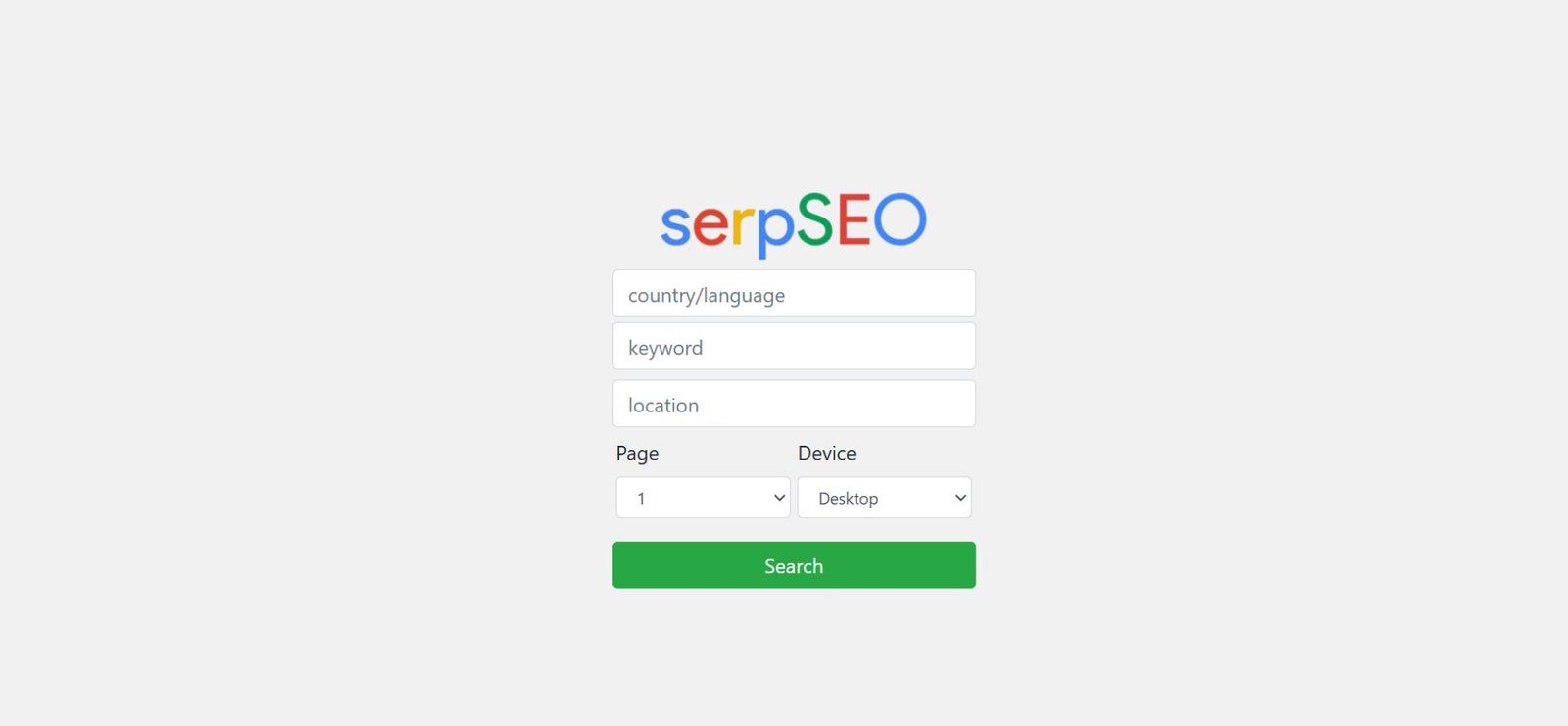
A mixed CTR platform using semi-automated click systems plus some human traffic. Faster to scale. Cheaper. Also noisier in Google’s behavioral datasets.
Why people still use them in 2026:
Because Navboost still weighs user interaction, and CTR remains a ranking modifier when used carefully.
The 2026 Reality: How Google Actually Detects Fake CTR
Google no longer looks at “clicks” in isolation.
Navboost correlates:
-
Time of day vs search volume curve
-
Scroll behavior & hover patterns
-
Query satisfaction (did users refine the search?)
-
Return-to-SERP behavior (pogo-sticking)
-
IP reputation clusters
-
Historical interaction baselines (13-month window)
This kills flat automation patterns.
A static 60-second dwell time?
Google sees through it.
Real humans pause. Scroll. Skim. Sometimes leave early. Sometimes read deeply. The randomness is the signal.
That’s why SerpClix survives, and cheap CTR bots keep getting smoked.
Feature Comparison (Quick Glance)
| Feature | SerpClix | SerpSEO | Notes |
|---|---|---|---|
| Click Naturalness | High | Medium | Humans vs mixed pool |
| Geo Targeting | Advanced | Limited | Matters for Local SEO |
| CTR Scheduling | Granular | Basic | Time-curve matching matters |
| Cost | Higher | Lower | Budget vs stability |
| Detection Risk | Lower | Higher | Still gray-hat |
| Best For | Money sites, Local SEO | Testing, churn projects | Use strategically |
2026 Pricing Reality (Fresh Data)
SerpClix pricing has quietly gone up.
As of February 2026:
-
Starter Plan: $197/month (~660 clicks)
-
Effective CPC: $0.30–$0.60 per click
That price point is the tax you pay for unspoiled residential IP traffic.
SerpSEO remains significantly cheaper — but that discount is paid in risk.
The “Improbable CTR” Flag (Why Overdoing It Gets You Burned)
Google Search Console in 2026 uses AI-driven anomaly detection.
If your page has:
-
100 impressions
-
90 clicks
You don’t look “optimized.”
You look manipulated.
This can trigger Security & Manual Actions warnings or soft trust dampening.
CTR manipulation now has to respect impression-to-click ratios and natural growth curves.
If your audience sleeps at 3 AM and your campaign fires 50 clicks, then?
That’s a red flag.
SerpClix lets you schedule traffic to mirror real search behavior.
SerpSEO’s patterns are often too flat.
The Local Pack Edge (Why Local SEOs Still Use SerpClix)
For Map Pack rankings, SerpClix has a unique advantage:
-
Verified local residential IPs
-
Real users triggering:
-
Map views
-
Driving directions
-
Call clicks
-
This creates local behavioral reinforcement that SerpSEO can’t reliably replicate.
For plumbers, dentists, locksmiths, and home services — SerpClix is still the only CTR tool that consistently nudges Map Pack visibility.
Case Study: Local Service Page Example
Scenario:
A roofing company page stuck at position #9 for “emergency roof repair [city].”
SerpClix Campaign:
-
Geo-targeted
-
Gradual CTR increase
-
Scheduled during peak search hours
Result:
Moved from #9 → #4 within 3 weeks
SerpSEO Test (same niche, different page):
-
Faster CTR injection
-
Cheaper volume
Result:
Jumped to #5, then decayed back to #8 within 10 days
Takeaway:
Fast artificial signals decay.
Human-like patterns stabilize.When CTR Tools Work (and When They Don’t)
CTR Tools Work When:
Your page already matches search intent
-
Your title & meta deserve clicks
-
You’re stuck at positions 4–15
-
You drip traffic naturally
-
You mirror real search volume curves
CTR Tools Fail When:
data-end=”5541″>Your content is thin
-
Your page doesn’t answer the query
-
You spike CTR unnaturally
-
You try to brute-force rank junk pages
-
You ignore zero-click SERPs
CTR doesn’t replace SEO fundamentals.<br data-start=”5722″ data-end=”5725″ />It amplifies them.
Zero-Click SERPs & AI Overviews (2026 Context)
Over 60% of searches now end without a click due to AI Overviews.
CTR tools now indirectly influence:
-
Autocomplete suggestions
This makes CTR less about raw traffic and more about behavioral presence in Google’s training loops.
Subtle engagement > brute clicks.
Risk vs Reward Matrix (2026)
| Strategy | Tool | Risk Level | 2026 Effectiveness |
|---|---|---|---|
| Local Map Packs | SerpClix | Low | ⭐⭐⭐⭐⭐ |
| Money Site Keywords | SerpClix | Medium | ⭐⭐⭐⭐ |
| Title Tag Testing | SerpSEO | High | ⭐⭐⭐ |
| Churn & Burn Sites | SerpSEO | Extreme | ⭐⭐ |
The Mic-Drop Reality
In 2026, SerpSEO is basically a burner tool.
If you’re testing a throwaway niche site you don’t mind losing, go for it.
But for a client’s $10k/month money site?
You’d be insane not to use real humans.
FAQs
Q1. Can I safely combine SerpClix and SerpSEO for SEO?
Yes. You can combine SerpClix and SerpSEO, but only for testing low-risk pages. Never mix multiple CTR traffic sources on high-value or money pages, as Google’s AI-driven Navboost system may detect unnatural behavior and flag your site.
Q2. How much daily CTR is safe to run in 2026?
In 2026, the safe daily CTR depends on search impressions and traffic patterns. Aim for natural CTR ranges between 5–18%, and avoid sudden spikes. Matching clicks to the impression volume curve ensures your campaign looks human and reduces the risk of GSC flags like “Improbable CTR.”
Q3. Will CTR tools like SerpClix or SerpSEO replace link building?
No. CTR tools do not replace links. Links remain a core SEO authority signal, while CTR tools only influence ranking momentum and behavioral signals. For lasting results, combine CTR campaigns with high-quality content and authoritative backlinks.
Q4. Is CTR manipulation using SerpClix or SerpSEO against Google’s guidelines?
Yes. Any CTR manipulation is considered gray-hat SEO and violates Google Webmaster Guidelines. While it can temporarily boost rankings, improper use may trigger manual actions or algorithmic penalties. Always use CTR tools conservatively and as a support strategy, not a replacement for solid SEO.
Q5. Which tool is safer for Local SEO in 2026: SerpClix or SerpSEO?
SerpClix is safer for local SEO campaigns because it uses real residential IPs and realistic user behavior, which can trigger Map Pack interactions. SerpSEO’s mixed user pool has higher detection risk and is less reliable for geo-targeted ranking boosts.
Q6. Can CTR tools improve rankings permanently?
CTR tools alone cannot guarantee permanent rankings. Their impact depends on content quality, user satisfaction, and link authority. They act as amplifiers for pages that already satisfy search intent but won’t sustain rankings for low-value content.
Final Verdict
Best practice:
Use CTR tools as supporting signals, not as a ranking crutch.
Your content still has to deserve clicks.
SerpClix is expensive because it’s harder to detect.
SerpSEO is cheap because Google can see through it faster.
Gray-hat still works — but sloppy gray-hat dies fast in 2026.
Expect CTR manipulation to remain viable in 2026 — but AI SERPs will punish sloppy campaigns faster than ever.