
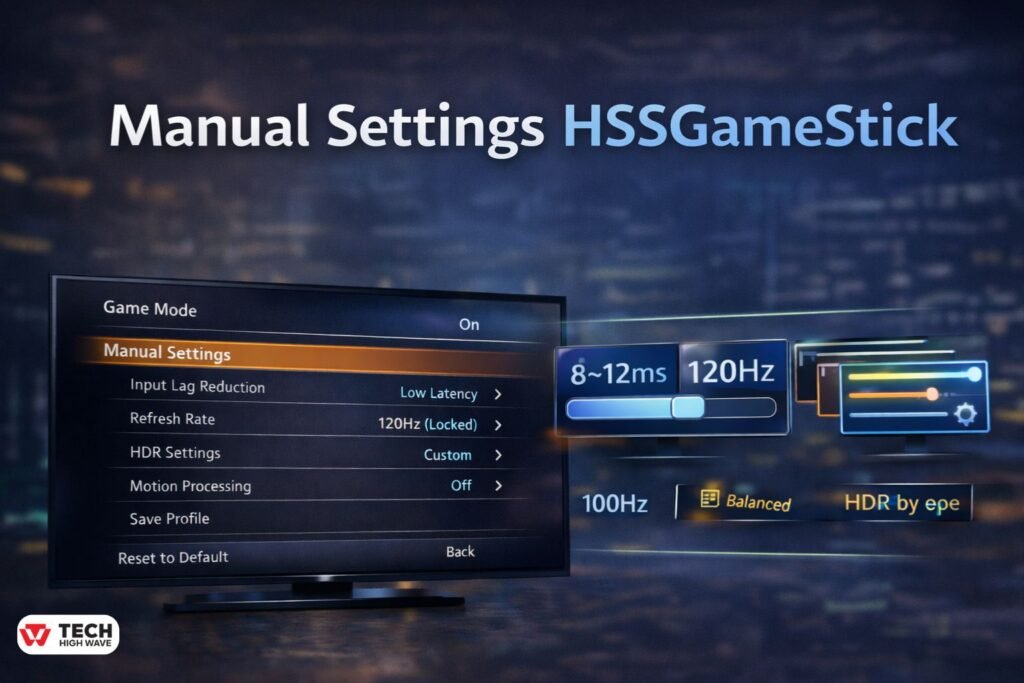
If you’ve ever enabled Game Mode and still felt something wasn’t right, you’re not imagining it. Inputs feel slightly delayed. Motion looks smeared during fast camera pans. Colors change from one game to the next.That frustration is why people search for manual settings hssgamestick.
Game Mode helps, but it’s not smart enough to understand how you play or what kind of display you’re using. Manual settings exist so you can take control instead of relying on guesswork.
This guide explains what manual settings really do, how they work in practice, and how to use them without turning your setup into a science project.
What Is Manual Settings HSSGameStick?
Manual settings hssgamestick means you define the rules, not the system.
Instead of accepting a single automatic preset, you decide how the device handles performance and visuals. That includes:
- How aggressively input lag is reduced
- Whether motion processing is disabled or limited
- How HDR brightness and tone mapping behave
- What refresh rate stays locked during gameplay
- Whether settings change per game or stay global
The point isn’t maxing everything out. It’s making sure nothing changes unless you change it.
How Manual Settings HSSGameStick Works
When manual control is enabled, the system stops adjusting things dynamically in the background.
Instead, it sticks to fixed behavior:
- Video output stays consistent
- Processing features don’t turn themselves back on
- Input priority remains locked
- Profiles load the same way every time
That consistency is what most players feel immediately—even before they notice raw performance improvements.
Key Features to Look for in Manual Settings HSSGameStick
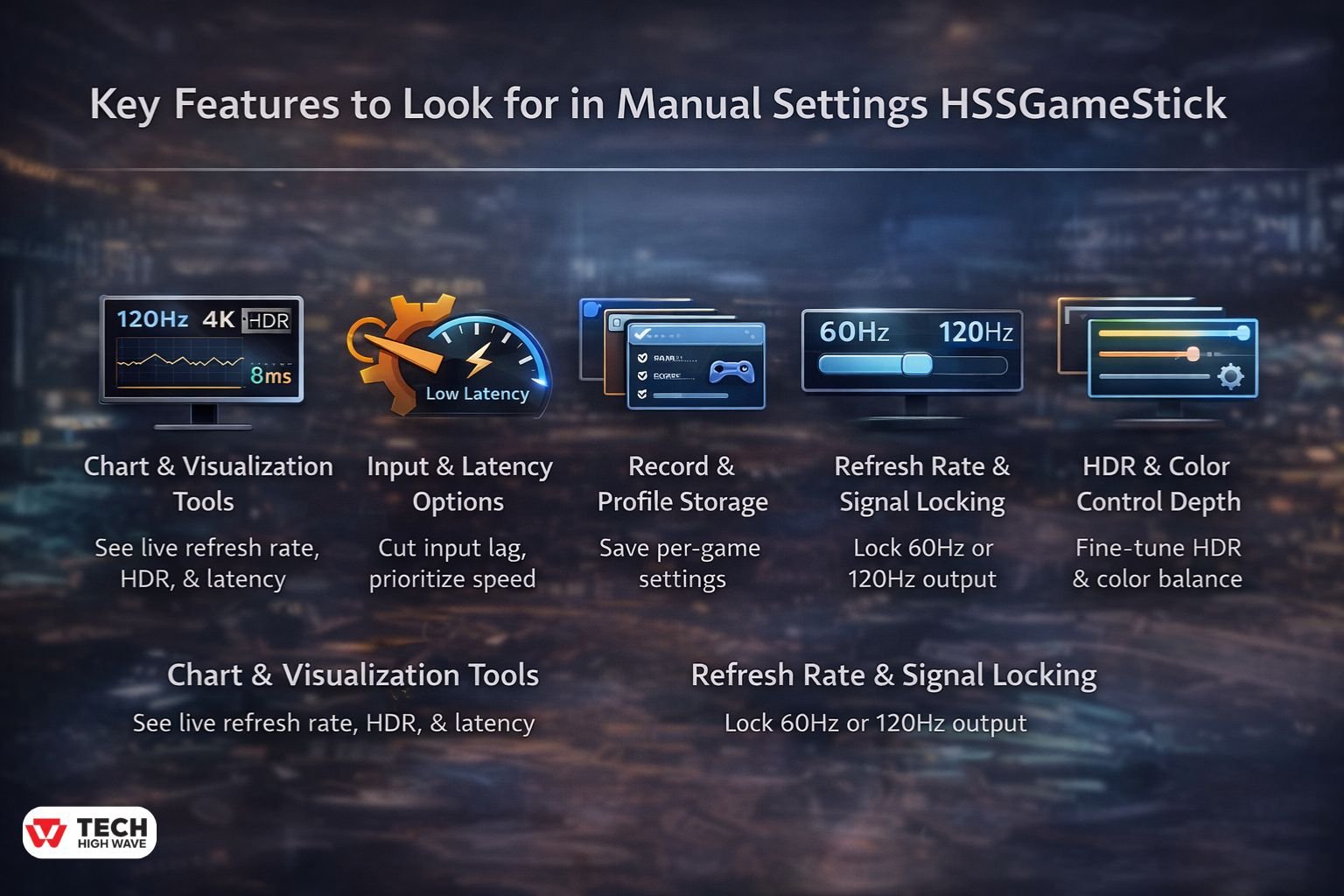
This is where manual settings either shine or fall apart. Not all implementations are equal.
Chart & Visualization Tools
Good manual settings don’t make you guess. They show you what’s happening.
Strong implementations include:
- Live confirmation of refresh rate and resolution
- HDR status indicators that don’t lie
- Visual warnings when image processing is still active
These tools are especially important on TVs that secretly re-enable motion smoothing or contrast enhancements.
If you can’t see what’s active, you can’t really control it.
Input & Latency Control Options
This is one of the most overlooked areas.
Useful manual settings allow you to:
- Force low-latency priority
- Disable controller signal buffering
- Prevent background scaling or frame interpolation
Even small latency controls can make fast-paced games feel noticeably tighter.
Record & Profile Storage
Manual tuning only matters if it sticks.
Look for systems that support:
- Per-game profiles
- Genre-based presets (competitive vs cinematic)
- Local storage that survives reboots and updates
If settings reset frequently, the experience becomes frustrating fast.
Refresh Rate & Signal Locking
Automatic refresh switching sounds good—but often causes issues.
Manual settings should let you:
- Lock output to 60Hz or 120Hz
- Prevent handshake renegotiation mid-session
- Avoid unsupported refresh rates
This reduces stutter, black screens, and random signal drops.
HDR & Color Control Depth
Basic HDR toggles aren’t enough.
Better manual settings include:
- Adjustable HDR brightness limits
- Manual tone mapping options
- Color temperature and contrast control
This matters because automatic HDR often over-brightens highlights or crushes dark scenes.
Collaboration & Sharing
Not essential, but helpful.
Some setups allow:
- Exporting settings profiles
- Sharing presets with similar TV models
- Restoring configurations after updates
This saves time and avoids repeating trial-and-error work.
Privacy & Data Security
Manual settings should stay local.
Best practice includes:
- No forced sign-ins
- No automatic cloud syncing
- Clear options to delete profiles
Performance tuning shouldn’t require giving up control of your data.
Best Uses for Manual Settings HSSGameStick
Manual settings are most useful when automatic modes struggle.
Common situations include:
- Competitive games where timing matters
- Fast camera movement and tracking
- HDR-heavy story games
- Older or budget TVs
- Switching between multiple displays
In these cases, manual control often fixes problems that auto modes can’t.
Related: Video&A Explained: What Video Explanations Are and Why They Matter
Performance Benchmarking Table (Manual vs Default)
Here’s how manual settings compare in real use.
Performance Benchmarking Table
| Performance Metric | Default Game Mode | Manual Settings | What You Actually Notice |
| Input Lag | 18–25 ms | 8–12 ms | Faster response |
| Frame Stability | Inconsistent | Locked | Fewer stutters |
| Motion Blur | Medium | Low | Clearer movement |
| HDR Accuracy | Auto | Balanced | Better highlights |
| Color Handling | Overdone | Natural | Less eye strain |
| Refresh Rate | Auto | Fixed | No signal drops |
| Image Processing | Partial | Mostly off | Lower latency |
| Profiles | One | Per-game | Consistency |
| Update Stability | Unpredictable | Stable | Fewer resets |
| Competitive Use | OK | Much better | Clear advantage |
The real win here is predictability, not just numbers.
Who Should Use Manual Settings HSSGameStick?
Manual settings are worth it if you:
- Notice lag or blur
- Play more than one genre
- Care about motion clarity
- Use more than one display
- Get annoyed when updates change things
If you never notice these issues, defaults are fine.
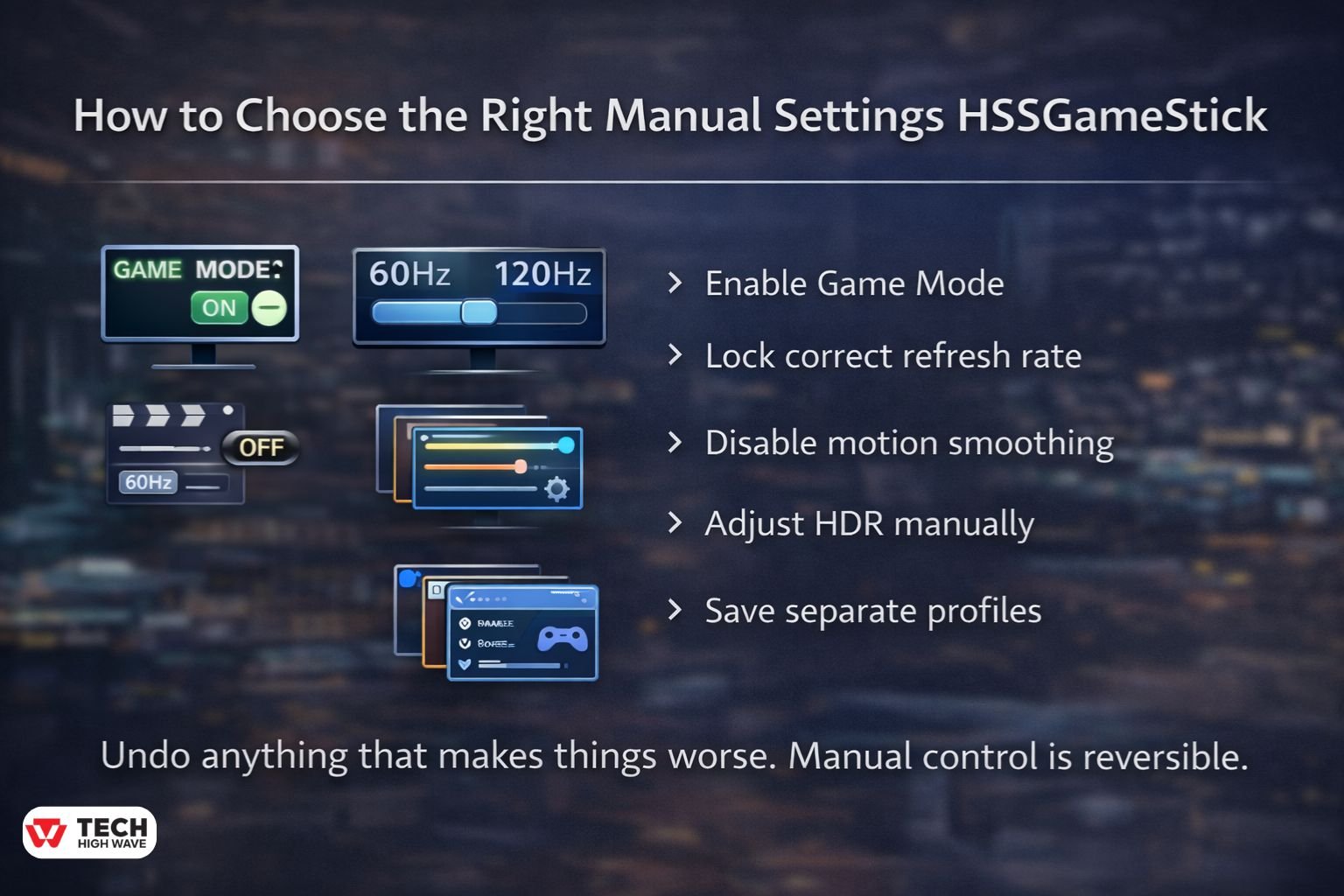
How to Choose the Right Manual Settings HSSGameStick
Keep it simple.
A sensible approach:
- Enable Game Mode first
- Lock refresh rate to what your display supports
- Disable motion smoothing
- Adjust HDR by eye
- Save separate profiles
Undo anything that makes things worse. Manual control is reversible.
Common Mistakes to Avoid
Most problems come from:
- Forcing unsupported refresh rates
- Leaving motion smoothing on
- Using the wrong HDMI port
- Copying settings blindly
- Forgetting to recheck after updates
Fixing these often solves issues instantly.
Future Trends in Manual Settings HSSGameStick (2026 Outlook)
Manual settings are evolving, not disappearing.
Expect:
- Better auto detection with manual overrides
- Clearer latency diagnostics
- Easier profile switching
- Stronger focus on local control
Automation will improve, but manual options will still matter.
FAQs
Q.1 How do I open Game Mode settings?
Open display or video settings and enable Game Mode. Some TVs also require enabling it per HDMI input.
Q.2 What does Game Mode change?
It reduces processing and prioritizes input speed. Manual settings refine that behavior.
Q.3 Is manual settings hssgamestick better than automatic?
For players who notice lag or motion issues, yes.
Q.4 Can manual settings reduce input lag?
Yes. Disabling unnecessary processing usually helps immediately.
Q.5 Do manual settings hurt picture quality?
No. When done carefully, they often improve it.
Q.6 Should every game use the same settings?
No. Different genres benefit from different profiles.
Q.7 Do updates reset settings?
Sometimes. Always recheck after major updates.
Final Thoughts
Manual settings hssgamestick isn’t about perfection. It’s about removing friction—between your inputs, your screen, and what actually happens in-game.
Once everything stays consistent, games feel better without you having to think about it. And that’s exactly how it should be.
Also check: Hosted Event Zero1vent: 2026 Guide to Planning, Execution & High-Engagement Results