If you’ve searched for bvostfus python, you’ve probably noticed something strange. There’s no official Python Enhancement Proposal, no GitHub repository with meaningful stars, and no documentation you’d expect from a legitimate Python framework — yet dozens of blogs talk about it as “new software” or a “fast dev solution.” That disconnect is exactly why this topic is gaining traction.
In 2025, developers are increasingly cautious about obscure tools that appear overnight, promise performance gains, and spread mostly through SEO-heavy articles rather than real developer communities. Bvostfus Python sits right in that gray zone. Some pages frame it as a productivity tool, others call it hype, and a few warn it may not be real at all.
This guide cuts through the noise. You’ll learn what Bvostfus Python actually refers to, why people report installation and usage issues, how to evaluate its legitimacy, and what safer alternatives exist. Unlike thin posts that repeat each other, this article focuses on verification, risk analysis, and practical decision-making — the things developers actually care about.
What Is Bvostfus Python?
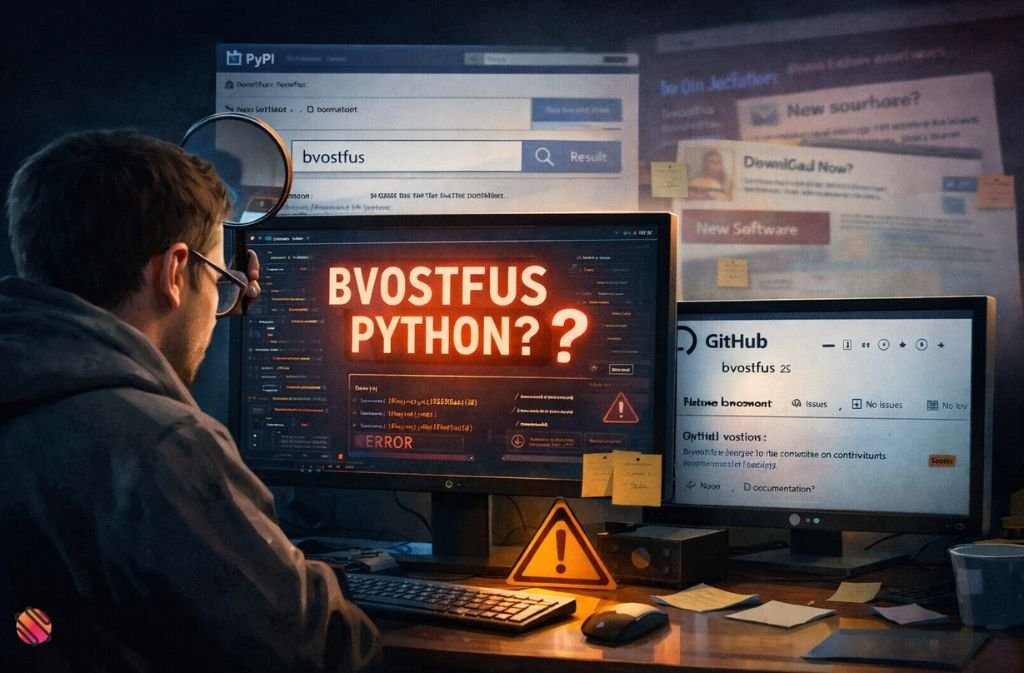
At face value, bvostfus python is described online as a new Python-based software or development utility. However, when you apply standard credibility checks — source transparency, code availability, maintainer identity — the picture changes.
What we can verify
- No widely recognized Python package named bvostfus exists on PyPI
- No credible GitHub repository with active issues or contributors
- No documentation following Python community norms
- Mentions are concentrated on low-authority blogs and content farms
This strongly suggests that bvostfus python is not an established Python library or framework. Instead, it appears to be a keyword-driven concept amplified through SEO rather than developer adoption.
Common Bvostfus Python Issues Reported Online
Even without a confirmed tool, recurring complaints show up across blogs and forums.
1. Installation failures
Users report commands that don’t resolve, missing dependencies, or instructions that simply don’t work.
2. No official support
There’s no maintainer, no issue tracker, and no response channel. When something breaks, you’re on your own.
3. Conflicting explanations
One site calls it an AI tool. Another calls it a Python compiler add-on. That inconsistency is a red flag.
4. Security uncertainty
Downloading software without verified sources increases exposure to:
- Malware
- Data exfiltration
- Browser hijacking
How to Evaluate Tools Like Bvostfus Python (Developer Checklist)
Before trusting any new Python software, run it through this filter.
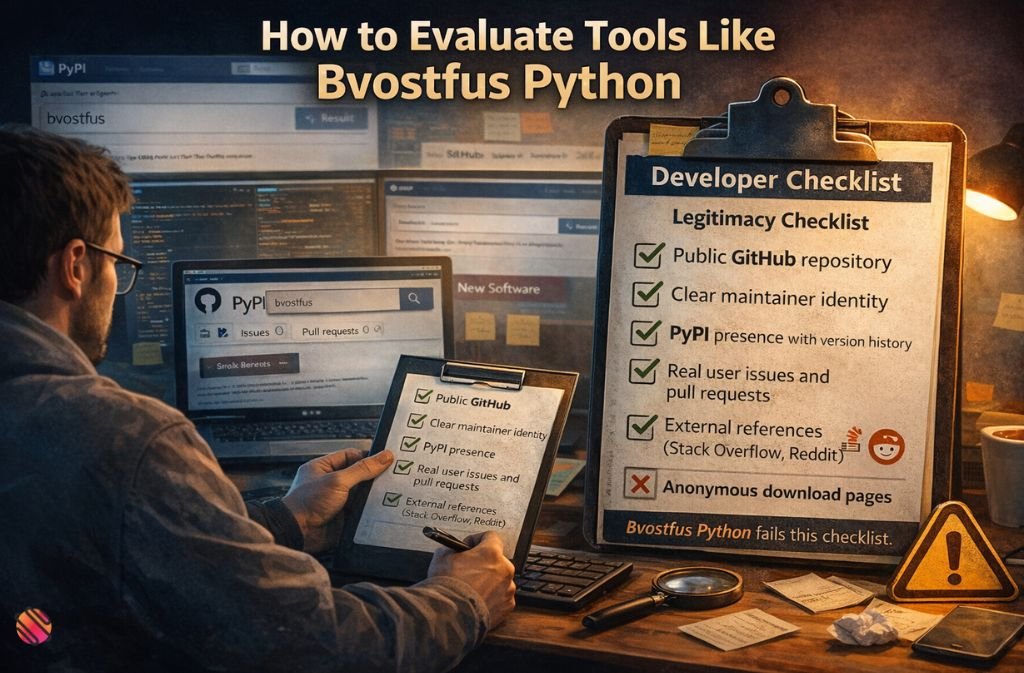
The 6-point legitimacy checklist
- ✅ Public GitHub repository
- ✅ Clear maintainer identity
- ✅ PyPI presence with version history
- ✅ Real user issues and pull requests
- ✅ External references (Stack Overflow, Reddit)
- ❌ Anonymous download pages
Bvostfus Python currently fails most of these checks.
Bvostfus Python vs Legitimate Python Tools
| Feature | Bvostfus Python | Real Python Libraries |
| PyPI listing | ❌ | ✅ |
| Documentation | Vague | Detailed |
| Community | None | Active |
| Security transparency | Unknown | Audited |
| Long-term support | Unclear | Roadmapped |
Safer Alternatives (If You’re Looking for Faster Python Development)
Credibility note: All tools below are maintained by active developer communities and documented on PyPI and their official project sites, following standard Python governance and security practices.
If your goal is productivity or performance, these proven tools actually deliver:
- Poetry – Dependency management
- FastAPI – High-performance APIs
- Pydantic – Data validation
- PyInstaller – Packaging Python apps
- Black – Code formatting
Each has years of community testing behind it.
Best Practices for Evaluating Unknown Python Packages
Before installing any unfamiliar Python package, especially one discovered through blogs or search results, apply these baseline checks:
- Verify the package exists on PyPI with a version history
- Review commit activity and contributors on GitHub
- Look for discussion on Stack Overflow, Reddit, or mailing lists
- Avoid direct binary downloads without source code
- Check whether the documentation explains how and why the tool works
These practices reduce security risk and prevent wasted setup time.
Common Mistakes Developers Make With Mystery Tools
- Trusting blogs over repositories
- Installing before verifying sources
- Assuming “new software” means innovation
- Ignoring community signals
In 2025, the absence of evidence is evidence.
Future Outlook: Will Bvostfus Python Become Real?
It’s possible the name could later be adopted by a legitimate project. But as of 2025, there’s no sign of active development. Trends like this usually fade once curiosity drops.
Developers are better served focusing on tools with visible roadmaps and real contributors.
FAQs
Q. Is Bvostfus Python a real Python library?
No. As of 2025, Bvostfus Python is not a verified Python library. There is no official listing on PyPI, no maintained GitHub repository, and no recognized documentation from the Python community.
Q. Why do people search for bvostfus python issue fix?
Most users search for bvostfus python issue fix after encountering broken installation steps or conflicting explanations online. These searches are driven by confusion caused by unclear or misleading blog content.
Q. Is it safe to install Bvostfus Python?
Installing bvostfus python is not considered safe because there are no verified maintainers, source repositories, or security audits. Unknown software can expose systems to malware or data risks.
Q. Does Bvostfus Python improve Python performance?
No evidence supports this claim. There are no benchmarks, tests, or documentation showing that Bvostfus Python improves performance, speed, or developer productivity.
Q. Could Bvostfus Python be a scam?
There is no confirmed scam activity, but the lack of transparency, documentation, and community support is a strong warning sign. Developers should avoid tools without verifiable sources.
Q. What should I use instead of Bvostfus Python?
Use established Python tools with active communities, such as FastAPI for APIs, Poetry for dependency management, or PyInstaller for packaging applications.
Conclusion
Bvostfus Python is best understood as a search-driven concept, not a proven Python tool. While it’s attracting attention online, it lacks the transparency, documentation, and community support expected from legitimate software.
If your goal is to write better Python, build faster applications, or learn modern workflows, stick with tools that have earned trust over time. Curiosity is healthy — blind installation is not.
Related: Problem on Llekomiss Software? Causes, Fixes & Quick Solutions (2025)