Most workplace systems still assume a simple truth: people work because they’re paid to. But that model has been breaking down for years. By 2026, the real question isn’t how much people work—it’s how engaged they feel while doing it.
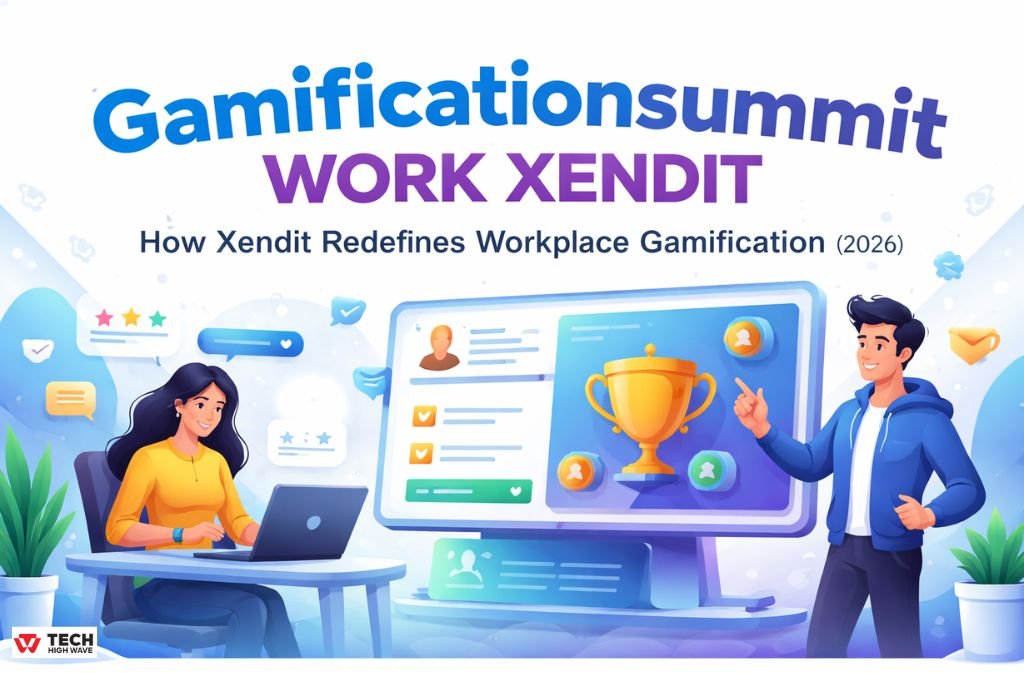
That’s where the idea behind gamificationsummit work Xendit starts to matter.
At first glance, it looks like a strange keyword. But behind it sits something much more interesting: a shift in how companies like Xendit are redesigning work itself. Not with flashy perks or surface-level rewards, but by quietly integrating game-like systems into daily workflows—so progress feels visible, effort feels recognized, and momentum becomes addictive in a good way.
This article doesn’t just explain gamification in theory. It shows how it actually plays out inside a modern fintech environment, where deadlines are tight, systems are complex, and motivation can’t be forced.
What “GamificationSummit Work Xendit” Really Means
At its core, gamificationsummit work Xendit refers to how Xendit applies gamification principles—often discussed in industry summits—to improve employee engagement, productivity, and internal culture.
It’s not about turning work into a game. That’s the misunderstanding.
It’s about borrowing specific mechanics from games—progress tracking, feedback loops, achievement systems—and embedding them into real work environments in a way that feels natural, not artificial.
What makes this topic relevant is that it sits at the intersection of three things:
- evolving workplace psychology
- fintech-scale operational complexity
- and the growing need for real-time performance visibility
Why Xendit Turned to Gamification
Inside fast-moving teams, especially in fintech, a quiet problem tends to emerge. Work keeps moving, but motivation becomes inconsistent. Some days feel productive, others feel invisible.
Xendit didn’t approach this as a morale issue. They treated it as a system design problem.
Instead of asking, “How do we motivate employees?” the better question became:
“How do we make progress visible, consistent, and rewarding without forcing it?”
Gamification offered a practical answer.
Not in the sense of adding points everywhere, but by creating:
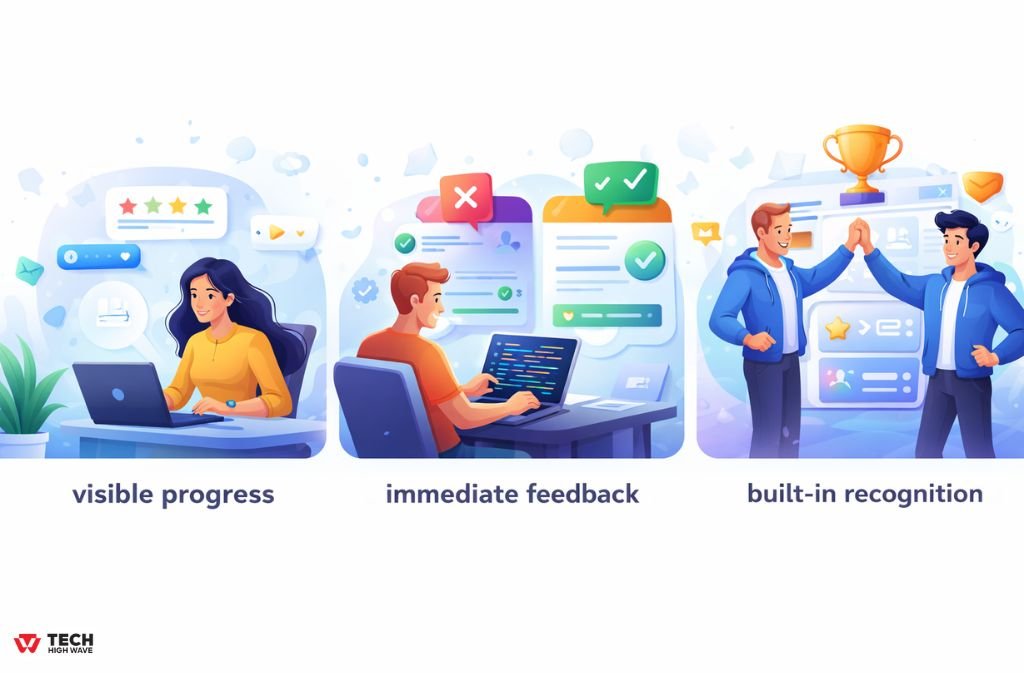
- clear signals of progress
- immediate feedback after actions
- small moments of recognition built into the workflow
Over time, this changes how work feels. Tasks don’t disappear into silence—they register, they move, they count.
How Gamification Actually Shows Up in Daily Work
One of the more interesting things about Xendit’s approach is that the system doesn’t feel like a separate layer. It doesn’t sit in a dashboard that people check once a week.
It lives inside the tools people already use.
When a deployment goes through cleanly, a quiet acknowledgment appears in Slack. When a backlog shrinks meaningfully, it reflects in Jira without needing a meeting to confirm it. When a team hits a consistency milestone, it becomes visible across the system.
Nothing about this is loud. That’s the point.
The goal isn’t to gamify attention—it’s to reinforce momentum.
And over time, that subtle visibility starts to matter more than traditional performance reviews.
The Moment It Didn’t Work (And What Changed)
Not everything worked immediately.
In the early stages, some employees pushed back—especially around leaderboards. One developer described it as “feeling like a game I didn’t agree to play,” particularly during high-pressure release cycles.
That reaction wasn’t ignored.
Instead of removing the system, the company adjusted what was being measured. Raw output stopped being the primary signal. Collaboration, problem-solving, and consistency started carrying more weight.
The shift was small, but it changed everything.
The leaderboard stopped feeling like competition and started feeling like shared progress. It wasn’t about who was fastest—it was about who was moving things forward in a sustainable way.
The Idea of “Velocity” Inside Teams
Over time, teams began using an internal term—half informal, half serious—something they referred to as a “velocity score.”
It wasn’t an official metric on paper. But it captured something real.
Velocity wasn’t about speed alone. It was about how smoothly work moved through a system:
- fewer bottlenecks
- fewer stalled tickets
- fewer last-minute escalations
When velocity was high, everything felt easier. When it dropped, friction showed up immediately.
Gamification helped make that invisible dynamic visible.
And once teams could see it, they could improve it.
A Practical Way to Think About Gamification at Work
If you strip away the buzzwords, the structure is actually simple.
Every effective gamified system inside a workplace tends to follow the same pattern:
First, actions are clearly defined. Not vaguely, but in a way that can actually be tracked.
Then, those actions are given meaning through points, signals, or visible progress markers.
Next comes feedback. Not at the end of the week or quarter, but immediately after something happens.
And finally, recognition. Not always rewards in the traditional sense, but acknowledgment that effort led to movement.
What makes this work isn’t complexity. It’s consistency.
Why This Approach Changes Employee Behavior
The biggest shift isn’t in productivity metrics. It’s in how people relate to their work.
When progress is visible:
- People stay engaged longer
- small wins feel real
- momentum becomes easier to maintain
When feedback is immediate:
- mistakes are corrected faster
- effort doesn’t feel wasted
- improvement becomes continuous
And when recognition is built into the system:
- Motivation doesn’t rely on managers alone
- Teams develop their own internal rhythm
This is why gamification, when done right, doesn’t feel like a tool. It feels like an environment.
Where Most Companies Get It Wrong
A lot of organizations try to copy gamification and end up abandoning it within months.
The pattern is predictable.
They focus too much on rewards, assuming incentives will drive behavior. They track the wrong things, which leads to shallow performance gains. Or they overcomplicate the system to the point where no one wants to engage with it.
The deeper issue is that they treat gamification as an add-on.
At Xendit, the difference is that it’s treated as part of the workflow design itself.
That’s why it sticks.
The Direction This Is Heading in 2026
What’s happening now is just the early version.
Gamification is starting to blend with AI-driven systems that can adjust feedback based on individual behavior. Instead of one static system for everyone, environments are becoming adaptive.
Some employees respond to recognition. Others respond to progress tracking. Others care about collaboration signals.
Future systems won’t guess. They’ll learn.
And when that happens, gamification stops being visible altogether. It simply becomes how work works.
What You Can Take From This
If you’re thinking about applying this in your own environment, the takeaway isn’t to copy what Xendit is doing step by step.
It’s time to think differently about work design.
Start with visibility. Make progress easier to see.
Then focus on feedback. Make it immediate, not delayed.
After that, build recognition into the system—not as an event, but as a natural outcome of movement.
And most importantly, keep it simple enough that people don’t have to think about it.
When it works, it doesn’t feel like gamification. It just feels like work that finally makes sense.
FAQs
Q. What is gamificationsummit work Xendit?
Gamificationsummit work Xendit refers to how Xendit applies gamification principles—often discussed in gamification industry summits—to improve employee engagement, productivity, and internal workflow systems. It focuses on using game-like mechanics such as progress tracking, feedback loops, and recognition to make work more structured and motivating.
Q. How does gamification work in a company like Xendit?
Gamification in a company like Xendit works by embedding game mechanics directly into everyday tools and workflows. This includes:
- progress tracking in tasks
- real-time feedback on performance
- recognition for completed milestones
These elements are often integrated into platforms like Slack and Jira, making work more interactive, measurable, and continuous rather than static or manual.
Q. Is gamification actually effective in the workplace?
Yes, gamification is effective when it is designed around behavior—not just rewards. It improves workplace performance by:
- increasing employee engagement
- reducing task fatigue
- making progress more visible
- reinforcing consistent motivation
However, its success depends on how well it aligns with real work goals and not just surface-level competition.
Q. Why do some employees dislike gamification systems?
Some employees may resist gamification when it feels overly competitive or artificial. This often happens when:
- Leaderboards emphasize ranking over collaboration
- Metrics focus only on speed instead of quality
- Systems feel disconnected from real work
These issues are usually resolved when gamification is redesigned to reward collaboration, consistency, and meaningful contributions rather than pure competition.
Q. What makes Xendit’s approach to gamification different?
Xendit’s approach stands out because gamification is not treated as a separate tool. Instead, it is integrated directly into daily workflows and engineering systems. This means:
- Feedback appears inside existing tools (not external dashboards)
- Recognition is part of normal workflows
- performance signals are continuous, not delayed
This makes the system feel natural rather than forced or artificial.
Q. Can small teams use gamification effectively?
Yes, small teams can use gamification very effectively. Even simple systems such as:
- task completion tracking
- milestone recognition
- basic progress indicators
can significantly improve motivation and clarity. The key is to keep the system simple, transparent, and directly connected to real work outcomes.
Conclusion
The conversation around gamificationsummit work Xendit isn’t really about gamification alone. It’s about a deeper shift in how companies understand motivation, performance, and culture.
The real insight is simple but easy to miss:
- people don’t just want to work—they want to see that their work is moving somewhere
- systems matter more than slogans
- and small feedback loops often outperform big incentives
As more companies move in this direction, the ones that succeed won’t be the ones that add gamification features. They’ll be the ones who redesign work, so progress becomes impossible to ignore.
For More Visit: TechHighWave