Quick Overview (TL;DR)
|
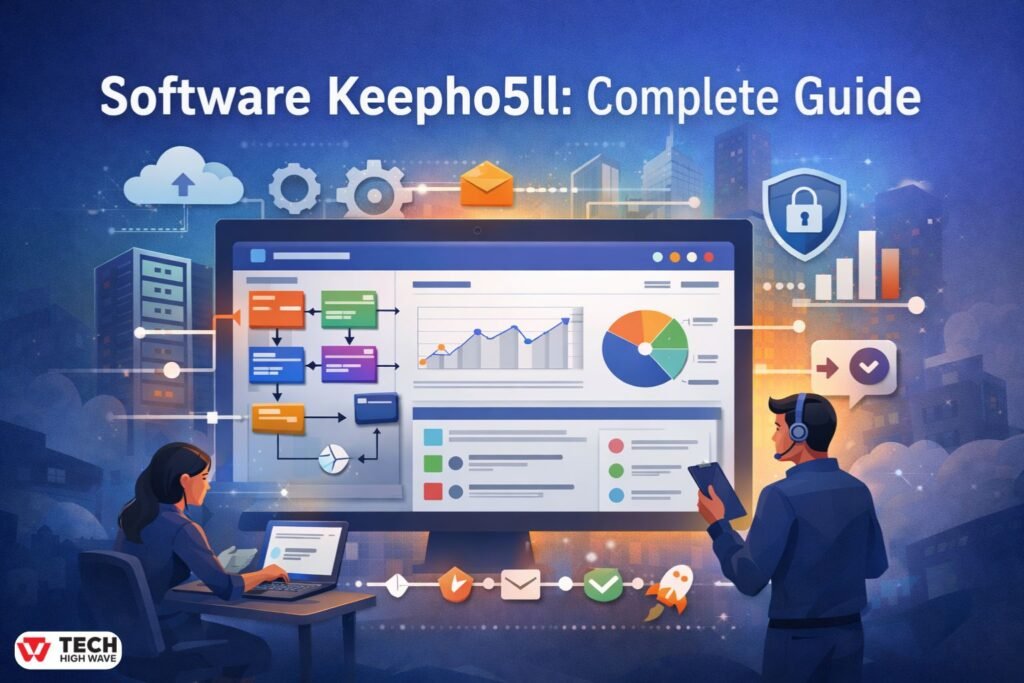
Modern teams often deal with a familiar challenge: too many tools, disconnected workflows, and limited visibility into ongoing work. Tasks get repeated, data becomes scattered, and decision-making slows down.
This is where software keepho5ll has started gaining attention.
Instead of relying on multiple platforms for task tracking, data storage, and communication, this framework offers a more structured way to manage everything in one place. As workflows become more complex, the need for clarity and control becomes harder to ignore.
This guide explores what software keepho5ll is, how it works, where it fits, and what to consider before adopting it.
What Is Software Keepho5ll?
Software keepho5ll is a workflow-driven framework designed to organize processes, manage structured data, and enable collaboration within a single environment.
It combines aspects of project management tools, automation systems, and data platforms. Instead of treating tasks, files, and communication as separate elements, it connects them into one cohesive system.
At a practical level, it acts as a controlled workspace where workflows are defined, tracked, and improved over time.
Some teams adopt it to reduce tool overload. Others use it to bring consistency to processes that have grown difficult to manage.
How Software Keepho5ll Works
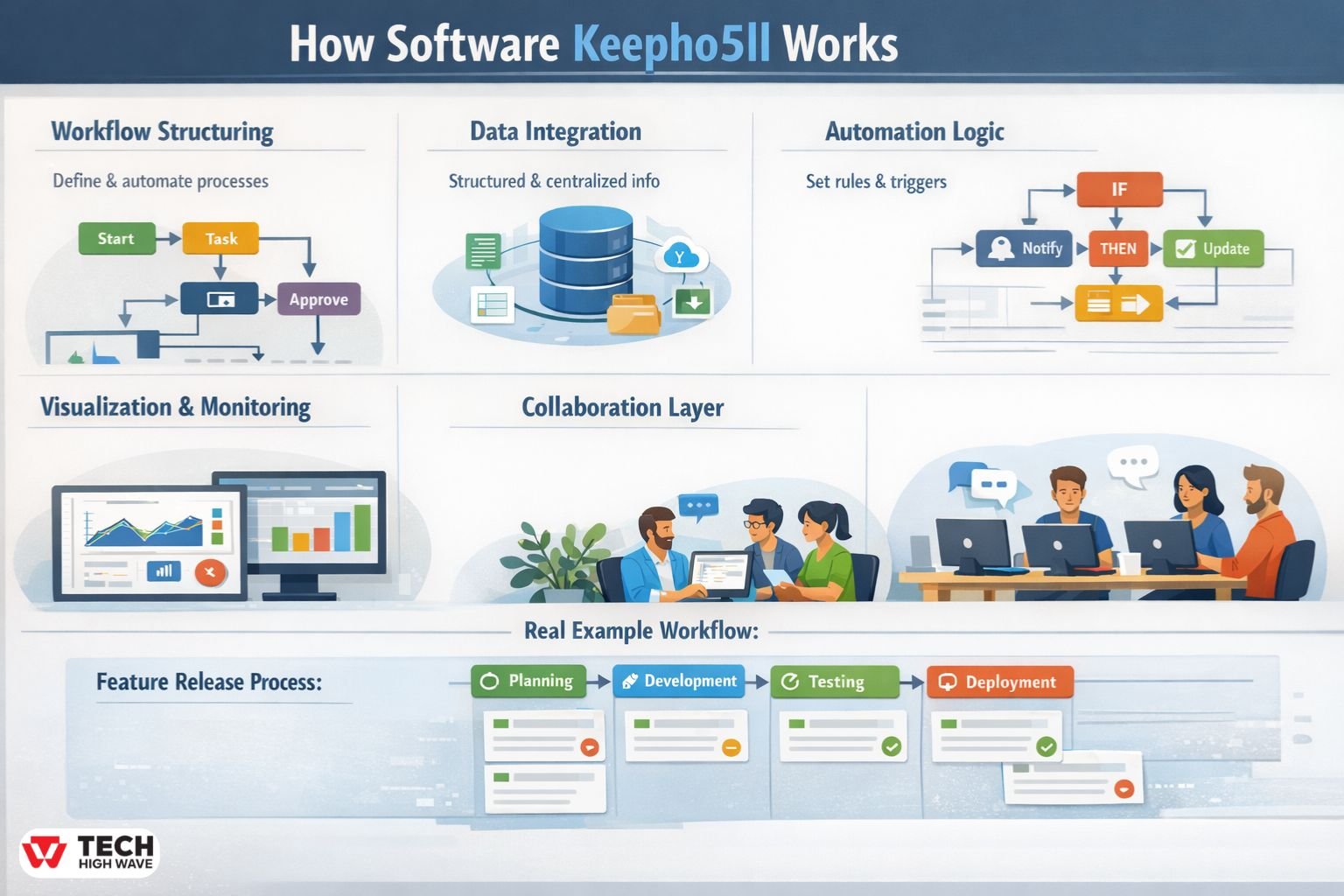
Software keepho5ll operates through a modular system that connects workflows, data, and automation logic.
Workflow Structuring
Processes are defined as step-by-step workflows. These can represent approvals, development cycles, or operational tasks.
Some workflows look simple at the start. As dependencies increase, structure becomes essential.
Data Integration
Information is entered or imported into the system and organized in a structured format.
This is where many teams begin to regain visibility—especially when data was previously scattered across tools.
Automation Logic
Rules trigger actions automatically. A completed step can notify stakeholders, update records, or move a process forward.
Without clear logic, automation can create confusion. When configured correctly, it removes repetitive manual work.
Visualization and Monitoring
Dashboards display workflow progress, performance metrics, and system activity.
When workflows become difficult to track, visualization tools turn scattered data into something immediately understandable—often revealing delays that would otherwise go unnoticed.
Collaboration Layer
Teams work within a shared environment, updating tasks and accessing information in real time.
Instead of switching between multiple tools, everything remains connected.
Real Example Workflow
A small product team managing feature releases may:
- Define stages such as planning, development, testing, and deployment
- Attach documentation and requirements to each stage
- Automatically notify testers once development is complete
- Monitor progress through a shared dashboard
What appears simple on the surface often becomes difficult to coordinate at scale. This is where structured systems begin to show their value.
Also Read: WaveTechGlobal.com Mobile Gurus: What It Really Is & Is It Worth It?
Key Features to Look for in Software Keepho5ll
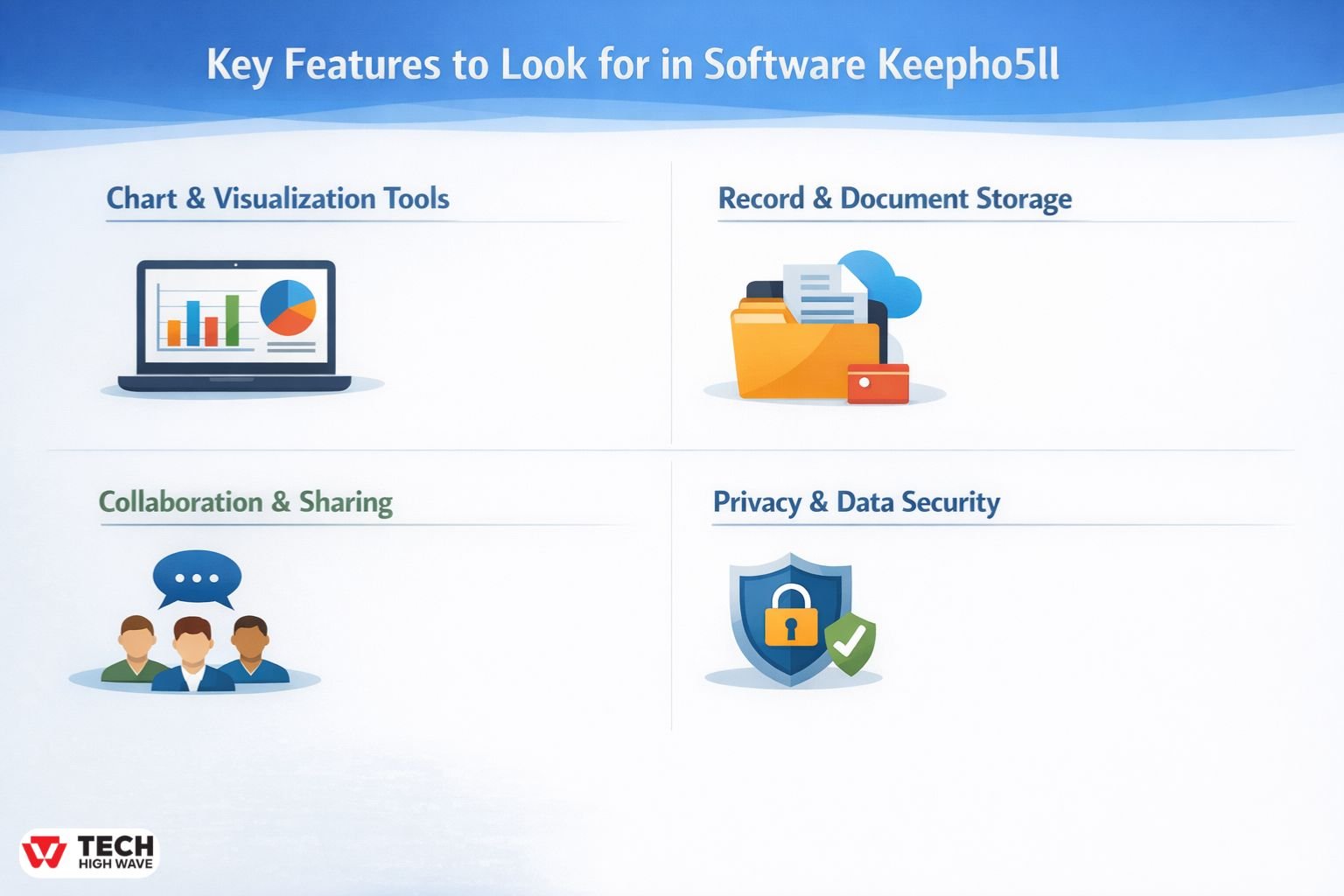
Chart & Visualization Tools
As workflows expand, tracking them manually becomes unreliable. Visual dashboards provide clarity by highlighting bottlenecks and delays.
Some issues only become visible when data is visualized.
Record & Document Storage
Centralized storage keeps all related data in one place. This reduces confusion caused by multiple versions of the same document.
Over time, consistent storage also improves traceability and accountability.
Collaboration & Sharing
Teams can work within a shared environment, reducing the need for constant updates across messaging tools.
Misalignment often begins when information is spread across too many channels.
Privacy & Data Security
Security features such as access control and authentication protect sensitive data.
This is where many organizations need to be careful. A well-structured system still requires proper permissions to remain secure.
Best Uses for Software Keepho5ll
Software keepho5ll performs best in structured environments where repeatability matters.
Process Management
Organizations can standardize internal workflows such as approvals or reporting.
Development Workflows
Teams can track feature lifecycles and manage dependencies more effectively.
Data Organization
Structured data storage allows information to be reused instead of recreated.
Team Collaboration
Shared workspaces improve coordination, especially for distributed teams.
Industry Examples
- Startups: Managing rapid product iterations
- Agencies: Coordinating client deliverables
- Operations teams: Standardizing repetitive internal workflows
What begins as a simple system often becomes critical as complexity increases.
Who Should Use Software Keepho5ll?
Suitable Users
- Teams managing structured or repeatable processes
- Organizations looking to consolidate multiple tools
- Groups needing better visibility into workflows
- Distributed teams working across locations
Less Suitable Users
- Individuals with simple, one-off tasks
- Teams requiring highly specialized enterprise systems
- Organizations without time for setup and configuration
Not every workflow needs structure. Over-engineering simple processes can reduce efficiency.
Software Keepho5ll Review: Pros and Cons
Pros
- Centralizes workflows, data, and collaboration
- Reduces tool fragmentation
- Improves visibility and accountability
- Automates repetitive processes
Cons
- Requires initial setup and planning
- Learning curve for new users
- Over-configuration can create complexity
- May not replace niche or specialized tools
A well-configured system simplifies work. A poorly configured one does the opposite.
Software Keepho5ll vs Other Workflow Tools
| Factor | Software Keepho5ll | Traditional Tools |
| Structure | Highly customizable | Predefined |
| Flexibility | High | Moderate |
| Setup Time | Moderate to high | Low |
| Automation | Built-in | Limited |
| Complexity | Moderate | Lower |
Instead of offering simplicity out of the box, software keepho5ll prioritizes control and adaptability.
How to Choose the Right Software Keepho5ll
Selecting the right setup depends on understanding actual needs.
Decision Checklist
- Identify whether automation or organization is the priority
- Evaluate team familiarity with structured tools
- Check compatibility with existing systems
- Assess scalability for future growth
- Review data security requirements
Many teams underestimate the importance of planning at this stage.
Common Mistakes to Avoid
Overcomplicating Workflows
Adding unnecessary steps often creates friction instead of efficiency.
Ignoring User Training
Even well-designed systems fail without proper onboarding.
Underestimating Setup Time
Initial configuration requires more effort than expected.
Neglecting Data Security
Improper access control can expose sensitive data.
Following Trends Instead of Needs
Adoption should be based on practical fit, not popularity.
Common Issues and Troubleshooting
Loading Code or Initialization Errors
Problem: System fails to load workflows or modules
Cause: Misconfigured setup or missing dependencies
Fix: Review configuration and ensure all components are properly initialized
Workflow Not Triggering
Problem: Automation rules fail to execute
Cause: Incorrect trigger conditions
Fix: Recheck workflow logic and dependencies
Data Not Syncing
Problem: Updates do not reflect across the system
Cause: Integration or connection issues
Fix: Verify sync settings and refresh intervals
These issues are common during early implementation stages.
Future Trends in Software Keepho5ll (2026 Outlook)
Increased Automation
Automation is becoming more adaptive and responsive to workflow conditions.
Improved User Experience
Simplified interfaces are reducing the barrier to adoption.
Enhanced Data Insights
More advanced analytics are improving decision-making.
Stronger Security Frameworks
Security measures continue to evolve alongside data protection needs.
Integration Expansion
Broader compatibility with external tools is expected.
Progress in this space is steady rather than disruptive.
FAQs
Q1: What is software keepho5ll used for?
Software keepho5ll is used to manage workflows, organize structured data, and automate processes within a centralized system.
Q2: Is software keepho5ll suitable for small teams?
Yes, it works well for small teams that need structured workflows and improved coordination.
Q3: Does software keepho5ll require technical expertise?
Basic technical understanding helps, especially during setup and workflow configuration.
Q4: How does software keepho5ll improve productivity?
It improves productivity by reducing manual work, centralizing data, and increasing workflow visibility.
Q5: Can software keepho5ll replace multiple tools?
Yes, it can replace several tools by combining workflow management, automation, and collaboration features.
Q6: What are common issues with software keepho5ll?
Common issues include setup complexity, workflow misconfiguration, and integration challenges.
Q7: Is software keepho5ll secure?
It includes security features like access control and encryption, but proper configuration is essential.
Also Check: How to Get Hauskbel28.2.5 New Version Safely (2026 Verified Guide)