
A practical guide to fenugreek — what it is, what the science says, and how to actually use it
Most people have tasted foenegriek without ever knowing it. It hides in curry powders, Dutch cheese, Ethiopian spice blends, and herbal teas. The seed is everywhere — and yet somehow, the name barely registers outside of cooking circles or natural health communities.
That quiet obscurity is starting to change. As interest in metabolic health and gut function has grown, researchers and nutritionists have been paying a lot more attention to this small, angular seed — and what they’re finding lines up with how traditional medicine has used it for centuries.
This guide covers everything worth knowing: the plant itself, the compounds inside it, the health effects that have actual evidence behind them, how to use it practically, and what to watch out for. No hype. Just what the research actually says.
What Is Foenegriek?
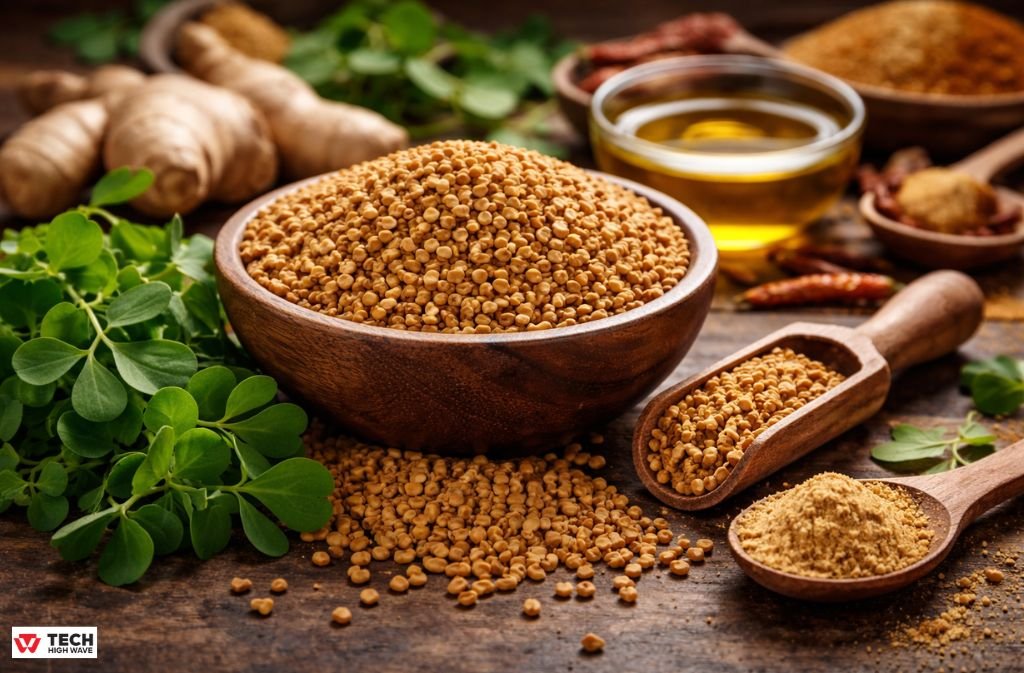
Foenegriek is the Dutch name for fenugreek, the seeds of the plant Trigonella foenum-graecum, a member of the legume family, closely related to clover. The plant grows across South Asia, North Africa, the Middle East, and parts of the Mediterranean, and has been cultivated for food and medicine for thousands of years.
The seeds are small, hard, and slightly angular with a yellowish-brown colour. Raw, they taste sharply bitter. Roast them for 30 to 40 seconds in a dry pan, and something interesting happens: the bitterness softens and gives way to a warm, nutty flavour with faint notes of caramel. That transformation is why fenugreek appears in so many spice-heavy cuisines — roasting unlocks the more pleasant side of the flavour.
Crush the seeds between your fingers and the scent is warm, slightly bitter, and oddly sweet — some people describe it as savoury maple syrup. Once it is in the kitchen, the smell tends to linger.
Where You’ve Already Encountered It
Foenegriek turns up in more places than most people realise:
- Indian curries and spice mixes (it’s a core ingredient in many masala blends)
- Leidse kaas — the Dutch cumin-seed cheese that also uses foenegriek for its distinctive flavour
- Ethiopian berbere and mitmita spice blends
- Middle Eastern stews and breads
- Herbal teas marketed for digestion or hormonal support
- Some commercial maple-flavoured products, where sotolon (fenugreek’s signature compound) is used as a flavouring agent
Available Forms
| Form | What It Is | Best Used For |
| Whole seeds | Raw dried seeds | Cooking, soaking, sprouting |
| Ground powder | Milled seeds | Teas, smoothies, baking |
| Standardised extract | Concentrated capsules | Metabolic or hormonal support |
Whole seeds remain the most versatile option for everyday use. Extracts are worth considering when a specific, consistent dose is the goal — usually for blood sugar or hormonal support, and preferably with guidance from a healthcare provider.
What’s Actually Inside Fenugreek Seeds
The nutritional profile of foenegriek is decent but not extraordinary. What makes it genuinely interesting is the combination of bioactive compounds — several of which are found in very few other foods.
Galactomannan Fibre
Fenugreek seeds are unusually rich in a soluble fibre called galactomannan. When it reaches the gut, galactomannan absorbs water and forms a thick, gel-like substance. That gel slows digestion, which means carbohydrates from a meal are broken down and absorbed more gradually. The result is a more gradual rise in blood sugar after eating, which is exactly why fenugreek keeps appearing in studies on glycaemic control.
4-Hydroxyisoleucine
This is an amino acid found in meaningful quantities in fenugreek and in very few other sources. Early research suggests it may stimulate insulin secretion in a glucose-dependent way — meaning it responds to rising blood sugar rather than triggering insulin release on its own. This distinction matters because it suggests a lower risk of hypoglycaemia compared to some pharmaceutical approaches. The research is ongoing, but the mechanism is considered promising.
Steroidal Saponins and Diosgenin
Fenugreek contains a family of compounds called steroidal saponins, including diosgenin. These interact with cholesterol metabolism and have also been studied for their role in hormonal pathways — particularly in relation to testosterone and oestrogen. The evidence here is mixed, but it’s the reason fenugreek appears in so many supplements marketed toward hormonal health.
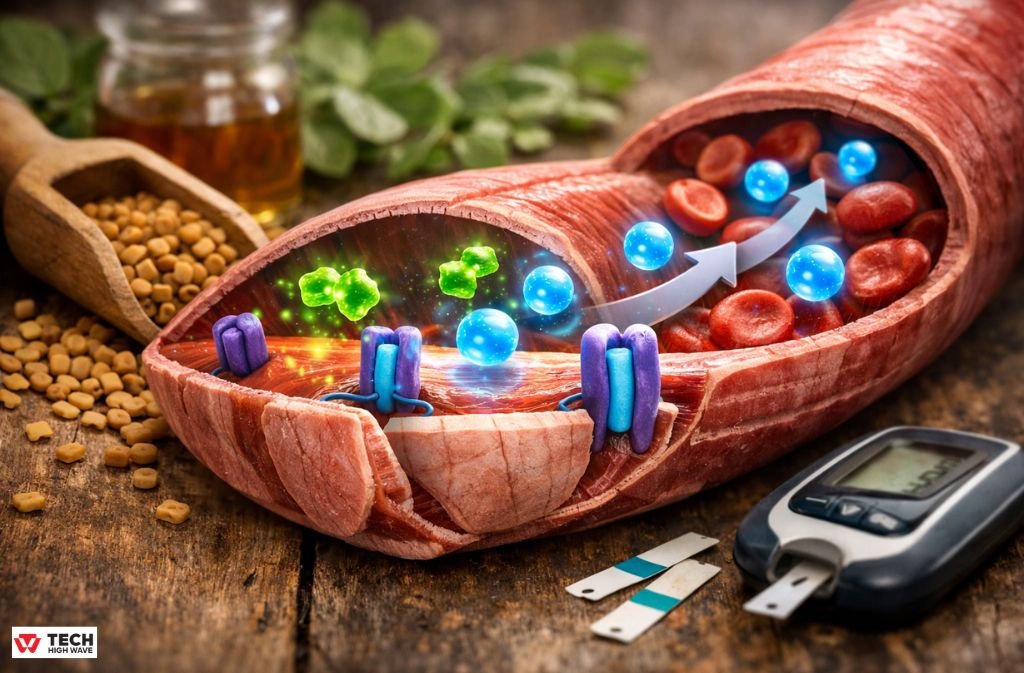
GLUT4 Transporter Activity
Some research has found that fenugreek compounds may support the activity of GLUT4, a protein responsible for pulling glucose out of the bloodstream and into muscle cells. This mechanism is separate from the fibre effect and operates more at a cellular level. It’s particularly relevant to researchers studying insulin resistance and metabolic syndrome, though human trial data is still catching up with the laboratory findings.
Fenugreek and the Gut Microbiome
One of the more interesting angles in recent research involves the relationship between fenugreek’s fibre and gut bacteria. Galactomannan acts as a prebiotic — it feeds beneficial microbes in the large intestine rather than being digested by the host. As those microbes ferment the fibre, they produce short-chain fatty acids, which have documented links to reduced inflammation, improved metabolic function, and better appetite regulation.
This gut-hormone connection is an active area of study in 2026, and fenugreek sits at an interesting intersection of fibre research, microbiome science, and metabolic health. The full picture is still being assembled, but the early signals are worth paying attention to.
Health Effects With Evidence Behind Them
A fair caveat before this section: a lot of health claims circulate around fenugreek that outpace what studies actually show. The effects listed below have at least a reasonable body of research support — though for most of them, quality human trials are still relatively limited compared to laboratory or animal studies.
Blood Sugar Regulation
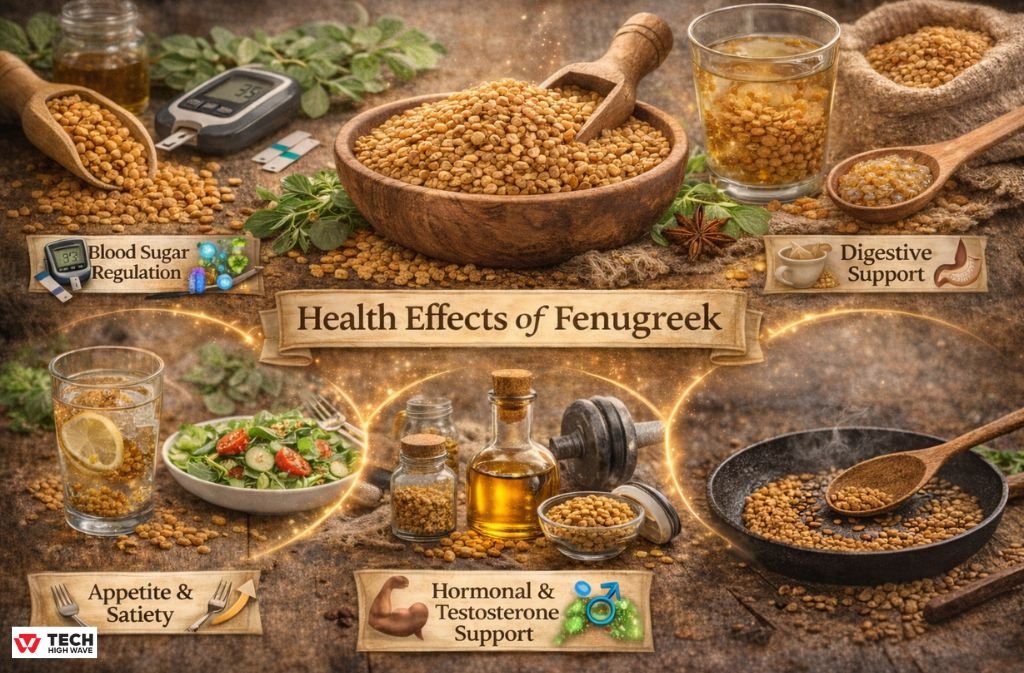
This is the most studied effect and the one with the most consistent findings. Fenugreek’s soluble fibre slows carbohydrate absorption; its amino acid compounds may support insulin response; its GLUT4 effects operate at the cellular level. Several human studies have found lower fasting glucose levels in people who consumed fenugreek daily over periods of several weeks.
The keyword is daily. Occasional use does little. But as a consistent dietary addition alongside a balanced diet, the evidence is reasonably compelling — particularly for people managing pre-diabetes or looking to moderate post-meal blood sugar spikes.
Digestive Support
Traditional medicine across multiple cultures recommends soaking fenugreek seeds overnight and consuming both the seeds and the water the next morning. The soaking process activates the galactomannan fibre, which coats the digestive tract with a soothing, mucilaginous gel. People who use this method regularly often report improvements in bowel regularity, reduced bloating, and general gut comfort.
It’s not glamorous. But it costs almost nothing and has a long track record in traditional use.
Appetite and Satiety
Because fenugreek expands with water and creates a feeling of fullness in the gut, it can reduce appetite when consumed before meals. Studies have found lower caloric intake in participants who consumed fenugreek fibre compared to control groups. This effect is modest and works best as part of a broader approach to eating — not as a standalone fix.
Breast Milk Production
Fenugreek has been used in herbal medicine to support lactation for centuries, and it remains one of the most commonly recommended galactagogues (substances believed to promote milk production). The evidence is genuinely mixed — some trials show increased milk output, others show no significant effect. Mechanisms are believed to involve stimulation of sweat glands, which are structurally similar to mammary glands. It is worth discussing with a healthcare provider rather than relying on supplementation alone.
Also Read: What to Avoid When Taking Glutathione (2026 Safety Guide)
Hormonal and Testosterone Support
Several supplements marketed to men include fenugreek extract with claims around testosterone support. Some human trials have shown modest improvements in testosterone levels and self-reported sexual function. The effect sizes are generally small, and the research quality is variable. Worth knowing about — but not worth treating as a reliable intervention without looking at individual studies.
How to Use Foenegriek: Practical Methods
The Traditional Morning Soak
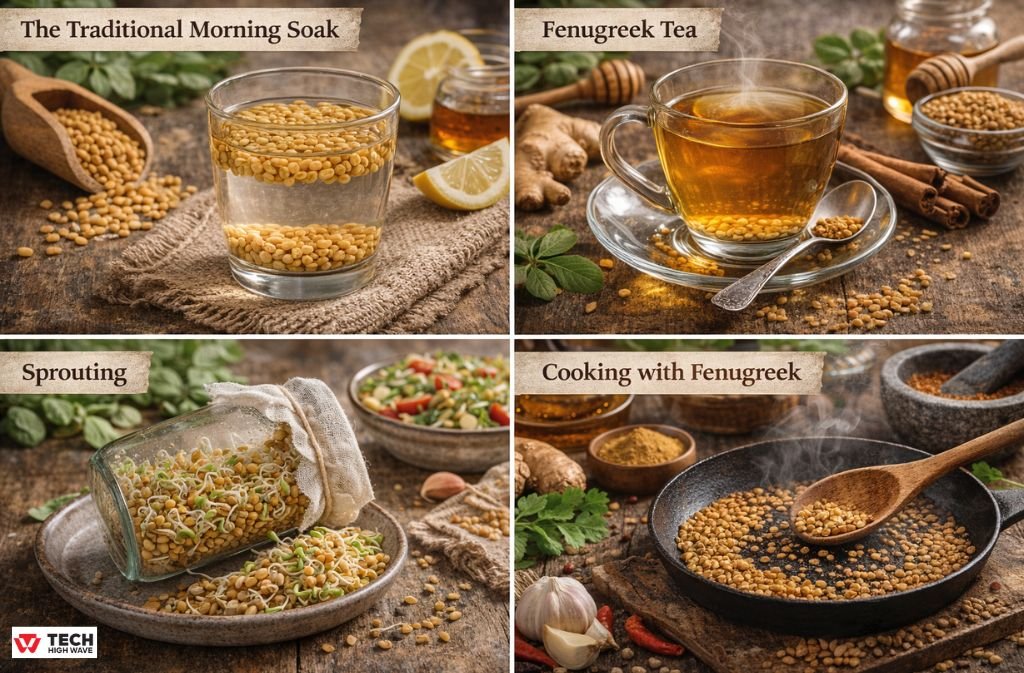
This is still the simplest and arguably most effective daily method. Measure out one teaspoon of whole fenugreek seeds and cover them with a glass of water. Leave overnight. In the morning, drink the water and chew the softened seeds.
The taste is bitter — there’s no way around that. Some people add a squeeze of lemon or a small amount of honey to make it more palatable. The bitterness does ease with time as the palate adjusts.
Fenugreek Tea
A gentler option, particularly for those who find the soaking method too strong:
- Bring 250 ml of water to a light simmer
- Add one teaspoon of whole or lightly crushed seeds
- Simmer for 8 to 10 minutes
- Strain and drink warm
- Optional: add fresh ginger, a cinnamon stick, or a small amount of honey
This works well as a post-meal drink for digestive support, or in the morning as part of a routine.
Sprouting: The Method Most Guides Skip
Raw fenugreek seeds contain phytic acid, an antinutrient that binds to minerals and reduces how well the body absorbs them. Sprouting largely neutralises this, and it also increases vitamin C content, enzyme activity, and protein bioavailability. The flavour shifts from bitter to something milder and faintly grassy.
Three-day process:
- Day 1 — Soak seeds in water for 8 to 12 hours
- Day 2 — Drain, rinse, and leave in a jar covered with muslin or mesh, tilted at an angle for airflow. Rinse again in the evening.
- Day 3 — Small white sprouts will have appeared. Rinse one final time and they’re ready to eat.
Add them to salads, wraps, or eat alongside meals. The sprouted seeds are considerably easier on digestion than raw seeds.
Cooking With Foenegriek
In the kitchen, seeds should be dry-roasted briefly before use — just 30 to 40 seconds in a hot, dry pan until they darken slightly and the nutty aroma develops. Grind them fresh for the best flavour. Ground foenegriek can be added to spice mixes, lentil dishes, marinades, and breads.
A note: fenugreek is a dominant flavour. A little goes a long way. Start with half a teaspoon in a dish serving four people and adjust from there.
Dosage Guide
| Goal | Typical Daily Amount | Notes |
| Blood sugar support | 5 to 10 g of seeds | Best consumed with or before meals |
| Digestive comfort | 1 tsp soaked seeds | Traditional morning method |
| Appetite management | 2 to 5 g before meals | Works via fibre expansion |
| Supplement extract | 500 to 600 mg standardised | Check for quality certification |
Starting with a smaller amount and increasing gradually is a sensible approach — both to let the digestive system adjust and to gauge individual tolerance.
The Maple Syrup Effect
Almost everyone who uses fenugreek regularly notices this at some point: sweat and urine take on a faint maple syrup scent. It is harmless and caused by a compound called sotolon, which the body metabolises and then excretes.
It tends to surprise people the first time. Worth knowing about in advance.
Also Check: Sourthrout Explained: Fermented Food, Medical Confusion, and the Truth Behind the Term
Side Effects and Who Should Be Cautious
Fenugreek is well tolerated by most people at typical amounts. Higher doses — particularly of supplemental extracts — can cause digestive discomfort, bloating, and loose stools, usually as the gut adjusts to increased soluble fibre.
A few groups should approach it with more care:
- Pregnant women — fenugreek has a long history of use to stimulate uterine contractions and should be avoided in pregnancy except under medical supervision
- People with allergies to chickpeas, peanuts, or other legumes — cross-reactivity is possible
- Anyone taking blood sugar medication — fenugreek has genuine glucose-lowering effects and may amplify medication, creating a risk of hypoglycaemia
If there’s any uncertainty, checking with a doctor or pharmacist before beginning regular supplementation is the right call.
Frequently Asked Questions
Q.Is foenegriek the same thing as fenugreek?
Yes — foenegriek is simply the Dutch word for fenugreek. Same plant, same seeds, same properties. The Latin name is Trigonella foenum-graecum. In Germany, it’s Bockshornklee; in France, fenugrec. Different names, identical ingredients.
Q. How long before fenugreek starts working?
For digestive effects — softer stools, reduced bloating, improved gut comfort — some people notice a difference within three to five days. Blood sugar effects take longer to measure reliably, usually requiring several weeks of consistent daily use. The research trials that found meaningful results ran for between four and eight weeks.
Q. Can men use fenugreek?
Yes, and it’s used by men for several reasons — metabolic support, blood sugar management, and testosterone-adjacent supplementation. There’s reasonable evidence for the first two. The testosterone evidence is more variable, though some trials have shown modest improvements in libido and testosterone levels.
Q. Does fenugreek interact with medications?
The most significant interaction risk is with blood thinners (fenugreek may slow clotting) and blood sugar medications (the glucose-lowering effects can compound). Anyone on regular medication should run it by a pharmacist or doctor before starting supplementation.
Q. What does foenegriek actually taste like?
Raw seeds are sharply bitter. Lightly roasted seeds develop a warmer, nuttier flavour with subtle caramel notes. The ground powder has a milder bitterness and a faint sweetness. Soaked seeds taste less bitter than raw ones. The flavour softens considerably when fenugreek is cooked as part of a dish.
The Bottom Line
Foenegriek is not a miracle food. No single ingredient is, regardless of what supplement marketing suggests. But it is something more interesting: a food with a genuinely unusual combination of compounds that has been used medicinally for thousands of years and is now being studied with modern tools — and holding up reasonably well under scrutiny.
The fibre effects on digestion and blood sugar are the best-supported findings. The gut microbiome connection is emerging and looks promising. The hormonal and lactation effects are real for some people, though the evidence is less consistent.
For most people, the simplest entry point is also the cheapest: a teaspoon of seeds soaked overnight, consumed in the morning. No capsules required. It takes 20 seconds to prepare and costs almost nothing.
Whether foenegriek earns a permanent place in the routine depends on individual response. But for something that has been quietly sitting in kitchens and spice racks across the world for centuries, it deserves rather more attention than it usually gets.
Related: What Is Hyperfixation? Understanding Hyperfiksaatio in ADHD and Autism