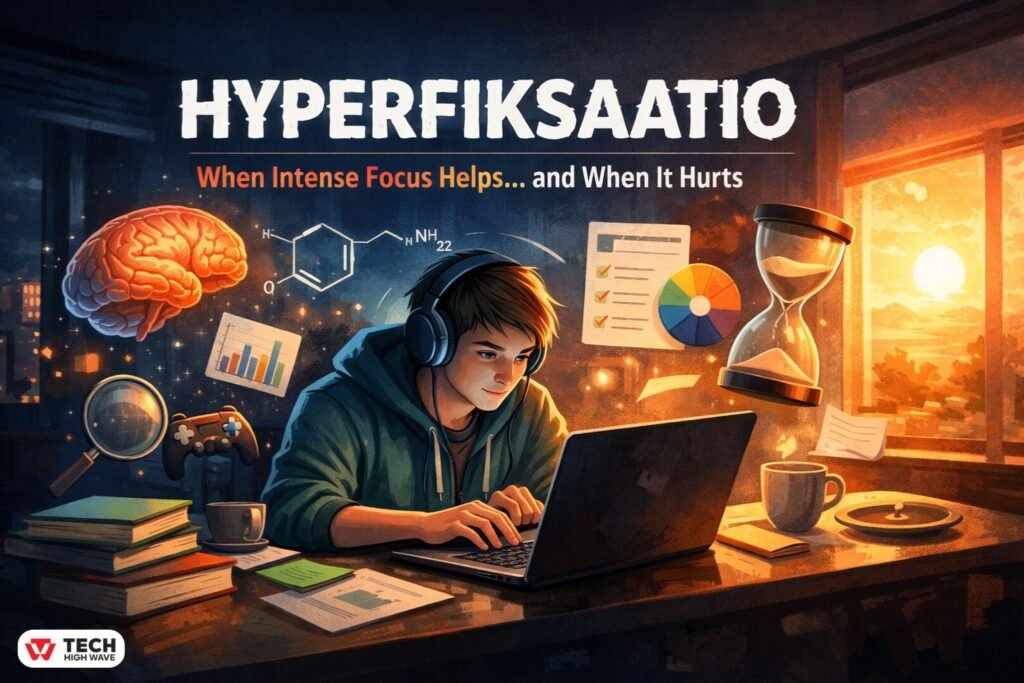
Have you ever sat down to “just check one thing” — and suddenly it’s 3 a.m., your phone is dead, your coffee is cold, and the rest of the world feels like it temporarily stopped existing?
That experience has a name: hyperfiksaatio.
For some, it feels like a superpower — a tunnel of crystal-clear focus where ideas flow, problems unravel, and progress happens at lightning speed. For others, it can quietly spiral into skipped meals, lost sleep, and mounting responsibilities left untouched.
Hyperfiksaatio lives in that thin space between brilliance and burnout. And understanding where that line sits can change everything — not by suppressing intense focus, but by learning how to shape it.
What Is Hyperfiksaatio?
Hyperfiksaatio—often referred to in English as hyperfixation—describes a state of unusually intense, prolonged focus on a specific task or interest. During these episodes, awareness narrows, and as a result, time begins to feel slippery. Meanwhile, external demands gradually fade into the background.
Importantly, this is not simply “working hard.” Rather, it represents a cognitive pattern in which attention locks onto something highly stimulating or deeply meaningful. Consequently, hours can pass unnoticed. In the process, meals may be delayed, and notifications often go unanswered.
Although hyperfiksaatio appears frequently in individuals with ADHD and autism, it is not exclusive to either. In many cases, it tends to center around:
Specialized interests
Creative projects
Technical problem-solving
Research-heavy subjects
Games or immersive media
At its best, hyperfiksaatio fuels deep focus and accelerates mastery. However, at its worst, it can disrupt sleep, strain executive functioning, and create imbalance in daily life. Ultimately, the difference often lies in structure and intentional boundaries.
How Hyperfiksaatio Works
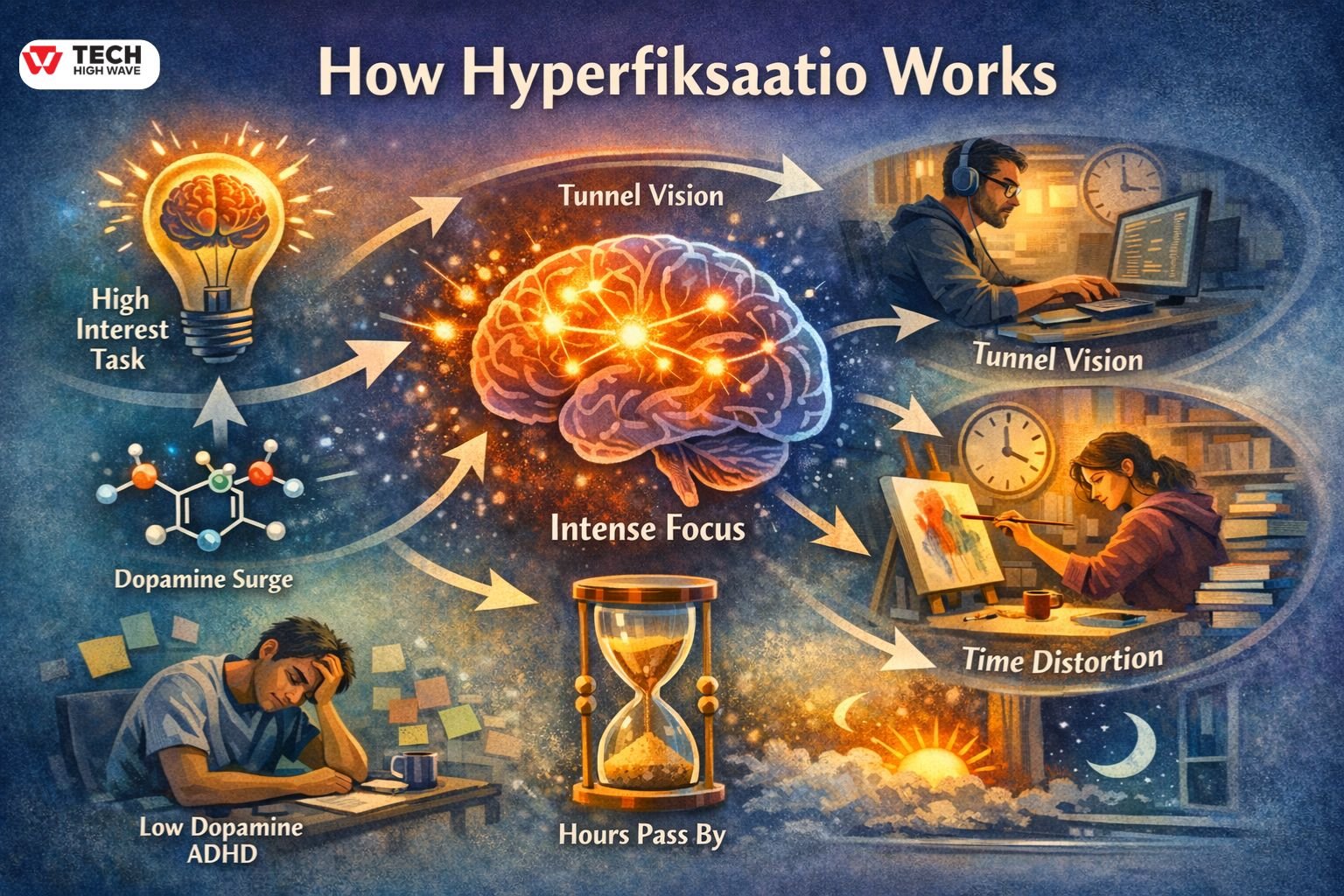
The mechanism behind hyperfiksaatio is closely tied to dopamine regulation. Dopamine is not simply a “pleasure chemical”; it governs motivation, reinforcement, and the brain’s reward pathways.
When a task produces high stimulation or emotional relevance, dopamine activity increases. Attention narrows accordingly.
In ADHD especially, baseline dopamine activity may be lower or dysregulated. The brain compensates by gravitating toward high-reward stimuli. That is why low-interest tasks feel nearly impossible—while high-interest activities trigger intense, prolonged focus.
A typical hyperfiksaatio cycle looks something like this:
- A task sparks strong interest.
- Dopamine rises, reinforcing engagement.
- External awareness diminishes.
- Time perception shifts.
- Task-switching becomes unusually difficult.
A programmer may sit down to “quickly fix a bug” and look up five hours later. A student researching climate science may miss dinner entirely. An artist might paint until sunrise without noticing fatigue.
Flow state is often compared to hyperfiksaatio, but they are not identical. Flow tends to be intentional and controlled. Hyperfiksaatio can feel more automatic—sometimes even compulsive.
Key Features to Look for in Hyperfiksaatio
Hyperfiksaatio differs from ordinary deep work in subtle but important ways. Recognizing these features helps distinguish healthy immersion from imbalance.
Chart & Visualization Tools
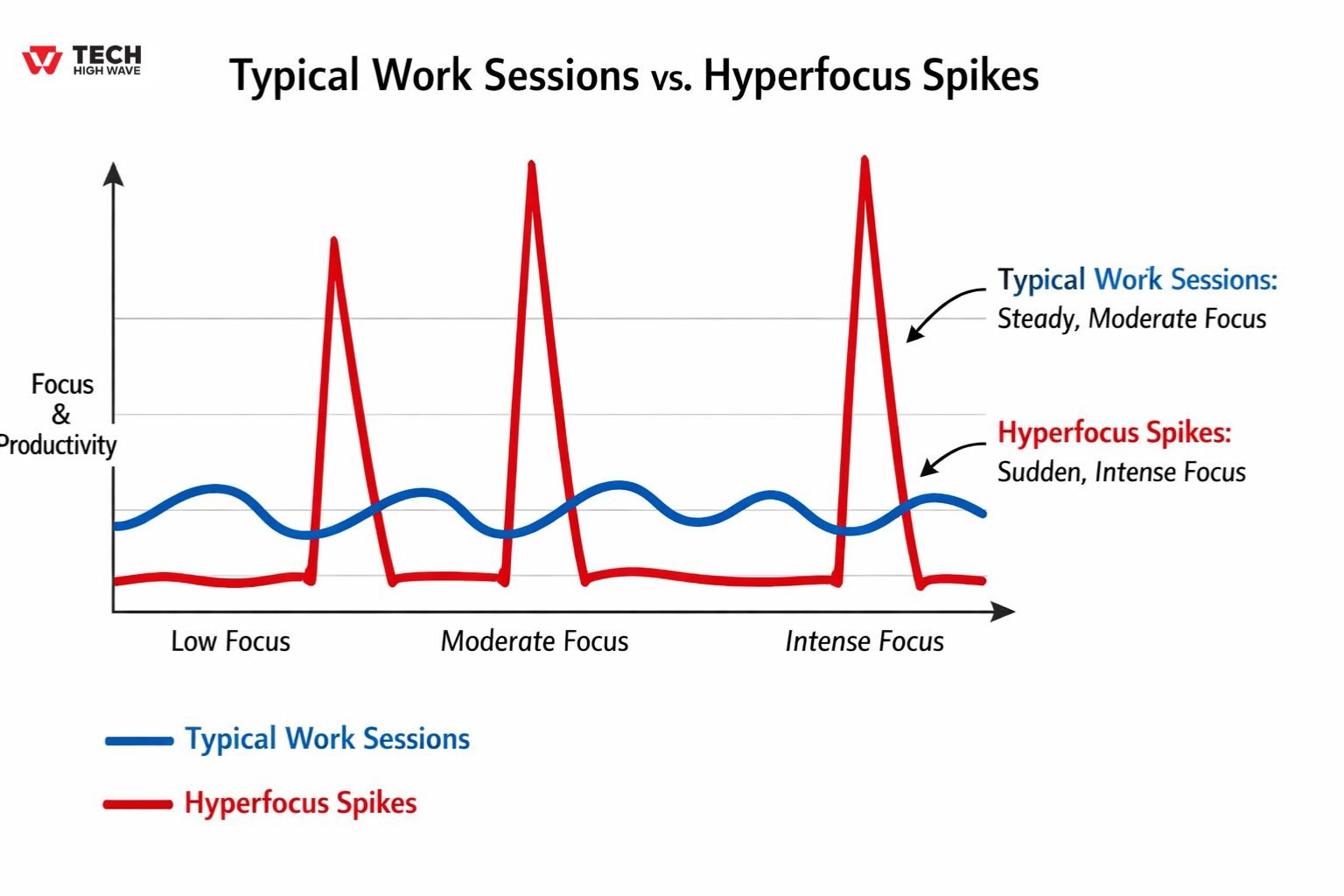
Tracking focus sessions with simple time logs or digital charts often reveals patterns that memory alone does not capture. For instance, several late-night sessions in a row may indicate that hyperfiksaatio is beginning to affect sleep.
Visual data matters because intense focus feels productive in the moment. Patterns, however, tell a fuller story.
Record & Document Storage
Keeping structured notes about when hyperfiksaatio occurs—what triggered it, how long it lasted, how energy levels felt afterward—provides practical insight.
Over time, patterns emerge. Certain environments, stress levels, or types of tasks may reliably trigger deep absorption. This awareness strengthens attentional regulation.
Collaboration & Sharing
Hyperfiksaatio can unintentionally isolate. In collaborative environments, check-ins serve as grounding points. They encourage alignment between personal focus and shared objectives.
Without collaboration, individuals may over-refine minor details while larger goals drift off course.
Privacy & Data Security
Attention tracking sometimes intersects with sensitive mental health information. Whether logs are digital or physical, privacy safeguards are essential. Secure tools encourage honest reflection and reduce hesitation around self-monitoring.
Best Uses for Hyperfiksaatio
When directed intentionally, hyperfiksaatio can become a powerful cognitive advantage.
Creative Projects
Long-form writing, design systems, coding architecture, music composition—these domains benefit from uninterrupted deep focus. Hyperfiksaatio allows ideas to evolve without constant interruption.
Creative breakthroughs often emerge from sustained immersion rather than fragmented attention.
Academic and Research Work
Complex topics require cognitive endurance. Researchers analyzing datasets or reviewing literature may experience hyperfiksaatio that accelerates insight formation.
However, balance remains critical. Extended cognitive strain without rest reduces long-term retention.
Skill Development
Mastery in fields such as programming, engineering, or musical performance demands repetition and depth. Hyperfiksaatio naturally supports that intensity.
Progress can feel exponential during these phases.
Structured Therapeutic Use
For individuals with ADHD or autism, understanding hyperfiksaatio patterns increases self-awareness. Rather than resisting intense focus entirely, structured scheduling can harness it productively.
Who Should Use Hyperfiksaatio?
Hyperfiksaatio is not something to deliberately “activate.” Rather, it is better understood as a natural attentional pattern that can be intentionally channeled.
For example, it may benefit:
-
Individuals with ADHD navigating attentional variability
-
Autistic individuals engaging with specialized interests
-
Professionals handling high-complexity projects
-
Students pursuing deep academic exploration
However, in different circumstances, it may create challenges for:
-
Those experiencing chronic sleep disruption
-
Individuals prone to anxiety-driven overwork
-
Roles requiring rapid, constant task-switching
Ultimately, context determines the outcome. Intense focus is neither universally helpful nor inherently harmful; instead, its impact depends on how, when, and where it is directed.
Also Check: Why People Think Palliative Care Is Bad — And the Truth You Need to Know
How to Choose the Right Hyperfiksaatio Approach
Management begins with awareness, but it does not end there.
-
Assess Overall Impact
Track whether hyperfiksaatio improves results or quietly undermines physical health and responsibilities.
-
Use Structured Time Techniques
Two methods consistently help:
- Pomodoro Technique: 25-minute focus intervals followed by 5-minute breaks.
- Time Boxing: Pre-scheduled blocks dedicated to high-focus tasks, with alarms for stopping.
Both introduce gentle external boundaries to counter distorted time perception.
-
Align With Priority Goals
Not all stimulating tasks deserve extended immersion. Strategic alignment prevents wasted effort.
-
Introduce Transition Rituals
Brief physical movement, hydration breaks, or environmental changes signal the brain to disengage.
-
Seek Professional Input When Needed
If hyperfiksaatio routinely disrupts daily life, consultation with a clinician familiar with ADHD or autism may clarify underlying executive functioning patterns.
Common Mistakes to Avoid
- Skipping meals or delaying sleep repeatedly
- Assuming productivity automatically equals sustainability
- Avoiding development of task-switching skills
- Overidentifying with a single specialized interest
- Ignoring emotional or relational needs
Hyperfiksaatio can quietly escalate from helpful to harmful when boundaries disappear.
Future Trends in Hyperfiksaatio (2026 Outlook)
Conversations around neurodiversity continue to evolve. By 2026, for instance, hyperfiksaatio is increasingly recognized within broader discussions of attentional regulation and workplace inclusion. As research and workplace culture progress, several developments stand out:
-
First, flexible work structures supporting deep focus cycles
-
In addition, digital wellbeing platforms with built-in break reminders
-
At the same time, expanded research on dopamine reward pathways
-
Finally, greater awareness of executive functioning differences
Taken together, these shifts reflect a broader movement toward understanding attentional diversity not as a deficit, but as a difference that can be supported through intentional design and policy.
Rather than pathologizing intense focus, the emphasis is shifting toward informed management. Structure, not suppression, appears to be the sustainable path forward.
Frequently Asked Questions
Q1: What is hyperfiksaatio in simple terms?
Hyperfiksaatio is an intense and prolonged focus on one task or interest, often accompanied by reduced awareness of time and surroundings.
Q2: Is hyperfiksaatio linked to ADHD?
Yes. It is commonly associated with ADHD due to differences in dopamine regulation and executive functioning.
Q3: Can hyperfiksaatio be harmful?
It can be if it repeatedly disrupts sleep, nutrition, responsibilities, or social engagement.
Q4: How long can hyperfiksaatio last?
Episodes may last several hours or, in some cases, extend across multiple days depending on stimulation and context.
Q5: Does hyperfiksaatio occur in autism?
Yes. It frequently appears around specialized interests that provide strong intrinsic motivation.
Q6: How can hyperfiksaatio be managed effectively?
Structured time limits, transition rituals, journaling, and professional guidance when necessary help maintain balance.
Conclusion
Hyperfiksaatio is best understood as a cognitive intensity pattern. In the right environment, with thoughtful boundaries, it can accelerate learning, deepen creativity, and strengthen expertise. Without structure, however, it may quietly erode balance.
Also Read: Vetter Software Login: 2026 Guide to DaySmart Vet Access